July 2025 in “OPAL (Open@LaTrobe) (La Trobe University)” In this study, researchers developed a novel method using ultrasound stimulation and a hydrogel delivery system to enhance the regenerative effects of stem cell-derived extracellular vesicles on severe skin injuries, resulting in improved healing and hair follicle regeneration in a mouse model.
39 citations
,
September 2018 in “American Journal of Medical Genetics Part A” This case report describes a 32-month-old girl with a newly identified pediatric disorder linked to a de novo mutation in the ODC1 gene, mirroring symptoms seen in a transgenic mouse model.
 12 citations
,
June 2011 in “Han-guk sikpum gwahakoeji/Han'gug sigpum gwahag hoeji/Han-guk sikpum gwahak hoeji”
12 citations
,
June 2011 in “Han-guk sikpum gwahakoeji/Han'gug sigpum gwahag hoeji/Han-guk sikpum gwahak hoeji” This study found that MBN, an herbal extract fermented by Lactobacillus plantarum, promoted hair growth and increased related gene expression in C57BL/6 mice.
March 2026 in “Materials Today Chemistry” Smart microneedles improve hair loss treatment by delivering drugs precisely with fewer side effects.
 February 2026 in “Annals of dermatological science.”
 In this case report, two young women with female pattern hair loss experienced significant hair regrowth without adverse effects after six months of treatment with bone-marrow-derived mesenchymal stem cells and their extracellular vesicles, suggesting potential for this approach when conventional treatments fail.
5 citations
,
June 2020 in “Medicine” This report discusses a 22-year-old patient with MELAS syndrome carrying the m.10158T>C mutation, and highlights the need for extensive genetic testing when initial hot-spot mutation tests are negative.
17 citations
,
September 2022 in “Biomaterials Research” This study found that the film-trigger applicator system enhanced drug delivery efficiency and skin penetration of dissolving microneedles compared to traditional patch systems in both lab and animal models.
 March 2026 in “Zenodo (CERN European Organization for Nuclear Research)”
 This publication presents a library of geometric medicines designed to selectively target pathogenic bacteria and fungi with high precision while minimizing ecological harm, available for free on a non-commercial basis.
 June 2024 in “Archives of dermatological research”
 In this self-controlled comparative study of 16 women with Female Pattern Hair Loss, MMP® with Minoxidil showed a better response in the parietal-vertex regions in less advanced cases compared to standard Minoxidil treatment, though overall effectiveness was similar.
4 citations
,
December 2022 in “Cells” This study found that fibroblast-engineered nanovesicles significantly enhanced proliferation and migration of dermal papilla cells and increased hair follicle shaft size in ex vivo organ cultures, suggesting potential as a treatment for alopecia.
1 citations
,
July 2016 in “PubMed” This study found that 5% minoxidil topical foam used once daily for 24 weeks was well tolerated and significantly improved hair regrowth and scalp coverage in women with female pattern hair loss compared to vehicle foam.
 March 2026 in “Zenodo (CERN European Organization for Nuclear Research)”
 This publication presents a library of precision geometric medicines that reportedly kill harmful bacteria and fungi while sparing beneficial organisms, using a delivery system that targets pathogens specifically and avoids ecological harm.
2 citations
,
March 2020 in “International journal of dermatology and clinical research” In this study, microneedling with minoxidil solution showed a significantly better response in treating male androgenetic alopecia compared to microneedling with a hair multivitamin solution.
May 2018 in “Journal of Clinical Oncology” This study observed that a combination of low-dose cyclophosphamide and vinorelbine appears safe and has promising antitumor activity in patients with metastatic breast cancer resistant to anthracyclines and taxanes, achieving a 44% objective response rate at 6 months with manageable toxicity levels.
 23 citations
,
January 2015 in “Journal of The American Academy of Dermatology”
23 citations
,
January 2015 in “Journal of The American Academy of Dermatology” This study found that patients with myotonic dystrophy type 1 had higher numbers of nevi, dysplastic nevi, melanomas, and pilomatrixomas compared to age- and sex-matched controls.
11 citations
,
May 2012 in “Genesis” This study in mutant mice found that Bmpr2 and Acvr2a are individually redundant, but together essential for normal hair follicle development, with their reduction causing rapid hair cycling and graying.
28 citations
,
June 2003 in “Applied immunohistochemistry & molecular morphology” This study demonstrated that combining cell conditioning with mild protease digestion enhanced the visualization of versican mRNA in formalin-fixed mouse skin tissue sections compared to using either technique alone.
116 citations
,
August 2021 in “Stem Cell Research & Therapy” This paper reviews the emerging potential of menstrual blood-derived mesenchymal stem cell extracellular vesicles in regenerative medicine, highlighting their promise for treating several diseases without providing new clinical results.
3 citations
,
July 2025 in “Stem Cell Research & Therapy” This study highlights the potential of extracellular vesicles derived from HuMSCs and lncRNA VIM-AS1 to enhance wound healing in diabetic conditions, suggesting innovative strategies for tissue repair.
7 citations
,
June 2012 in “Journal of dairy science” This study found that topical application of bovine milk polar lipids accelerated hair cycle progression in mice, showing potential for use in cosmetic products.
January 2025 in “Archives of Dermatological Research” This research observed that Moracin M, a compound from the Moraceae family, significantly promotes hair growth and angiogenesis via the Wnt signaling pathway in human dermal papilla cells, offering a promising alternative to current hair growth treatments like minoxidil.
 8 citations
,
July 2007 in “International Journal of Dermatology”
8 citations
,
July 2007 in “International Journal of Dermatology” Using 5% topical minoxidil improved and normalized the hair growth in a girl with short anagen hair naevus.
 48 citations
,
February 2025 in “Nano-Micro Letters”
48 citations
,
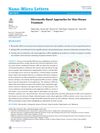
February 2025 in “Nano-Micro Letters” This review summarizes the application of microneedles in treating various skin diseases and highlights challenges like low drug loading, noting no new clinical results are reported.
This study found that a bioorthogonal microneedle patch delivering AAV-aFGF effectively improved hair follicle regeneration and sustained hair growth in murine alopecia models compared to other methods.
January 2006 in “Chinese Journal of Aesthetic Medicine” In this study, lipo-minoxidil was found to increase vascular endothelial growth factor expression in the skin of C57BL/6 mice more than standard minoxidil formulations.
 129 citations
,
January 2007 in “Otology & Neurotology”
129 citations
,
January 2007 in “Otology & Neurotology” This study found that delivering math1 via an adenovector led to vestibular hair cell regeneration and improved balance function in ototoxin-treated adult mice.
 1 citations
,
August 2018 in “Journal of Investigative Dermatology”
1 citations
,
August 2018 in “Journal of Investigative Dermatology” This study found that Muse cells retained their pluripotency and ability to differentiate into various cell types even after being cryopreserved multiple times.
11 citations
,
January 1990 in “Cell and Tissue Research” Minoxidil does not specifically target any hair follicle cells.

This article introduces REVVup Hair Therapy as an alternative to surgery for early-stage hair loss but reports no new clinical findings.

In this study, researchers developed vegan exosome-like vesicles from microalgae that mimic mammalian exosomes, demonstrating promising in vitro, ex vivo, and clinical effects such as improved wrinkle depth and elasticity, making them a potential alternative in cosmetic applications.