 10 citations
,
March 2014 in “Scandinavian journal of clinical and laboratory investigation”
10 citations
,
March 2014 in “Scandinavian journal of clinical and laboratory investigation” This study found that MDA-modified DNA may contribute to immune responses in alopecia areata patients by creating neo-epitopes, providing new insights into the condition's immunological mechanisms.

This study discovered that androgenetic alopecia disrupts the scalp microbiome balance across the whole scalp, not just areas with hair loss, and introduced a microbial index for early detection and severity prediction.
4 citations
,
December 2021 in “Applied sciences” This study observed that a combination of micro-needling and low-level light/laser therapy significantly increased hair density in patients with mild to moderate androgenic alopecia, showing an increase of 12 hairs/cm² after 16 weeks, compared to baseline.
This study observed that both 15% topical Minoxidil and low-level laser therapy increased patient satisfaction in treating androgenetic alopecia, but physician satisfaction was higher for Minoxidil, despite it causing more side effects.
 March 2022 in “Research Square (Research Square)”
 This study found that replacing components with artificial sebum in the modified Leeming and Notman agar medium significantly increased the growth yield of Malassezia restricta.
 8 citations
,
November 2019 in “Dermatologic Clinics”
8 citations
,
November 2019 in “Dermatologic Clinics” This study highlights the importance of clinicians understanding the effects of gender-affirming hormones like testosterone, estrogen, and antiandrogens on hair growth, to effectively diagnose and treat androgenetic alopecia in gender minority patients.
 October 2023 in “Case Reports”
 This case report identified a new isotype of male androgenetic alopecia (inverse-MAGA) in a man successfully treated with finasteride and minoxidil, suggesting the need for future studies to evaluate this variant widely.
 December 2022 in “Small methods”
 This study developed dissolving microneedles incorporating a new AR degrader for treating androgenetic alopecia, showing that a single application leads to superior hair regeneration compared to daily minoxidil, without systemic toxicity or androgen-related issues.

This review discusses male androgenetic alopecia treatments, noting that topical minoxidil and oral finasteride are FDA-approved and require continuous use to maintain hair retention effects, but reports no new clinical results.
 November 2023 in “Scientific Reports”
 In this study, researchers used NIH hairless mice to uncover genetic markers associated with hair loss and identified a Lama3 point mutation as a potential genetic contributor, creating a mutant mouse model that may advance the study of androgenetic alopecia.
 April 2024 in “MRIMS journal of health sciences”
 This study observed that autologous growth factor concentrate combined with topical minoxidil significantly improved hair growth and patient satisfaction in individuals with androgenic alopecia, with no adverse effects reported.
 November 2022 in “The journal of investigative dermatology/Journal of investigative dermatology”
 In this case study, a 26-year-old female with PLEC mutations and features of muscular dystrophy and myasthenia gravis showed significant improvement in symptoms following steroid treatment.
 February 2026 in “Zenodo (CERN European Organization for Nuclear Research)”
 This study reviewed treatments and findings related to male androgenetic alopecia, noting that topical minoxidil and oral finasteride are effective for slowing hair loss, while newer interventions like PRP and microneedling show promise.
 10 citations
,
March 2015 in “Journal of dermatology”
10 citations
,
March 2015 in “Journal of dermatology” This case report describes a 12-year-old boy with severe skin scaling due to novel compound heterozygous null truncation mutations in the TGM1 gene, resulting in loss of transglutaminase 1 activity.
 7 citations
,
February 2010 in “British Journal of Dermatology”
7 citations
,
February 2010 in “British Journal of Dermatology” A woman with a rare autoimmune disorder had a blister on her eye and unique immune reaction, which was effectively treated with medication.
 4 citations
,
August 2020 in “Facial plastic surgery & aesthetic medicine”
4 citations
,
August 2020 in “Facial plastic surgery & aesthetic medicine” This study found that combining concentrated growth factor injections with minoxidil treatment significantly improved hair growth and participant satisfaction in male patients with androgenetic alopecia compared to minoxidil alone.
16 citations
,
September 2006 in “The Journal of Immunology” This study identified that mouse MILL1 and MILL2 are glycoproteins distinct from human MICA/B, primarily due to their association with β2-microglobulin and TAP-independent surface expression.
 5 citations
,
April 2024 in “BMC Neurology”
5 citations
,
April 2024 in “BMC Neurology” The researchers reported that non-motor symptoms like taste disorders and alopecia are associated with myasthenia gravis, particularly in severe cases and those linked to thymoma.
 15 citations
,
December 2016 in “Advanced Pharmaceutical Bulletin”
15 citations
,
December 2016 in “Advanced Pharmaceutical Bulletin” This study found that N-acetyl-glucosamine-loaded nanostructured lipid carriers showed promise for skin lightening in healthy volunteers by reducing melanin distribution.
August 2025 in “OPAL (Open@LaTrobe) (La Trobe University)” This preclinical study found that a machine-learning-driven strategy for fabricating microneedles with optimal hardness and rapid dissolution significantly promoted hair regrowth in androgenetic alopecia mice by activating the Wnt/β-catenin pathway, surpassing the effects of minoxidil.
15 citations
,
June 2021 in “Medicina” This study found that combined intense pulsed light and low-level light therapy significantly improved ocular surface outcomes and quality of life for patients with meibomian gland dysfunction and dry eye disease.
November 2020 in “Acta Medica Bulgarica/Acta medica Bulgarica” This case report details two patients with Graham-Little-Piccardi-Lassueur syndrome who showed marked skin lesion improvement with corticosteroid treatment, though cicatricial scalp alopecia remained unresponsive.
 October 2025 in “EMJ Dermatology”
 This study found that glucagon-like peptide-1 receptor agonist therapy was independently associated with an increased incidence of non-scarring hair loss, including telogen effluvium and androgenic alopecia, in adults but not alopecia areata.
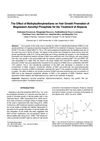 6 citations
,
July 2009 in “Biomolecules & therapeutics”
6 citations
,
July 2009 in “Biomolecules & therapeutics” This study found that combining MSM with MAP significantly enhanced hair growth in mice, comparable to or better than minoxidil, due to increased intradermal retention of MAP.
 February 2024 in “International Journal of Biological Macromolecules”
 In this study, researchers developed a microfluidic-assisted technology to create dual-layer microspheres containing mesenchymal and epidermal cells, which efficiently induced hair follicle regeneration in mice, suggesting potential improvements for hair regeneration treatments in conditions like androgenetic alopecia.
December 2020 in “Forum Dermatologicum” In this case report, a combination treatment of intralesional triamcinolone acetonide, oral acitretin, and topical clobetasol propionate showed effectiveness in reducing symptoms of Graham-Little-Piccardi-Lasseur syndrome in one patient over two months, with no new areas of hair loss observed.
November 2025 in “Cosmetics” This review discusses the clinical efficacy, safety, and mechanisms of Autologous Micrografting Technology for androgenetic alopecia, reporting significant short-term improvements in hair density and thickness.
July 2026 in “Journal of the American Academy of Dermatology” GLP-1RA medications may increase the risk of hair loss, especially in non-diabetic people.
 1 citations
,
September 2019 in “BMC veterinary research”
1 citations
,
September 2019 in “BMC veterinary research” This case report suggests that Malarone® may cause acute pancreatitis and alopecia in dogs, highlighting the need for careful monitoring of adverse reactions when using this drug in canine treatment.
January 2019 in “Journal of clinical and cosmetic dermatology” This article discusses the potential of combining growth factor therapy with LLLT LED therapy for hair regrowth in androgenetic alopecia, but it does not report new clinical results.