83 citations
,
May 2022 in “Journal of Advanced Research” This study suggests that enhancing glycolysis in MSCs may improve their immune functions and therapeutic potential, although more evidence is needed to understand the direct metabolic mechanisms involved.
 4 citations
,
September 2020 in “Frontiers in Microbiology”
4 citations
,
September 2020 in “Frontiers in Microbiology” In this study, algal oligosaccharides effectively countered key factors in androgenetic alopecia pathogenesis, improving hair growth indicators in vitro and in mice.
26 citations
,
April 2011 in “British Journal of Dermatology” This study identified novel mutations in the DSG4 gene in a Japanese patient with monilethrix, affecting protein interactions that may disrupt hair shaft structure.
78 citations
,
February 2024 in “ACS Omega” This study developed a bilayer material combining poly(vinyl alcohol) and bacterial cellulose with a gelatin-poly(vinyl alcohol) hydrogel, showing strong potential as a wound dressing due to its good antibacterial properties, cell viability, and sustained drug release.
 19 citations
,
November 2017 in “Journal of Pharmaceutical Sciences”
19 citations
,
November 2017 in “Journal of Pharmaceutical Sciences” This research investigated aqueous alginate-based hydrogels for delivering minoxidil and reported that using hydroxypropyl-β-cyclodextrin (HP-β-CD) with molar substitution 0.65 significantly enhanced minoxidil's solubility and skin permeability without damaging the epidermis, suggesting potential as an alternative to commercial minoxidil solutions.
This study reports that a novel series of compounds can potently and selectively inhibit glycogen synthase kinase-3, which activates glycogen synthase in insulin receptor-expressing cells and primary rat hepatocytes.
 2 citations
,
September 2022 in “Composites Part B: Engineering”
2 citations
,
September 2022 in “Composites Part B: Engineering” This study found that multifunctional peptide-based materials derived from Crassostrea gigas may promote scarless dermal wound healing without affecting intestinal flora through both topical and oral administration.
February 2019 in “International Journal of Dermatology and Clinical Research” In this study, Nε-(carboxymethyl) lysine was found to weaken hair follicle morphogenesis and inhibit essential cell activities in a model simulating accumulated glycation.
30 citations
,
February 2023 in “Biomaterials Research” This study evaluated a new carboxymethyl chitosan/polyaldehyde dextran (CMCS/PD) hydrogel and found it to be a promising tissue adhesive for trauma emergencies in rats, showing rapid gel formation, strong adhesion, and better antibacterial properties than some commercial alternatives.
 18 citations
,
April 2022 in “Frontiers in bioengineering and biotechnology”
18 citations
,
April 2022 in “Frontiers in bioengineering and biotechnology” This study found that gelatin microspheres delivering adipose-derived stem cells significantly accelerated diabetic wound healing in rats, suggesting a promising approach for enhancing cell-based therapies.
January 2000 in “Time to knit” This article reviews the advantages of emulgel as a topical drug delivery system for hydrophobic drugs but provides no new findings.
39 citations
,
November 2007 in “Journal of Histochemistry & Cytochemistry” This study found that in neonatal mice, the absence of the NG2 proteoglycan leads to reduced epidermal thickness and delayed subcutis thickening due to impaired proliferation and adipocyte deficiencies.
6 citations
,
October 2011 in “InTech eBooks” This article reviews carbohydrate metabolism in plants, focusing on enhancing soybean product diversity and quality, and reports no new research results.
This article explores the potential applications of polyglutamic acid in cosmetics, discussing its benefits for skincare and haircare, but reports no new experimental results.
August 2024 in “Repozitorij Farmaceutsko-biokemijskog fakulteta (Sveučilišta u Zagrebu)” This study reports that a carbopol gel formulation with melatonin shows potential for extended drug release and biocompatibility in dermal applications due to its favorable bio-pharmaceutical properties.
31 citations
,
December 2021 in “Materials” In a study using a mouse model of diabetes, chitosan-based hydrogels increased healing markers and improved wound closure and tissue repair compared to untreated wounds, but human efficacy needs further validation.
19 citations
,
December 2022 in “Regenerative Biomaterials” This study found that gelatin–polycaprolactone/silk fibroin composite membranes with line micropatterns enhanced wound healing in rats by promoting cell alignment, angiogenesis, and increased α-SMA production.
September 2025 in “Acta Biomaterialia” In this study, researchers developed injectable micropore-forming hydrogels that enhance tissue adhesion strength and promote wound healing by allowing better cell infiltration and inducing hair follicle regeneration in skin incision wound models.
 January 2025 in “Biomedical Engineering Letters”
 This study reported that a new polymeric formulation for topical minoxidil delivery in an animal model improved hair growth and hair follicle formation more effectively than minoxidil in PBS, suggesting potential as a future hair loss treatment.
 4 citations
,
May 2023 in “Composites Part B: Engineering”
4 citations
,
May 2023 in “Composites Part B: Engineering” In this study, a novel nanocomposite hydrogel was developed for diabetic wound care, demonstrating superior tissue adhesion, antibacterial properties, and healing capabilities in vivo and in vitro, while also allowing real-time pH monitoring to aid clinical management.
 15 citations
,
May 2010 in “International Journal of Cosmetic Science”
15 citations
,
May 2010 in “International Journal of Cosmetic Science” This review discusses new developments in understanding the structure and properties of keratin fiber cell membrane complexes, without reporting new experimental results.
28 citations
,
November 2009 in “European Journal of Neuroscience” This study found that progesterone can increase glycine release in rat brainstem neurons through its conversion to allopregnanolone, which modulates presynaptic GABA receptor activity.
 86 citations
,
March 2018 in “ACS Biomaterials Science & Engineering”
86 citations
,
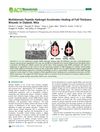
March 2018 in “ACS Biomaterials Science & Engineering” This study found that MDP hydrogel significantly accelerated wound healing and improved tissue formation in diabetic mice compared to a standard clinical hydrogel and control buffer.
 July 2026 in “International Journal of Aquatic Research and Environmental Studies”
 In this experimental study, researchers developed and optimized metformin-loaded mucoadhesive microspheres for sustained anti-hyperglycemic and anticancer activity, demonstrating high entrapment efficiency, enhanced α-amylase and α-glucosidase inhibition, improved cytotoxicity against breast cancer cells, and promising stability.
This study found that metformin treatment significantly decreased gremlin levels and improved insulin resistance in patients with polycystic ovary syndrome.
 4 citations
,
August 2025 in “Scientific Reports”
4 citations
,
August 2025 in “Scientific Reports” This study found that hair analysis is an effective non-invasive method for assessing metabolic fluctuations, showing stable advanced glycation end products levels that correlate with age and differ significantly between diabetic and non-diabetic rats.
3 citations
,
January 2016 in “Recent Advances in Biology and Medicine” This study observed that smeathxanthone A improved wound healing and reduced blood glucose levels in diabetic mice, suggesting potential benefits for tissue healing.
26 citations
,
September 2023 in “Bioengineered” This review article discusses recent progress in the extraction and potential health benefits of oligosaccharides from brown seaweeds, especially focusing on their antimicrobial, anti-inflammatory, and prebiotic properties, and possible applications in managing metabolic syndrome.
This study found that GPC1 is a significant regulator of angiogenesis in human dermal microvascular endothelial cells, suggesting its potential as a target for alopecia research.
July 2026 in “Journal of Pharmacy and Pharmacology” In this study, gelatin methacrylate hydrogel dressings co-loaded with resveratrol, 18-β-glycyrrhetinic acid, and berberine showed enhanced capabilities in wound closure, infection clearance, and skin structure regeneration in mice with infected wounds compared to dressings with single agents.