 April 2023 in “Tropical Animal Health and Production”
 Giving melatonin to sheep before the non-breeding season can improve their chances of reproducing in northwest Mexico.
 4 citations
,
August 2017 in “International journal of molecular sciences”
4 citations
,
August 2017 in “International journal of molecular sciences” This study observed two cases of pigmented epithelioid melanocytoma suggesting potential differing origins: one from a hair follicle's outer root sheath and another from an intradermal nevus.
7 citations
,
March 1990 in “Pigment Cell Research” This animal study observed that while topical MBEH and intraperitoneal phenol induced hair graying in eumelanic mice, they had little effect on pheomelanic mice, and amcinonide reduced certain epidermal melanocytes in both.
 1 citations
,
May 2023 in “International Journal of Applied Pharmaceutics”
1 citations
,
May 2023 in “International Journal of Applied Pharmaceutics” In this study, the researchers developed a novasome vesicle carrying bovine placenta extract, which demonstrated superior hair growth effects in rats compared to traditional minoxidil and PE-loaded liposomes, and showed good stability and physical characteristics over 90 days at 4°C.
 211 citations
,
May 2013 in “Journal of Nutrition Health & Aging”
211 citations
,
May 2013 in “Journal of Nutrition Health & Aging” This study found that while MK-0773 significantly increased lean body mass in sarcopenic frail elderly women, it did not significantly improve muscle strength or physical function compared to placebo.
18 citations
,
October 2019 in “Advanced Pharmaceutical Bulletin” This study found that finasteride microemulsions significantly increased skin permeability in vitro, highlighting the potential for enhanced delivery of this drug through the skin.
This study found that overexpression of antizyme in mice with activated MEK reduced skin tumor growth by inhibiting putrescine accumulation, slowing cell growth, and increasing G2/M transit time.
 April 2016 in “Journal of Investigative Dermatology”
 This study found that the peptide derivative beta-Ala-Pro-Dab-NHbenzyl may reduce wrinkles and sebum production in human skin by inhibiting dipeptidyl peptidase 4, suggesting potential for acne and skin inflammation treatment.
 April 2023 in “Journal of Investigative Dermatology”
 This study found that MPZL3 plays a crucial role in controlling sebaceous gland size and sebocyte proliferation in mice and humans, implicating its potential involvement in skin disorders like acne and psoriasis.
 December 2023 in “Medical Times”
 In this study, combining stromal cells and PRP resulted in a significantly higher cell count and volume than using a saline group, suggesting increased potential efficiency; however, clinical outcomes need further evaluation.
 1 citations
,
December 2016 in “Journal of Pakistan Association of Dermatology”
1 citations
,
December 2016 in “Journal of Pakistan Association of Dermatology” In this study, iontophoresis of medroxyprogesterone acetate significantly reduced hair growth rate in women with idiopathic facial hirsutism, without affecting serum androgen levels, and was well-tolerated as a treatment option.
This study observed that liposomes encapsulating minoxidil and PEP penetrate the skin at a slower rate but may reach deeper layers compared to a foam formulation.
7 citations
,
December 2024 in “International Journal of Pharmaceutics” In this study, researchers developed a new method for producing dissolving microneedle array patches containing mesoporous silica nanoparticles, successfully confirming nanoparticle deposition and release in both ex vivo and in vivo models.
 11 citations
,
May 2010 in “Journal of the South African Veterinary Association”
11 citations
,
May 2010 in “Journal of the South African Veterinary Association” This case report describes how a treatment with mycophenolate mofetil and prednisone may be effective in managing autoimmune subepidermal blistering dermatosis in dogs while allowing for steroid reduction.
 4 citations
,
August 2022 in “The Scientific World Journal”
4 citations
,
August 2022 in “The Scientific World Journal” This study found that bufotalinin, derived from Merremia peltata leaves, may enhance hair growth by acting as a potential androgen receptor antagonist in rabbits.

This study suggests that Tenebrio molitor larvae extract may promote hair growth and prevent hair loss by enhancing cell proliferation and protecting against cytotoxicity in laboratory settings.
29 citations
,
July 2008 in “British Journal of Dermatology” This case report examines a patient with myasthenia gravis, invasive thymoma, and paraneoplastic pemphigus associated with alopecia areata, notably without the usual mucosal involvement.
 October 2021 in “Journal of Investigative Dermatology”
 This study found no significant difference in SARS-CoV2 IgG seroconversion rates between patients with immune-mediated inflammatory diseases treated with targeted immune-modulating therapies and those on conventional systemic treatments.
 May 2022 in “Research Square (Research Square)”
 Melatonin improved sheep reproduction, being more beneficial and cost-effective in males.
 1 citations
,
October 2010 in “Series in cosmetic and laser therapy”
1 citations
,
October 2010 in “Series in cosmetic and laser therapy” Mesotherapy is a minimally invasive treatment with potential benefits and risks, requiring standardized practices and further investigation.
April 2020 in “Rice Research Repository (Rice University)” This study suggests that MultiDomain Peptide hydrogels may support wound healing in diabetic mice by accelerating closure and promoting tissue regeneration, though they did not inhibit bacterial growth in infected wounds as expected.
 66 citations
,
August 2011 in “Parasitology Research”
66 citations
,
August 2011 in “Parasitology Research” This study found that Mentha pulegium essential oil had a stronger protoscolicidal effect against Echinococcus granulosus in vitro than Mentha piperita, showing dose- and time-dependent effects.
 September 2011 in “Clinical Biochemistry”
 The demineralized bone matrix scaffold is better for cell attachment than the mineralized bone allograft.
 8 citations
,
November 1990 in “Archives of Dermatology”
8 citations
,
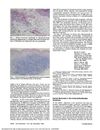
November 1990 in “Archives of Dermatology” This case report details a woman with eosinophilia-myalgia syndrome associated with L-tryptophan ingestion, highlighting skin lesions with abundant dermal mucin.
April 2013 in “The FASEB journal” This study observed that Platycarya strobilacea S. et Z. extract enhanced hair growth and improved hair follicle length and immune response in mice compared to control groups.
 12 citations
,
December 2009 in “Amino Acids”
12 citations
,
December 2009 in “Amino Acids” In this study, topical application of α-methylspermidine during the telogen phase in mice induced hair growth by increasing the polyamine pool and mimicking the anagen phase's characteristics.
 April 2015 in “Andrology”
 This special issue contains abstracts from the ASA 40th Annual Meeting, providing an overview of various studies without reporting new primary results.
July 1979 in “Archives of Dermatology” This case report describes a 68-year-old woman with benign mucous membrane pemphigoid and unusual keratotic plaques on her extremities, associated with longstanding mouth and eye symptoms and phalangeal swelling.
November 2005 in “CRC Press eBooks” This article reviews the development and challenges of skin penetration enhancers, highlighting their limitations in compatibility and safety, and reports no new clinical findings.
49 citations
,
July 2000 in “Journal of Histochemistry & Cytochemistry” This study found cell-specific variations in POMC mRNA and peptide expression in murine skin, suggesting that PC1 and PC2 convertases contribute to differential POMC processing.