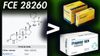
A Peptide Derivative with Known Anti-Wrinkle Properties Identified as Potent Dipeptidylpeptidase-4 Inhibitor

    D. Imfeld, Eileen Jackson, Eliane Wandeler, P. Lais, Remo Campiche
    Image
    Studysummary This study found that the peptide derivative beta-Ala-Pro-Dab-NHbenzyl may reduce wrinkles and sebum production in human skin by inhibiting dipeptidyl peptidase 4, suggesting potential for acne and skin inflammation treatment.
    Our plain-language summary. Not medical advice or a treatment recommendation. Consult a qualified healthcare professional before changing treatment. Full disclaimer
    The document reports on a peptide derivative (PD) beta-Ala-Pro-Dab-NHbenzyl, previously known for its anti-wrinkle properties due to its inhibition of the nicotinic acetylcholine receptor, which reduces muscular activity. This PD was found to be a potent inhibitor of dipeptidylpeptidase-4 (DPP-4), an enzyme expressed in skin cells and associated with conditions like sebaceous hyperplasia, follicular hyperkeratosis, and inflammation. The PD demonstrated an IC50 of 5μM in a cell-free DPP-4 enzyme inhibition assay and showed potential as a ligand in in silico docking studies. The PD's effects on sebum lipid production and anti-inflammatory interleukin-1 receptor antagonist (IL-1RA) were investigated ex vivo on sebaceous glands. Clinical data indicated that 85% of volunteers using a PD-containing formulation reported reduced skin reflection or shiny skin, compared to 60% with a placebo, suggesting a reduction in sebum secretion. These findings suggest new applications for the PD in treating skin inflammation and acne.
    Discuss this study in the Community →