 1 citations
,
January 2017 in “Journal of Clinical Trials & Patenting”
1 citations
,
January 2017 in “Journal of Clinical Trials & Patenting” This study assessed the safety and efficacy of Romantaque lotion for unwanted hair growth and found statistically significant hair growth inhibition with no adverse effects in 30 volunteers after repeated applications over one year.
 25 citations
,
June 2015 in “Clinical, Cosmetic and Investigational Dermatology”
25 citations
,
June 2015 in “Clinical, Cosmetic and Investigational Dermatology” This study found that using an electrical microneedling device enhanced the penetration of liposomal melanin-fluorescein into hair structures and widened the follicular infundibulum in ex vivo human skin models.
3 citations
,
July 2023 in “Cells” This study found that topical application of recombinant human MG53 protein mitigated nitrogen mustard-induced skin injuries in mice by preserving epidermal integrity and hair follicle structure.
4 citations
,
February 2023 in “Frontiers in Oncology” In this study, Nano-Pulse Stimulation Therapy successfully cleared up to 91% of melanoma tumors in mice with less skin damage compared to cryoablation, which cleared up to 66% of tumors.
15 citations
,
November 2018 in “Current radiopharmaceuticals” This study found that melatonin, when administered to Wistar rats prior to and after radiation exposure, reduced oxidative stress markers and histopathological damage in skin tissue compared to radiation alone, suggesting it may effectively prevent and treat radiation-induced skin injury.
 1 citations
,
November 1990 in “International Journal of Dermatology”
1 citations
,
November 1990 in “International Journal of Dermatology” This article reports no new findings; it discusses metastasis of an untreated thin melanoma in a very elderly patient.
October 2025 in “Molecular Genetics and Genomics” 
This study found that Meshushit, a new herbal ointment, enhanced granulation tissue formation and hair follicle preservation in treated burns compared to a control in an animal model.
 2 citations
,
November 2023 in “Bioactive materials”
2 citations
,
November 2023 in “Bioactive materials” The researchers reported that a newly developed ionic liquid-based microemulsion significantly improved the local delivery of copper peptides in mice, enhancing hair growth-related factor activation while offering a safer, non-invasive alternative to existing treatments for hair loss.
11 citations
,
August 2006 in “Cell Biology International” This study found that endothelin-1 increases adhesion and chemotaxis of amelanotic melanocytes on fibronectin, laminin, and collagen IV, potentially through changes in the actin cytoskeleton.
1 citations
,
January 1988 In this study, topical dehydroepiandrosterone (DHEA) doubled sebum production in women without systemic side effects, suggesting it may be a safe treatment for reduced sebum output related to menopause.
1 citations
,
May 2010 in “Chinese journal of plastic surgery” This study found higher expression of melatonin receptors in fibroblasts of human hypertrophic scars compared to normal skin, suggesting a possible link to scar development.
2 citations
,
October 2021 in “Journal of Cosmetic Dermatology” In this randomized trial, the researchers observed that both montelukast and finasteride effectively reduced acne severity and lesion count in women with moderate acne, but finasteride showed greater efficacy. Both medications had transient, non-serious side effects, indicating satisfactory tolerability and safety.
 51 citations
,
January 2004 in “Domestic animal endocrinology”
51 citations
,
January 2004 in “Domestic animal endocrinology” This study concluded that an endogenous circannual rhythm of prolactin secretion in mouflon influences their seasonal hair growth and moulting cycle, which varies under different photoperiodic and melatonin treatments.
 May 2008 in “The International Conference on Mathematics and Engineering Physics”
 This study reports that combining low level laser treatment with liposome-delivered methylene blue may effectively target sebaceous glands in mice, with efficacy influenced by laser timing and drug absorption.
 January 2022 in “International Journal of Nutrology”
 This review discusses the potential role of nutritional supplements, like lycopene and tranexamic acid, in managing melasma during the COVID-19 pandemic but reports no new clinical outcomes.
159 citations
,
July 2014 in “Molecular pharmaceutics” This study found that MPEG-dihexPLA micelles significantly improved the skin deposition of tacrolimus compared to a marketed ointment, suggesting better targeted delivery with reduced systemic absorption.
 14 citations
,
July 2012 in “Journal of the American Academy of Dermatology”
14 citations
,
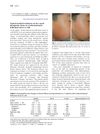
July 2012 in “Journal of the American Academy of Dermatology” This study found that topical tacalcitol improved roughness and scaling in erythromelanosis follicularis faciei et colli, although it was less effective for facial erythema.
 21 citations
,
January 2023 in “Biomaterials Science”
21 citations
,
January 2023 in “Biomaterials Science” This study investigated the use of dissolving microneedle patches to improve the skin-lightening effects of alpha-arbutin and resveratrol, finding that the patches enhanced intradermal delivery and slightly decreased the melanin index without affecting skin hydration or causing irritation over 24 hours.
1 citations
,
May 2024 in “Pediatric Blood & Cancer” In this case study, a transition to the MEK inhibitor trametinib successfully stabilized disease and reduced toxicity in a patient with refractory kaposiform lymphangiomatosis after prolonged sirolimus and steroid treatment.
 29 citations
,
November 2014 in “Experimental Dermatology”
29 citations
,
November 2014 in “Experimental Dermatology” This study found that α-MSH administration before skin wounding in adult mice reduced inflammation and scar area, suggesting a potential pathway to more regenerative healing.
 109 citations
,
October 2007 in “Journal of pineal research”
109 citations
,
October 2007 in “Journal of pineal research” This study suggests that melatonin plays a role in hair follicle function by modulating growth and pigmentation, and it may act as a protective agent in active hair growth phases.
 1 citations
,
January 2015 in “Journal of Pigmentary Disorders”
1 citations
,
January 2015 in “Journal of Pigmentary Disorders” This review discusses the complex relationship between melasma and factors like female sex hormones, genetics, and ultraviolet light exposure, but reports no new clinical findings.
 28 citations
,
January 2003 in “Skin pharmacology and physiology”
28 citations
,
January 2003 in “Skin pharmacology and physiology” This study found that melatonin's effect on HaCaT keratinocyte proliferation varied with concentration and incubation time, with no cytotoxic effects observed at suitable concentrations for skin treatment.
1 citations
,
June 1999 in “American Journal of Contact Dermatitis” In this study, tazarotene 0.1% gel showed greater efficacy than tretinoin 0.025% gel in reducing acne lesions and demonstrated similar efficacy to adapalene 0.1% gel when used less frequently.
40 citations
,
January 2013 in “Clinical Cosmetic and Investigational Dermatology” In this study, niacinamide 4% and desonide 0.05% emulsions significantly improved axillary hyperpigmentation in women, with desonide demonstrating a superior depigmenting effect compared to niacinamide and placebo.
 2 citations
,
April 2023 in “South East European Journal of Immunology”
2 citations
,
April 2023 in “South East European Journal of Immunology” This pilot study found elevated levels of leptin and other proinflammatory molecules in the serum of melanoma patients, suggesting a potential role for leptin in melanoma progression and a possibility for targeting it in adjuvant therapy.
 26 citations
,
March 2015 in “American journal of clinical dermatology”
26 citations
,
March 2015 in “American journal of clinical dermatology” This study found that systemic mycophenolate mofetil and topical clobetasol were equally effective at reducing lichen planopilaris activity over six months, but satisfaction differed between the treatments.
10 citations
,
July 2022 in “Journal of Cosmetic Dermatology” This study suggests that Medicago sativa extract, combined with UVA light, may enhance pigmentation in hypopigmented skin and hair, offering potential treatment for vitiligo.
16 citations
,
April 1998 in “Journal of Investigative Dermatology” ACTH promotes hair growth in mink, but α-MSH does not.