January 2026 in “Current Issues in Molecular Biology” This study found that transfecting alpaca melanocytes with miR-5110 altered gene expression related to pigmentation, specifically identifying pathways like MAPK and Wnt as involved in melanogenesis regulation, providing insights into miR-5110's role in pigmentation processes.
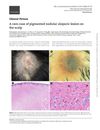
This study reported the case of a 30-year-old man with a bluish-grey scalp nodule that developed over a previously stable hairless plaque, revealing histopathological features consistent with epithelioid cell nests and spindle-shaped dermal melanocytes embedded in collagen.
January 2004 in “Linchuang pifuke zazhi” This study identified specific genes that are more abundantly expressed in black hair than in gray hair, with black hair displaying higher expression of pigment-related proteins and gray hair showing increased expression of keratin-related genes.
56 citations
,
December 2010 in “The journal of investigative dermatology/Journal of investigative dermatology” This study suggests that the susceptibility of hair follicle melanocytes to oxidative stress as they age may be key in the graying of hair due to reduced catalase expression and activity.
 January 2025 in “Cellular and Molecular Life Sciences”
 Using mouse hair follicle organoids, this study demonstrated that BMP4 plays a key role in controlling hair follicle coloration and growth, as well as directing Nestin-positive stem cells towards becoming melanocytes, the pigment-producing cells responsible for hair color.
 222 citations
,
January 2005 in “Endocrine journal”
222 citations
,
January 2005 in “Endocrine journal” This article discusses the potential role of melatonin in protecting skin against stress and maintaining homeostasis, based on its local synthesis and various protective functions, but presents no new clinical results.
September 2024 in “Pigment Cell & Melanoma Research” This study found that mitochondrial fusion regulator Opa1 is crucial for maintaining melanocyte stem cells during the hair follicle cycle in mice, with Opa1 deficiency leading to impaired SCF-KIT signaling, reduced melanocyte populations, and early hair graying.
 2 citations
,
May 2023 in “Photobiomodulation, photomedicine, and laser surgery”
2 citations
,
May 2023 in “Photobiomodulation, photomedicine, and laser surgery” This editorial reviews how photobiomodulation therapy might effectively treat both hyperpigmentation and depigmentation skin disorders, but reports no new clinical results.
This review discusses forensic DNA phenotyping and its potential applications, particularly for human identification in Latin American populations, but notes challenges due to genetic diversity and reports no new results.
10 citations
,
May 2023 in “iScience” In this study, researchers found that Sox9 is critical for determining whether Nestin+ stem cells in adult mouse skin develop into melanocytes or glial cells, offering insights into possible paths for melanoma research.
In this study, mangosteen pericarp extract was found to promote hair dermal papilla cell proliferation and enhance melanin synthesis, suggesting its potential as an ingredient in hair growth and tanning products.
177 citations
,
November 2002 in “British journal of dermatology/British journal of dermatology, Supplement” In this study, stable types of leucoderma such as segmental vitiligo and piebaldism showed 100% repigmentation after melanocyte transplantation, suggesting surgery as the preferred method for these conditions.
March 2026 in “Journal of Investigative Dermatology” 1 citations
,
June 2025 in “Journal of Cellular and Molecular Medicine” This study explored the role of plant-derived monomers in reversing grey hair, finding that compounds like fraxinol and morin may stimulate melanin production and tyrosinase activity, suggesting potential therapeutic benefits, although further evaluation of their safety and efficacy is needed.
6 citations
,
January 2019 in “Indian Journal of Pharmacology” In this case study, a 14-year-old female with premature hair graying showed improved hair color after treatment with a topical Melitane 5% formulation and oral hair supplements.
 August 2025 in “Annals of Medicine”
 This study found that mycophenolate mofetil can enhance skin pigmentation in vitiligo models by activating the WNT signaling pathway and increasing melanin-related gene expression.
 April 2023 in “Dermatology practical & conceptual”
 This study concluded that lenalidomide significantly induces the proliferation and migration of melanocyte stem cells, enhancing their differentiation into functional melanocytes in a mouse model.
1 citations
,
May 2011 in “DOAJ (DOAJ: Directory of Open Access Journals)” In this study, researchers detected all three genotypes associated with the MLPH gene's R199H polymorphism in a population of Czech pointer dogs, which is linked to coat color dilution.
 November 2022 in “Journal of Investigative Dermatology”
 This study developed a chalcone-based molecule that significantly increased tyrosinase inhibition and solubility, showing potential as a safe and effective skin depigmenting and antiaging agent, with supportive epigenetic and antioxidant properties observed in vitro.

In this study, researchers found that melanoma risk factors and characteristics vary with age, noting distinct differences in younger, middle-aged, and older patients, with strong correlations in the oldest group.
21 citations
,
February 2006 in “Clinical Cancer Research” This commentary discusses how microphthalmic-associated transcription factor levels in circulating tumor cells correlate with melanoma progression and suggests the factor may be up-regulated in vivo, but it reports no new clinical results.
 February 2009 in “Springer eBooks”
 Hyperpigmentation is common in pregnancy and may not fully fade after birth; melasma, also frequent, can persist but has limited treatment options during pregnancy.
 March 2026 in “Preprints.org”
 In this study, plerixafor was found to enhance melanogenesis and promote repigmentation by engaging a β-arrestin–β-catenin–MITF signaling axis in melanocytes, and showed effectiveness in restoring depigmentation in a murine model without causing systemic toxicity.
September 2016 in “Journal of Dermatological Science” Polarizing light microscopy can easily and reliably diagnose congenital keratinizing disorders like Netherton syndrome.
4 citations
,
June 2024 in “Animals” This review examines the genetic factors influencing coat color in horses and donkeys, highlighting key genes like MC1R, TYR, MITF, ASIP, and KIT, and discusses implications for selective breeding and the relationship between coat color and specific equine diseases.
14 citations
,
July 2019 in “Journal of Investigative Dermatology” In this study, targeted inactivation of the integrin-linked kinase gene in melanoblasts led to defects in cell migration, proliferation, and ability to populate the skin, implicating an integrin-linked kinase-Rac1 connection in melanocyte function.
August 2026 in “Regenerative Biomaterials” This review examines human-relevant in vitro models for studying pigmentation disorders, identifying both challenges and advancements in replicating human pigmentation processes and disease-specific pathology in vitro.
3 citations
,
June 2025 in “Stem Cell Research & Therapy” Hair follicle-derived melanocyte transplant could effectively treat vitiligo by restoring skin color.
 11 citations
,
May 2021 in “Journal of Cosmetic Dermatology”
11 citations
,
May 2021 in “Journal of Cosmetic Dermatology” This review discusses the potential use of platelet-rich plasma for treating melasma, suggesting its effectiveness but noting the need for more extensive studies to confirm these findings.
12 citations
,
December 1981 in “Journal of Endocrinology” This study found that α-melanocyte-stimulating hormone increased melanin production in hair follicles of moulting Siberian hamsters, whereas [8-arginine]-vasotocin inhibited melanin production without affecting tyrosinase activity.