February 2023 in “Journal of Cutaneous Pathology” This case report describes an adult female with concurrent mycosis fungoides and papillary dermal elastolysis, highlighting the importance of considering rare presentations in differential diagnoses.
10 citations
,
January 2016 in “ACG Case Reports Journal” This case report describes a 73-year-old male with numerous colon polyps whose long-term use of Cape Aloe likely caused melanosis coli, which helped highlight the polyps' locations.
26 citations
,
February 2022 in “Journal of pineal research” This review examines melatonin's potential effects on human skin and hair follicle pigmentation, highlighting the need to confirm findings from cell cultures in physiological tissue contexts.
April 2023 in “International Journal of Pharmaceutics” In this study, melatonin-loaded Pickering emulsions stabilized by chitosan-dextran sulphate nanoparticles and enhanced with lecithin showed improved photostability, antioxidant activity, and follicular delivery in androgenic alopecia-affected rats, potentially rivaling commercial minoxidil for hair loss treatment.
 31 citations
,
April 2019 in “Cell reports”
31 citations
,
April 2019 in “Cell reports” This study found that human iPSC-derived melanocytes from vitiligo patients successfully integrated into mouse hair follicles and epidermis, demonstrating potential for personalized therapy for depigmentation.
February 2017 in “Developmental Cell” This study reported that mammary stem cells in terminal end buds of the mammary gland primarily contribute to branching morphogenesis through dynamic positional regulation and cellular rearrangement.
1 citations
,
August 2022 in “Pigment Cell & Melanoma Research” This study presents two new mouse models using the CreER T2-loxP system to target and study melanocytic cells, with implications for melanoma research.
 9 citations
,
February 2022 in “BMC Genomics”
9 citations
,
February 2022 in “BMC Genomics” This study examined gene expression in cashmere goats and identified key pathways and molecular regulators that influence hair follicle growth stages and melatonin's role in promoting cashmere growth.
 June 2021 in “Research Square (Research Square)”
 This study reports that melatonin influences gene expression related to cashmere growth cycles in Inner Mongolian cashmere goats, potentially aiding in understanding and enhancing cashmere yield through molecular regulation.
74 citations
,
January 2020 in “Frontiers in Genetics” In this study, the researchers identified key genes with differential m6A methylation involved in cashmere fiber growth, suggesting these modifications may play a significant role in this process.
 1 citations
,
March 2015 in “Journal of the European Academy of Dermatology and Venereology”
1 citations
,
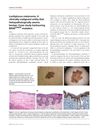
March 2015 in “Journal of the European Academy of Dermatology and Venereology” This letter to the editor shares a case study of lentiginous melanoma that appears clinically malignant but histopathologically benign, involving the BRAFV600R mutation.
 3 citations
,
September 2022 in “Frontiers in veterinary science”
3 citations
,
September 2022 in “Frontiers in veterinary science” This study identified key genes and signaling pathways involved in cashmere goat hair follicle growth cycles, influenced by melatonin implantation, suggesting a basis for further research on melatonin's regulatory mechanism.
118 citations
,
January 1992 in “Experientia” 3 citations
,
October 2020 in “Journal of Investigative Dermatology” This study established that the Dct::CreERT2 mouse line is effective for targeting and studying adult melanocyte stem cells, contributing to the understanding of melanocyte biology and hair pigmentation.
18 citations
,
March 2015 in “Journal of Investigative Dermatology” In this study, silencing BMAL1 and PER1 genes increased melanogenic activity in follicular and epidermal melanocytes, suggesting that peripheral circadian clocks may regulate melanin pigmentation.
 October 2023 in “Medical records-international medical journal”
 In this study, researchers sought to explore whether there is a correlation between melasma and ABO/Rh blood types, using data from 100 patients with melasma and 1000 healthy controls.
 93 citations
,
October 2006 in “The International Journal of Biochemistry & Cell Biology”
93 citations
,
October 2006 in “The International Journal of Biochemistry & Cell Biology” This review discusses melanocyte biology and its genetic and molecular basis, highlighting its relevance in understanding diseases like vitiligo and albinism, and reports no new findings.
 January 2014 in “Sen'i Gakkaishi”
 This study highlights that dyeing and other processing methods can impact the identification of animal species from hair fibers using an amino acid sequence analysis technique.
26 citations
,
September 2012 in “Cell Reports” In this study, knockout of B-raf and C-raf genes in mice showed they are not needed for early melanocyte development, but are crucial for maintaining melanocyte stem cells, as evidenced by hair graying due to stem cell depletion.
This study observed that melatonin significantly increases FGF5 expression in cashmere goat skin, which may influence hair growth-related gene interactions differently than in other animals.
43 citations
,
March 2017 in “Drug Design Development and Therapy” The researchers reported that a new nanoformulation of paclitaxel-loaded nanoparticles showed superior antitumor effects against malignant melanoma in vitro and in vivo compared to the commercial formulation Taxol®.
August 2024 in “International Journal of Cosmetic Science” This study found that acetyl zingerone methyl ether (MAZ) in hair dyes and haircare products may reduce oxidative damage, improve hair condition, and enhance the longevity and quality of dyed hair color.
1 citations
,
November 2024 in “Life” In this study, Desmodesmus pannonicus water extract demonstrated significant antioxidative properties, inhibited melanin production, promoted wound healing in human keratinocyte cells, and showed potential for hair growth enhancement in human follicle dermal papilla cells, suggesting its promise for future dermatological applications.
January 2000 in “The Mouseion at the JAXlibrary (Jackson Laboratory)” This study identified a new mouse mutation associated with noninflammatory proliferative skin disease and hair abnormalities, drawing parallels to human conditions like Netherton's syndrome and monilethrix.
 July 2025 in “ACS Pharmacology & Translational Science”
 In this study, maslinic acid applied topically was observed to stimulate hair growth in mice comparably to minoxidil, primarily activating pathways like Wnt/β-catenin, and suggesting a link between hair growth and cilia activity.
 58 citations
,
February 2016 in “Scientific reports”
58 citations
,
February 2016 in “Scientific reports” This study found that dual inhibition of BACE1 and BACE2 in mice affects melanosome maturation and causes dose-dependent hair depigmentation without altering retinal morphology.
 April 2024 in “Pigment cell & melanoma research”
 This study explored the diversity of melanocyte stem cell subpopulations in the hair follicles of adult female mice and identified novel groups with distinct immune privilege regulation, suggesting a heterogeneous landscape that future research should consider.
 1 citations
,
January 2015 in “Journal of Pigmentary Disorders”
1 citations
,
January 2015 in “Journal of Pigmentary Disorders” This article reviews melasma in men, its causes, and treatment options, but reports no new clinical findings.

In this laboratory study, the methanolic extract of Eclipta alba demonstrated significant anthelmintic activity against earthworms (Pheretima posthuma), causing paralysis and death at doses of 50-100 mg/ml, with stronger effects observed at higher concentrations compared to the standard treatment, albendazole.
34 citations
,
December 1984 in “Journal of Cutaneous Pathology” This study observed that the thinning and structural abnormalities in monilethrix-affected hair occur at the internodes due to possible periodic dysfunction of the hair matrix, particularly in the cortex.