113 citations
,
May 2007 in “Journal of the American Academy of Dermatology” This study suggests that tetracycline may be more effective for treating lichen planopilaris than previously thought, alongside topical high-potency and intralesional corticosteroids.
 July 2023 in “Dermatology Practical & Conceptual”
 This study found that a positive anagen pull test can be an indicator of lichen planopilaris activity, suggesting its utility in the clinical assessment of this condition.
2 citations
,
September 2025 in “Future Journal of Pharmaceutical Sciences” This study reviewed the potential of Lupeol, a natural triterpenoid, in promoting hair growth and reducing inflammation related to alopecia, revealing promising molecular pathways and favorable pharmacokinetics while suggesting further research to validate these findings.
April 2022 in “International Journal of Health Sciences (IJHS)” This study found that combining low-level light therapy with platelet-rich plasma significantly improved hair parameters in men with androgenic alopecia, although most improvements decreased after treatment stopped.
 94 citations
,
October 2017 in “International Journal of Dermatology”
94 citations
,
October 2017 in “International Journal of Dermatology” This narrative review discusses lichen planus pigmentosus, including its variations, associated triggers, and management strategies, but reports no new clinical results.
6 citations
,
December 2021 in “Journal of Clinical Medicine” This study introduced the Lichen Planus Activity and Damage Index (LiPADI), which effectively assesses the severity and progression of lichen planus, aligning well with other clinical indicators.
 24 citations
,
January 2019 in “Theranostics”
24 citations
,
January 2019 in “Theranostics” This study found that loss of the Pten gene in Lgr5+ hair follicle stem cells promoted squamous cell carcinoma formation through the Akt/β-catenin signaling pathway.
June 2024 in “Cermin Dunia Kedokteran” This review discusses the benefits and applications of low level laser therapy in cosmetic dermatology, particularly for skin conditions and pigmentation disorders, but reports no new clinical results.
 September 2024 in “Research Square (Research Square)”
 This study found that bi-weekly 1550nm low-level laser therapy significantly improved hair loss conditions and scalp health in participants, suggesting its potential as an effective non-invasive treatment option.
 11 citations
,
January 2020 in “Skin appendage disorders”
11 citations
,
January 2020 in “Skin appendage disorders” This study reviewed clinical trials and found that low-level laser therapy significantly increased hair diameter or density in both men and women with pattern hair loss compared to a sham device, though the involvement of industry relationships in some studies suggests cautious interpretation.
 April 2023 in “The journal of investigative dermatology/Journal of investigative dermatology”
 This study suggests that the expression and localization of toll-like receptors and caveolin-1 in lichen planopilaris may influence cicatricial alopecia pathobiology and that downregulating caveolae could offer a novel management strategy.
5 citations
,
February 2022 in “Stem cell reports” This study found that thymic stromal lymphopoietin (TSLP) promotes hair growth after skin injury by enhancing the proliferation of specific stem cells in hair follicles.
 5 citations
,
August 2025 in “Drug Delivery and Translational Research”
5 citations
,
August 2025 in “Drug Delivery and Translational Research” This review discusses lipid-polymer hybrid nanoparticles for dermatological applications, outlining their structural and formulation advancements, but reports no new clinical results and calls for further research on their therapeutic potential.
December 2018 in “Zenodo (CERN European Organization for Nuclear Research)” This review of low-level laser therapy for patterned hair loss found that red-spectrum light may be effective for hair growth, but larger case-controlled studies are needed to further support this conclusion.
1 citations
,
August 2016 in “Pan Stanford Publishing Pte. Ltd. eBooks” This chapter reviews low-level light therapy for hair growth and loss prevention but reports no new clinical results, providing an overview of mechanisms, treatments, and future perspectives.
 1 citations
,
January 2022 in “Open Access Macedonian Journal of Medical Sciences”
1 citations
,
January 2022 in “Open Access Macedonian Journal of Medical Sciences” This study observed that PRP treatment resulted in greater improvement in hair thickness and density in alopecia areata patients compared to LLLT, with benefits sustained over 12 weeks.
 3 citations
,
May 2022 in “Clinical and experimental dermatology”
3 citations
,
May 2022 in “Clinical and experimental dermatology” This review discusses potential EMT-targeting drugs for treating lichen planopilaris and emphasizes the need for clinical trials, as current evidence is limited to individual cases or case series.
10 citations
,
October 2009 in “Photomedicine and laser surgery” This study found that intense pulsed light treatment achieved a mean of 85% hair reduction in two patients with faun tail, although local anesthesia may be needed due to severe pain associated with neurological abnormalities.
January 2026 in “Forum Dermatologicum” This study reviewed cases of Graham–Little-Piccardi–Lassueur syndrome and found that topical treatments were generally ineffective, while systemic therapies like prednisone, hydroxychloroquine, and isotretinoin led to partial hair regrowth and disease stabilization, highlighting the importance of early diagnosis and systemic therapy to improve outcomes.
 January 2018 in “Clinical approaches and procedures in cosmetic dermatology”
 This review discusses clinical studies on low-level laser therapy for various types of hair loss and suggests it may be promising for those unresponsive to conventional treatments, but reports no new clinical results.
 1 citations
,
April 2018 in “The journal of investigative dermatology/Journal of investigative dermatology”
1 citations
,
April 2018 in “The journal of investigative dermatology/Journal of investigative dermatology” This study found that oral tofacitinib improved disease activity in patients with lichen planopilaris, suggesting it may be a promising treatment option for this condition.
 160 citations
,
December 2016 in “Journal of biophotonics”
160 citations
,
December 2016 in “Journal of biophotonics” This review discusses the evolution and potential of photobiomodulation therapy, highlighting its transition from skepticism to recognition in medical research; it reports no new experimental findings.
 July 1998 in “Proceedings of SPIE”
 This study found that Low Power Laser therapy may be an effective complementary treatment for scalp alopecia and crural ulcers, showing quicker and potentially better results than conventional treatments.
 February 2023 in “Journal of Ginseng Research/Journal of ginseng research”
 This review discusses the formation of gintonin LPAs in ginseng during processing and reports no new clinical results; the authors suggest potential benefits against degenerative diseases through LPA receptors.
 21 citations
,
August 2013 in “Journal of Dermatological Treatment”
21 citations
,
August 2013 in “Journal of Dermatological Treatment” This review discusses the mixed evidence and high risk of bias in studies on low-level light therapy for treating androgenetic alopecia and calls for rigorous randomized controlled trials to assess its efficacy.
 June 2001 in “Proceedings of SPIE”
 The authors concluded that low energy laser therapy may serve as a useful complementary treatment for skin diseases such as lichen planus, infectious finger pulpits, scalp alopecia, and crural ulcers.
 2 citations
,
October 2014 in “International Journal of Trichology”
2 citations
,
October 2014 in “International Journal of Trichology” Low-level laser therapy may increase hair density in pattern hair loss.
 April 2012 in “Informa Healthcare eBooks”
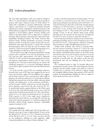
 Lichen planopilaris is a rare, chronic condition causing hair loss, mainly in middle-aged women, and early treatment is important to prevent permanent baldness.
June 2026 in “British Journal of Dermatology” This case study documented the first known instance of biopsy-confirmed lichen planopilaris occurring after hairline-lowering surgery in a patient without prior history, highlighting a potential complication where surgical trauma may trigger immune-mediated hair loss.
 155 citations
,
June 2009 in “International Journal of Dermatology”
155 citations
,
June 2009 in “International Journal of Dermatology” This extensive review discusses the clinical manifestations, potential associations, and treatment approaches for lichen planus, but reports no new clinical results, highlighting gaps in evidence for therapeutic strategies.