28 citations
,
September 2020 in “International Journal of Molecular Sciences” This study concluded that leucocyte-rich PRP has a continuous stimulatory effect on human fibroblast cells, enhancing their proliferation, migration, and impacting gene expression of the extracellular matrix and adhesion molecules.
15 citations
,
April 2025 in “Journal of Clinical Medicine” This review reports that platelet-rich plasma may be more effective for musculoskeletal conditions when prepared with high platelet doses and low leukocyte content, but further trials are needed to confirm optimal formulations.
2 citations
,
November 2025 in “Biomedicines” This review explores how platelet- and marrow-derived biologics like PRP and BMAC exhibit both regenerative and antimicrobial properties useful in musculoskeletal conditions and wound healing, though their clinical outcomes are affected by preparation inconsistencies and lack of standardized protocols.
May 2025 in “The Open Biomedical Engineering Journal” This review discusses the use of adipose tissue and platelet-rich plasma in tissue repair and regeneration, noting their promise in surgical outcomes but emphasizing the need for further research to optimize therapies.
 58 citations
,
January 2020 in “International Journal of Molecular Sciences”
58 citations
,
January 2020 in “International Journal of Molecular Sciences” This review evaluates various kits for isolating platelet-rich plasma using established processing standards and finds they enable compliance with consensus quality criteria; ongoing research is needed to refine these procedures for improved consistency and safety.
 17 citations
,
March 2021 in “Expert Opinion on Biological Therapy”
17 citations
,
March 2021 in “Expert Opinion on Biological Therapy” This review analyzes the impact of different preparation methods for platelet-rich plasma, human follicles stem cells, and adipose-derived stem cells on hair regrowth and wound healing, but reports no new results; the authors emphasize convincing evidence of positive outcomes despite protocol variability.
 17 citations
,
April 2020 in “Dermatology and Therapy”
17 citations
,
April 2020 in “Dermatology and Therapy” In this randomized double-blind study, 160 adults with alopecia areata showed significant improvements in hair loss severity after using a bioactive peptide cosmetic product that mimics platelet-rich plasma, while the placebo group showed no significant change, underlining the treatment's potential effectiveness.
 March 2026 in “Frontiers in Pharmacology”
 The study concluded that the Exprecell™ device for preparing anticoagulant-free f-PRF increases volume yield and simplifies the process while maintaining biological activity comparable to conventional methods, suggesting potential clinical utility.
 January 2026 in “Archives of Internal Medicine Research”
 This review examines how regenerative therapies targeting shared biological pathways can promote healing in musculoskeletal disorders and hair follicle dysfunction, highlighting modalities like platelet-rich plasma and laser therapy while addressing challenges in standardization and measurement.
 37 citations
,
August 2014 in “Journal of experimental botany”
37 citations
,
August 2014 in “Journal of experimental botany” This study identified the AtPRPL1 gene in Arabidopsis thaliana as being involved in cell elongation processes, despite unclear changes in cell wall composition from its altered expression.
 2 citations
,
July 2024 in “Cureus”
2 citations
,
July 2024 in “Cureus” This review discusses the potential benefits of using autologous endometrial cells and PRP via hysteroscopic injections to improve pregnancy outcomes in ART, particularly in individuals with refractory thin endometrium, but reports no new clinical results.
 3 citations
,
March 2023 in “National Journal of Health Sciences”
3 citations
,
March 2023 in “National Journal of Health Sciences” This article reviews the potential of platelet-rich plasma therapy in managing diabetic foot ulcers but reports no new clinical findings, highlighting the need for further controlled trials to evaluate its effectiveness.
November 2025 in “International Journal of Molecular Sciences” This review covers the diverse clinical applications of platelet-rich plasma in regenerative medicine but provides no new clinical results.
 September 2025 in “Dermatology and Therapy”
 This systematic review and meta-analysis found that platelet-rich plasma (PRP) therapy is effective in increasing hair density and reducing hair loss for alopecia, with variations in response based on activation status.
January 2025 in “Open Science Framework” AA-PRP temporarily increases hair density in androgenetic alopecia but loses effectiveness over time.
5 citations
,
January 2020 in “Acta dermatovenerologica Alpina, Pannonica et Adriatica (Tiskana izd.)” This study found that PRP was effective for treating alopecia areata with similar improvement across groups, while topical delivery via fractional CO2 laser or microneedling reduced injection pain.
 29 citations
,
September 2020 in “International Journal of Molecular Sciences”
29 citations
,
September 2020 in “International Journal of Molecular Sciences” This review outlines the current state of freeze-dried platelet-rich plasma (FD-PRP) research, emphasizing its use in wound healing, lumbar fusion, knee conditions, and dentistry, but reports no new clinical findings.
 22 citations
,
January 2015 in “Actas dermo-sifiliográficas/Actas dermo-sifiliográficas”
22 citations
,
January 2015 in “Actas dermo-sifiliográficas/Actas dermo-sifiliográficas” This review discusses the increased use of platelet-rich plasma in dermatology for conditions like skin ulcers and alopecia but reports no new clinical results, emphasizing the need for more scientific evidence to support its benefits.
 15 citations
,
May 2020 in “Journal of Dermatological Treatment”
15 citations
,
May 2020 in “Journal of Dermatological Treatment” This systematic review and meta-analysis found that platelet-rich plasma treatments improved hair density and thickness in people with androgenetic alopecia, without serious adverse effects.
 1 citations
,
August 2023 in “Bioengineering”
1 citations
,
August 2023 in “Bioengineering” This review explores the potential benefits of platelet-rich plasma for anti-aging and tissue regeneration, especially in orthopedic applications like osteoarthritis, but it reports no new clinical results.
 May 2026 in “International Journal of Drug Delivery Technology”
 This review discusses PRP therapy's history, mechanisms, and innovations in its use across various medical fields, but provides no new clinical results; the authors highlight challenges like standardization and regulatory issues.
 March 2026 in “Trends in Sciences”
 This review suggests that while platelet-rich plasma has the most robust clinical evidence, platelet-rich fibrin and concentrated growth factors are gaining favor due to their ease of use and absence of additives.
 January 2026 in “Frontiers in Cell and Developmental Biology”
 This review discusses the molecular mechanisms and clinical applications of autologous platelet-derived products for TMJ regeneration, but reports no new clinical results.
 December 2025 in “Eastern Ukrainian Medical Journal”
 This study reviews current methods for making and using platelet-rich plasma and fibrin, emphasizing the variability in clinical outcomes due to differences in preparation protocols, and calls for standardized guidelines and large-scale studies for better effectiveness in regenerative medicine.
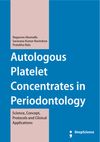
In this book, the authors provide an accessible overview of platelet concentrates and their dental applications, highlighting their role in tissue healing and regeneration, and reviewing recent studies on their efficacy in periodontal therapy, implant dentistry, and oral surgery.
 August 2025 in “Intisari Sains Medis”
 This study found that in healthy individuals, TGF-β1 levels in platelet-rich plasma are significantly higher when extracted using the buffy coat method compared to the pure method, with additional gender differences observed only in the buffy coat PRP.
 99 citations
,
July 2017 in “Clinical Reviews in Allergy & Immunology”
99 citations
,
July 2017 in “Clinical Reviews in Allergy & Immunology” This review noted that alopecia areata is an autoimmune disease impacting hair follicles and offered insights into its complex pathogenesis involving immune responses, while highlighting ongoing research into new treatments such as Janus kinase inhibitors and other immunomodulatory drugs.
 56 citations
,
January 2021 in “Clinical and Experimental Medicine”
56 citations
,
January 2021 in “Clinical and Experimental Medicine” This review highlights the challenges in treating alopecia areata, noting that current therapies often lead to relapse and have uncertain long-term effectiveness; it also points to potential future treatments such as JAK-STAT inhibitors and PRP.
 47 citations
,
October 2014 in “Expert Opinion on Emerging Drugs”
47 citations
,
October 2014 in “Expert Opinion on Emerging Drugs” This review discusses emerging treatments and mechanisms for alopecia, highlighting potential therapies like janus kinase inhibitors and advances in stem-cell technology, but reports no new experimental results.
 31 citations
,
January 2019 in “Journal of Cutaneous Medicine and Surgery”
31 citations
,
January 2019 in “Journal of Cutaneous Medicine and Surgery” This review found that three monthly PRP injections improved hair density in patients with androgenetic alopecia compared to placebo, but more rigorous studies are needed for broader dermatological applications.