11 citations
,
August 2010 in “Annals of plastic surgery” This study found a significant relationship between lash ptosis severity and marginal reflex distance, levator function, and double fold presence in Asian patients, which may inform surgical planning for upper eyelid procedures.
1 citations
,
December 2020 in “Medical lasers” The laser therapy device effectively increased hair growth in people with androgenetic alopecia.
June 2025 in “British Journal of Dermatology” This reported case of lichen planopilaris in siblings suggests a potential genetic predisposition, supporting the hypothesis of inherited susceptibility in this condition.
 15 citations
,
May 2015 in “Photomedicine and Laser Surgery”
15 citations
,
May 2015 in “Photomedicine and Laser Surgery” This review assesses low-level laser therapy in plastic surgery and reports that it may improve flap survival and burn scars, but lacks efficacy for venous ulcers, alopecia, and skin aging.
 1 citations
,
July 2021 in “Curēus”
1 citations
,
July 2021 in “Curēus” This case report describes a rare occurrence of lichen planopilaris in a nine-year-old child, emphasizing the need for awareness of this condition in the pediatric population.
3 citations
,
December 2024 in “Pediatric Dermatology” This review discusses the clinical and histopathologic features of pediatric lichen planopilaris and reports therapeutic responses to various treatments; the condition should be considered in cases of patchy hair loss in children.
253 citations
,
April 2009 in “Journal of Biological Chemistry” This study found that p2y5 functions as a novel LPA receptor involved in the G13-Rho signaling pathway, with implications for human hair growth, and proposes renaming it to LPA6.
January 2025 in “International journal of research studies in biosciences” This abstract discusses the prevalence and forms of lichen planopilaris, a type of scarring hair loss, but reports no new clinical findings.

This study found that patients with lichen planopilaris exhibit a higher pro-atherogenic lipid profile and elevated atherogenic indexes, suggesting a need for increased cardiovascular and lipid monitoring in these individuals.
 December 2024 in “Surgery and Clinical Practice”
 This study suggests that Low-level Laser Therapy may improve pain and quality of life in women with Chronic Pelvic Pain Syndrome, though larger studies are needed to confirm these findings.
 52 citations
,
February 2006 in “Archives of Dermatology”
52 citations
,
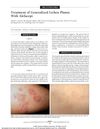
February 2006 in “Archives of Dermatology” This case report describes a 25-year-old woman with widespread lichen planus who did not respond to multiple systemic treatments, including antihistamines, hydroxychloroquine sulfate, and corticosteroids.
113 citations
,
May 2007 in “Journal of the American Academy of Dermatology” This study suggests that tetracycline may be more effective for treating lichen planopilaris than previously thought, alongside topical high-potency and intralesional corticosteroids.
January 2022 in “Clinical Cases in Dermatology” This article discusses the causes and treatment options for lichen planopilaris, a scarring hair loss condition, but reports no new clinical findings.
 January 2025 in “Journal of Plastic Reconstructive & Aesthetic Surgery”
 Two L-PRP treatments improve hair density in mild to moderate alopecia.
158 citations
,
June 2014 in “Journal of Lipid Research” This review summarizes recent discoveries of GPCRs for lysophosphatidylserine and lysophosphatidylinositol, detailing their roles as lipid mediators, but reports no new experimental results.
 16 citations
,
May 2000 in “Endocrinology”
16 citations
,
May 2000 in “Endocrinology” This study identified a new gene, mrp4, in mice, which suggests it may have a unique role in the growth and development of hair follicles in the ears and tails.
 March 2024 in “Case Reports in Dermatology”
 This report details a case where diffuse lichen planopilaris and female pattern hair loss in a 32-year-old woman mimicked diffuse alopecia areata, highlighting the diagnostic value of dermoscopy-guided biopsies and the importance of timely treatment to prevent disease progression.
August 2025 in “BMC Pharmacology and Toxicology” The LTF gene may help predict and manage nonspecific orbital inflammation.
3 citations
,
March 2024 in “iScience” This study found that long-lived proteins in mice, identified across various tissues, may be linked to neurodegenerative and cardiovascular diseases due to their low renewal rate and increased risk of damage.
 5 citations
,
November 2014 in “Hair transplant forum international”
5 citations
,
November 2014 in “Hair transplant forum international” This article introduces a series on low level laser light therapy, focusing on its science, regulatory aspects, and controlled trial methodologies, but reports no new clinical results.
 July 2018 in “Elsevier eBooks”
 This study highlights lichen planopilaris as a form of scarring hair loss with symptoms like shedding and itching, and notes successful treatment options such as topical and oral antiinflammatory medications to preserve hair follicles by early intervention.
19 citations
,
January 2015 in “International Journal of Cosmetic Science” This study reports that optimized PLA nanoparticles can effectively target hair follicles to deliver both lipophilic and hydrophilic compounds, suggesting potential applications in hair cosmetics and treatments.
35 citations
,
November 2019 in “Journal of the American Academy of Dermatology” This study reviewed 40 patients with scalp symptoms and identified a new variant of diffuse lichen planopilaris in 20 individuals, suggesting these conditions should be considered in similar cases.
 291 citations
,
January 2014 in “The Scientific World Journal”
291 citations
,
January 2014 in “The Scientific World Journal” Lichen Planus is a less common condition affecting skin and mucous membranes, with various types and associated risk factors, challenging to diagnose, significantly impacts life quality, and may have a risk of cancerous changes in oral lesions.
5 citations
,
August 2001 in “International Journal of Dermatology” This case study reports a 20-year-old laborer's progressive hair loss with scalp and body lesions, diagnosed as lichen planopilaris, leading to scarring alopecia resembling male-pattern baldness.
 1 citations
,
September 2016 in “Dermatologic Surgery”
1 citations
,
September 2016 in “Dermatologic Surgery” New hair loss subtype found, mimics common baldness.
2 citations
,
February 2021 in “Indian Dermatology Online Journal” This case report describes the first instance of classical lichen planopilaris with atrophic lichenoid plaques developing in a Blaschko-linear pattern due to imatinib treatment in a patient with chronic myeloid leukemia.
 1 citations
,
May 2015 in “Journal of The American Academy of Dermatology”
1 citations
,
May 2015 in “Journal of The American Academy of Dermatology” Lichen planus pigmentosus and fibrosing frontal alopecia in Colombia are likely different stages of the same disease.
July 2024 in “Skin Appendage Disorders” This review discusses the role of trichoscopy in diagnosing lichen planopilaris and reports no clinical results; the authors emphasize early recognition to potentially prevent permanent scarring.
 1 citations
,
December 2012 in “Dermatologic Surgery”
1 citations
,
December 2012 in “Dermatologic Surgery” Hair transplants can risk reactivating lichen planopilaris, a scarring hair loss condition.