 January 2024 in “Brazilian Journal of Hair Health”
 Combining low-level laser therapy with topical corticosteroids effectively improved Lichen Planopilaris symptoms.
21 citations
,
October 2007 in “Journal of Investigative Dermatology” Fetuin-A helps wounds heal without scars by promoting cell movement.
December 2024 in “Skin Appendage Disorders” This case report highlights the diagnostic challenges of distinguishing folliculotropic mycosis fungoides from alopecia areata and lichen planopilaris, emphasizing the importance of histopathological evaluation for accurate diagnosis and treatment.
This study identified the FGF5:c.578C>T variant as linked to long hair in Akitas in Japan and suggests that genetic testing could help improve their breeding practices and welfare.
 May 2015 in “Journal of The American Academy of Dermatology”
 Mycophenolate mofetil may improve symptoms and stop hair loss in Lichen planopilaris, but more research is needed.
 9 citations
,
January 2020 in “Skin appendage disorders”
9 citations
,
January 2020 in “Skin appendage disorders” This case report presents two instances where typically irreversible lichen planopilaris and frontal fibrosing alopecia showed signs of hair regrowth and symptom improvement following specific treatments.
 3 citations
,
September 2022 in “Archives of dermatological research”
3 citations
,
September 2022 in “Archives of dermatological research” In this study, fractional CO2 laser treatment for alopecia areata was found to significantly increase terminal hair and patient satisfaction compared to betamethasone valerate cream alone, highlighting its efficacy and safety both as a standalone and combined treatment.
 January 2019 in “LASER THERAPY”
 Laser technologies improve medical treatments and outcomes.
 November 2025 in “SKIN The Journal of Cutaneous Medicine”
 In this open-label study of post-menopausal women with frontal fibrosing alopecia, researchers found that 12 weeks of baricitinib monotherapy significantly reduced disease activity as measured by the Lichen Planopilaris Activity Index, improved patient-reported scalp hair growth, but showed no significant change in eyebrow growth.
1 citations
,
August 2023 in “Journal of Investigative Dermatology” Farudodstat may help treat alopecia areata by protecting hair follicles.
 November 2023 in “Indian Journal of Dermatology”
 This study from North-East India analyzed 21 cases of frontal fibrosing alopecia, noting a high prevalence in post-menopausal women and distinct histological features such as perifollicular lymphocytic infiltrate and hydropic degeneration.
 41 citations
,
November 2011 in “The Journal of Dermatology”
41 citations
,
November 2011 in “The Journal of Dermatology” This review identifies genetic mutations associated with congenital hair loss disorders in Japanese populations, particularly highlighting common LIPH gene mutations linked to woolly hair/hypotrichosis, and reports no new clinical results.
 November 2025 in “Pacific Journal of Medical Research”
 This study found that acute cutaneous lupus erythematosus, particularly malar rash, was the most common skin manifestation among SLE patients in Bangladesh, with significant occurrences of nonspecific lesions like alopecia and mucosal ulcers.
 4 citations
,
September 2017 in “Dermatologic surgery”
4 citations
,
September 2017 in “Dermatologic surgery” This article contains no new research findings or results.
8 citations
,
August 2023 in “Lasers in Surgery and Medicine” This study observed that treating acne scars with fractional ablative laser concurrently with isotretinoin improved outcomes more effectively compared to applying the laser 6 months after isotretinoin treatment ended, as measured by the Quantitative Global Acne Scarring Grading System.
January 2021 in “Asian Journal of Pharmaceutical and Clinical Research” This study examined the effectiveness of FT-Raman spectroscopy for detecting polymorphism in Lamivudine and Finasteride, highlighting its advantages over other methods due to its capability to provide sharp, well-resolved spectral bands and reduced sampling issues.
58 citations
,
March 2019 in “Frontiers in Pharmacology” This study found that wedelolactone from Eclipta prostrata L. significantly reduced lung inflammation and fibrosis in mice with bleomycin-induced pulmonary fibrosis, suggesting potential therapeutic benefits through AMPK activation.
10 citations
,
July 2014 in “Annals of Saudi Medicine” This case report describes a rare concurrence of Morbihan disease with eyelid edema and extrafacial lupus miliaris disseminatus faciei in a patient, noting improvement of truncal lesions with roxithromycin and resolution of eyelid edema following surgical treatment.
 2 citations
,
September 2014 in “PubMed”
2 citations
,
September 2014 in “PubMed” This review discusses low-level laser or light devices as an alternative treatment for androgenetic alopecia and highlights the need for further research to compare their efficacy with existing therapies.
 March 2024 in “Cytologia”
 In this study, researchers observed that melatonin-mediated LncRNA MTC in Liaoning cashmere goat skin fibroblasts enhances cell proliferation by interacting with the GSTM1 protein, affecting its complex formation with ASK1 and thereby inhibiting apoptosis, which may be relevant for improving cashmere growth.
 31 citations
,
April 2010 in “British journal of dermatology/British journal of dermatology, Supplement”
31 citations
,
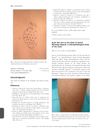
April 2010 in “British journal of dermatology/British journal of dermatology, Supplement” This report describes two patients with frontal fibrosing alopecia who developed acute hair loss on their limbs, revealing that the limb alopecia had similar histological features to scalp alopecia.
 May 2024 in “Australasian journal of dermatology”
 This study reports on a unique clinical presentation of folliculotropic mycosis fungoides in a 60-year-old man, highlighting complexities in diagnosis due to dense histiocytic infiltration, which led to xanthoma formation before treatment, and obscured lymphomatous features.
 45 citations
,
December 2018 in “Lasers in Medical Science”
45 citations
,
December 2018 in “Lasers in Medical Science” In a 24-week randomized trial, this study found that the RAMACAP laser helmet significantly increased hair density and diameter in androgenetic alopecia patients compared to a sham device, although limitations included a small sample size and potential issues with the control used.
 8 citations
,
October 2019 in “International Journal of Dermatology”
8 citations
,
October 2019 in “International Journal of Dermatology” This study examined 56 Thai patients with frontal fibrosing alopecia, finding frontotemporal hairline recession and eyebrow loss were common, and reported better disease stabilization with combination treatments of topical corticosteroids with hydroxychloroquine or finasteride.
 7 citations
,
January 2019 in “Australasian Journal of Dermatology”
7 citations
,
January 2019 in “Australasian Journal of Dermatology” In this study, the CYP 21A2 gene p.V281L mutation was associated with an increased susceptibility to familial frontal fibrosing alopecia, suggesting an antigen-driven mechanism linked to certain human leukocyte antigen haplotypes.
 33 citations
,
March 2017 in “Dermatologic Surgery”
33 citations
,
March 2017 in “Dermatologic Surgery” In this clinical study, low-level laser therapy using the HANDI-DOME LASER device increased hair counts by 51% compared to controls, indicating its potential as a safe and effective treatment for androgenetic alopecia in women aged 18 to 60.
 13 citations
,
March 2020 in “Genes”
13 citations
,
March 2020 in “Genes” This study found that FGF5-/- rabbits exhibited a significant long hair phenotype by prolonging the anagen phase, suggesting FGF5 acts as a negative regulator of hair growth.
 38 citations
,
January 2019 in “International Journal of Women's Dermatology”
38 citations
,
January 2019 in “International Journal of Women's Dermatology” This review discusses potential therapeutic options for frontal fibrosing alopecia by exploring distinct signaling pathways and cellular players, but reports no new clinical findings and emphasizes the need for further trials.
 5 citations
,
July 2023 in “International Journal of Women’s Dermatology”
5 citations
,
July 2023 in “International Journal of Women’s Dermatology” This study reports that anifrolumab showed promising improvement in a case of refractory discoid lupus erythematosus, specifically enhancing skin lesions and promoting hair regrowth, suggesting potential as an effective therapy for severe cases.
 1 citations
,
January 2021 in “Journal of biological chemistry/The Journal of biological chemistry”
1 citations
,
January 2021 in “Journal of biological chemistry/The Journal of biological chemistry” This study found that loss of the folliculin protein delays transferrin receptor recycling, leading to iron deficiency and suggesting a role in the mechanisms of Birt-Hogg-Dubé syndrome.