 November 2022 in “Journal of Investigative Dermatology”
 This study found that DermaCult™ Keratinocyte Expansion Medium allows for significantly extended growth of human epidermal keratinocytes while maintaining their differentiation potential.
 August 2023 in “International Ayurvedic medical journal”
 In this thesis, the authors concluded that various lifestyle factors such as poor dietary habits, stress, and inadequate hair care habits contribute significantly to hair fall, or Khalitya, highlighting the role of lifestyle changes in mitigating hair loss.
 June 2026 in “Communications Biology”
 In this study, researchers found that the cornification process in the nuptial pads of Xenopus frogs involves the expression of the type II hair keratin homolog, krt59, and is regulated by the transcription factor hoxc13, showing similarities to mammalian hair evolution.
 October 2018 in “Ayurlog: national journal of research in ayurveda science”
 This article discusses methods to enhance scalp hair strength and beauty according to Ayurvedic principles, without presenting new clinical results, and emphasizes understanding various aspects of hair health from Ayurvedic texts.
33 citations
,
August 2008 in “American Journal Of Pathology” This study found that K6a expression in mouse sebaceous gland ducts correlates with Hedgehog signaling, suggesting a role in duct fate.
60 citations
,
December 2003 in “Journal of Investigative Dermatology” This study found that keratin 6hf, a type II keratin, is expressed in specific regions of mouse and human hair and suggests potential interactions with keratin 17, impacting hair development and associated disorders.
93 citations
,
July 2006 in “Journal of Investigative Dermatology” This study describes the expression patterns of type I inner root sheath keratin proteins K25–K28 in human hair follicles, highlighting their distinct distribution within different layers.
 November 2023 in “Cermin Dunia Kedokteran”
 In this case report, a girl with tinea capitis experienced psychological disorders, but oral and topical treatment with griseovulfin led to both clinical and psychological improvement, as assessed by CDQLI and DMHC methods.
 September 2025 in “International Journal of Ayurveda and Pharma Research”
 In this clinical study, researchers found that treating hair loss with Anutaila Nasya combined with Keshamitra Yoga was more effective in alleviating symptoms of Keshpatana compared to Keshamitra Yoga alone, with a significant reduction in hair fall observed.
 27 citations
,
June 2005 in “The journal of investigative dermatology/Journal of investigative dermatology”
27 citations
,
June 2005 in “The journal of investigative dermatology/Journal of investigative dermatology” This study identified numerous size polymorphisms in the human ultrahigh sulfur KAP4 genes due to intragenic sequence variations, suggesting these polymorphisms may have arisen through deletions and duplications during evolution.
40 citations
,
September 2010 in “Journal of Biological Chemistry” This study found that keratin K80, structurally similar to hair keratins, is broadly expressed in various epithelial tissues and is involved in intermediate filament formation with multiple type I partners.
 July 2024 in “International Journal of Ayurvedic Medicine”
 This study used molecular docking to analyze nine compounds from the Siddha herbal formulation Kushtakudori ennai, finding that they may effectively interact with androgen receptors to hinder hair follicle shrinkage and potentially reduce hair loss, showing potential as anti-alopecia treatments.
6 citations
,
January 2006 in “Journal of dermatological science” Runx1 helps control the KAP5 gene in human hair follicles.

In this case study, a 26-year-old female with hair fall, dandruff, scalp itching, and dry hair reported improvements after using Dhatturadi Tail and taking Yashtimadhu churna with milk, evaluated through a custom scoring system, according to researchers at the National Institute of Ayurveda, Jaipur.
 2 citations
,
September 2020 in “Biomedical materials”
2 citations
,
September 2020 in “Biomedical materials” This study found that recombinant human hair keratin proteins K31 and K81 show greater potential for inducing skin cell differentiation compared to natural keratin coatings.
April 2026 in “Zenodo (CERN European Organization for Nuclear Research)” In this case study, a daily morning Detox Drink combined with Malasana improved bowel frequency, stool consistency, and other constipation-related symptoms in a 37-year-old woman with chronic Malabaddha.
6 citations
,
April 2005 in “Journal of dermatological science” This study identified the expression sites of five KAP5 genes on human chromosome 11q13.5 in scalp skin sections but did not explore their detailed distribution within hair follicles.
 May 2020 in “Jurnal Penelitian Perawat Profesional”
 This literature review identified that katuk leaves, rich in vitamins and phenolic compounds, show potential in preventing hair loss by promoting hair growth, enhancing vascularity, and nourishing hair.
 April 2023 in “Journal of Investigative Dermatology”
 In this study, the KPAI and KP-IGA scoring systems for assessing keratosis pilaris showed excellent interrater and intrarater reliability, offering standardized measures for clinical and research use.
This study found that skin changes, such as xerosis and pruritus, are common in children with chronic kidney disease and are primarily related to the disease itself rather than haemodialysis.
226 citations
,
January 2006 in “International review of cytology” Keratin-associated proteins are crucial for hair strength and structure.
79 citations
,
June 1993 in “Molecular and Cellular Biology” This study found that as few as 90 base pairs of the K5 promoter directed keratinocyte-preferred expression in stratified epithelia, especially in epidermis, hair follicles, and tongue, showing cell type specificity.
46 citations
,
November 1998 in “Experimental Cell Research” This study found that K15 is variably expressed in sheep and mouse hair follicles, with specific patterns suggesting a role in the early stages of keratinocyte differentiation.
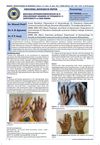 July 2021 in “PARIPEX INDIAN JOURNAL OF RESEARCH”
 This study highlighted knuckle hyperpigmentation as an early sign of vitamin B12 deficiency, indicating a potential link to megaloblastic anemia in the vegetarian population in India.
 May 2025 in “Proceedings of the National Academy of Sciences”
 In this study, researchers found that the histone demethylase UTX is crucial for regulating skin differentiation through retinoic acid signaling, mainly impacting females, as males compensate with a Y-linked paralog.
April 2021 in “Cermin Dunia Kedokteran” This report describes two cases of tinea capitis in young siblings, with cultures showing M. canis and Rhodotorulla, and notes improvement after treatment with ketoconazole lotion and shampoo for two months.
 November 2025 in “Zenodo (CERN European Organization for Nuclear Research)”
 In this observational study, researchers found that 55% of participants with hair loss known as Khalitya had serum calcium deficiency, which aligns with both Ayurvedic and modern perspectives linking poor nutrition to hair disorder, highlighting the importance of dietary regulation and stress management.
65 citations
,
September 2014 in “BMC genomics” This research found that variations in the KRTAP gene family are likely responsible for the diverse hair phenotypes seen among mammals, influenced by gene repertoire differences, expression, and evolutionary factors.
 71 citations
,
August 2005 in “The journal of investigative dermatology. Symposium proceedings/The Journal of investigative dermatology symposium proceedings”
71 citations
,
August 2005 in “The journal of investigative dermatology. Symposium proceedings/The Journal of investigative dermatology symposium proceedings” This study revealed that human keratin-associated protein genes are expressed in specific patterns in hair fiber regions and vary in size, with some variations distinct across different populations.
 February 2026 in “Pharmaceuticals”
 This study introduced the KRDQN predictive framework, which outperformed existing methods in predicting adverse drug reactions and provided interpretable insights into drug mechanisms, aiding pharmacovigilance and clinical decision-making.