 46 citations
,
September 2014 in “Tissue engineering. Part A”
46 citations
,
September 2014 in “Tissue engineering. Part A” This study found that a 3D Matrigel culture technique for dermal papilla cell spheroids can enhance hair follicle inductivity and induce hair-like fiber differentiation in vitro, even with high-passage cells.
19 citations
,
January 2015 in “Skin appendage disorders” This study identified a new variety of central centrifugal cicatricial alopecia that includes patchy hair loss on the lateral and posterior scalp in African-American women, which could be misdiagnosed as traction alopecia without dermatoscopy and pathology.
This study found that mutations in the PADI3 gene, which is important for hair shaft formation, may contribute to central centrifugal cicatricial alopecia among patients.
 9 citations
,
July 2014 in “Experimental Dermatology”
9 citations
,
July 2014 in “Experimental Dermatology” This study suggests that while PTH rP initially seemed to shorten the hair cycle by transitioning hair follicles from anagen to catagen, more relevant models indicate it ultimately accelerates and stimulates hair growth.
10 citations
,
October 2000 in “PubMed” This study found that transgenic mice expressing HPV E6/E7 in the outer root sheath experience continuous hair follicle cycling due to delayed catagen entrance and insensitivity to telogen resting signals.
This study found that encapsulating dermal papilla spheroids in alginate hydrogel with extracellular matrix proteins increased alkaline phosphatase activity, suggesting an enhanced manipulation of dermal papilla activity.
February 2020 in “Research Square (Research Square)” In this study, the researchers identified key genes, including KAP and KRTAP, that correlate with the secondary hair follicle growth cycle in Inner Mongolian cashmere goats, emphasizing March as the significant transition month.
August 2000 in “Chinese Journal of Dermatology” This study found that dermal papilla cells can induce and sustain hair follicle regeneration and growth in both laboratory and animal settings.
 April 2017 in “Journal of Investigative Dermatology”
 This study found that human iPSC-derived dermal papilla precursor cells can regenerate hair follicle structures, offering a potential new treatment approach for permanent alopecia.
January 2006 in “Chinese Journal of Dermatology” This study found that cultured dermal papilla cells can induce hair follicle regeneration and sustain hair growth both in vivo and in vitro, with their effectiveness linked to specific protein expression levels.
December 2019 in “Journal of Cosmetic Dermatology” In this study, researchers developed an innovative training model using oranges to practice designing the scalp's parietal whorl for hair transplantation. They reported that a density of 40-50 follicular units per cm² achieved better results, aiding surgeons in improving their technique.
 35 citations
,
February 2015 in “Experimental Dermatology”
35 citations
,
February 2015 in “Experimental Dermatology” This study found that human follicle dermal papilla cells promote survival, proliferation, and tubulogenesis of microvascular endothelial cells, highlighting their significant role in hair follicle vascular remodeling.
 176 citations
,
April 2011 in “Science”
176 citations
,
April 2011 in “Science” This study found that in a population of hair follicles, regenerative cycling stages are regulated by both intrinsic and extrinsic signals, with WNT/BMP signaling mediating interactions among follicles for adaptability.
January 1992 in “Proceedings of the New Zealand Society of Animal Production” This study observed that key signaling events controlling hair growth in ferret follicles occur between 0 and 4 days after melatonin implantation, highlighting distinct processes in follicular regeneration and fibre growth.
 28 citations
,
March 2010 in “Histochemistry and cell biology”
28 citations
,
March 2010 in “Histochemistry and cell biology” Skin cells can help create early hair-like structures in lab cultures.
 1 citations
,
August 2023 in “Clinical, Cosmetic and Investigational Dermatology”
1 citations
,
August 2023 in “Clinical, Cosmetic and Investigational Dermatology” In this study, researchers observed that a hidden scalp condition could contribute to acne keloidalis nuchae and potentially other primary cicatricial alopecias, impacting their diagnosis and treatment.
 1 citations
,
August 2023 in “Nature communications”
1 citations
,
August 2023 in “Nature communications” In this study, researchers found that Hdac1 and Hdac2 are crucial for maintaining the quiescence and survival of dermal papilla cells in the hair follicle, regulating the hair cycle by controlling cell-cycle genes and Wnt signaling.
36 citations
,
November 1990 in “The Journal of Dermatology” This study found that dermal papilla cells in culture may enhance and attract follicular epithelial cell growth, suggesting their pivotal role in hair and follicle development.
 45 citations
,
January 2012 in “Experimental Dermatology”
45 citations
,
January 2012 in “Experimental Dermatology” This study reveals that human hair follicles transition between active and dormant states stochastically, challenging the idea of a cyclical automaton controlling hair growth.
5 citations
,
April 2024 in “bioRxiv (Cold Spring Harbor Laboratory)” This study observed that in adult mice, a cell-autonomous size control mechanism involving the RB pathway determines the timing of S phase entry in epidermal stem cells based on their size, while external microenvironment factors influence growth rates but not this intrinsic coupling.
 1 citations
,
April 2022 in “The Journal of Family Practice”
1 citations
,
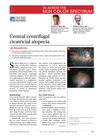
April 2022 in “The Journal of Family Practice” This report describes early and late stages of central centrifugal cicatricial alopecia in two Black women, highlighting progression from a small to a large central patch of hair loss.
 14 citations
,
December 2003 in “International Journal of Cosmetic Science”
14 citations
,
December 2003 in “International Journal of Cosmetic Science” This review discusses the hair eclipse phenomenon in hair cycling and the potential roles of synchronizers and microinflammation in its occurrence, reporting no new empirical findings.
29 citations
,
February 1989 in “Journal of Cutaneous Pathology” This case report identifies a new type of hair matrix tumor called "rippled pattern trichomatricoma," distinguished by its unique cell arrangement and differentiation features.
17 citations
,
November 1967 in “American Journal of Anatomy” This study observed that the catagen phase in hairless mice displayed a slower shortening of the mutant epithelial column, resulting in longer total follicle length and abnormalities in the connective tissue sheath and glassy membrane.
November 2024 in “Stem Cell Research & Therapy” A new method improves the isolation of hair follicle cells for better hair growth research.
 29 citations
,
April 2020 in “Journal of Tissue Engineering and Regenerative Medicine”
29 citations
,
April 2020 in “Journal of Tissue Engineering and Regenerative Medicine” This study demonstrates that incorporating human neopapilla into reconstructed human skin can initiate hair follicle morphogenesis by stimulating epidermal invagination and maintaining follicle-inductive properties in vitro.
 6 citations
,
January 2020 in “Methods in molecular biology”
6 citations
,
January 2020 in “Methods in molecular biology” This study outlines a method for isolating dermal papilla cells from human hair follicles, which may help overcome challenges in studying their role in hair growth.
 19 citations
,
January 2021 in “Experimental dermatology”
19 citations
,
January 2021 in “Experimental dermatology” This study found that acne inversa is primarily an epithelial-driven disease, with cyst-forming tendrils causing inflammation due to rupture and the release of debris, highlighting limitations of punch biopsies for analysis.
January 2000 in “Acta Academiae Medicine Militaris Tertiae” This study observed that epidermal growth factor significantly enhanced the growth of dermal papilla, dermal sheath cells, and fibroblasts in vitro, particularly benefiting dermal sheath cells.
1 citations
,
January 2015 This study found that bursts of ERK activation in the skin, termed SPREADs, are linked to increased cell division and help synchronize cell cycle progression in living mice.