3 citations
,
January 2018 in “Cirugía Plástica Ibero-Latinoamericana” This study found that intradermal PRP injections may reduce hair loss and increase hair density in patients with non-scarring alopecia, with differences in the response time between men and women.
 2 citations
,
January 2022 in “Journal of the American Academy of Dermatology”
2 citations
,
January 2022 in “Journal of the American Academy of Dermatology” This article discusses the use of virtual reality as a sensory distraction technique during intradermal injections for hair loss treatment and reports no new clinical results.
 July 2026 in “Plastic & Reconstructive Surgery Global Open”
 This study found that intradermal injections of plant-derived exosomes in adults with early-stage alopecia increased stem cell activity, activated Wnt signaling pathways, and reduced certain immune cell populations, providing insights into their role in hair follicle regeneration and suggesting potential for hair restoration therapy.
 February 2026 in “Medicina”
 This study found that intradermal injections of Profhilo® significantly reduced skin inflammation and pain, while altering spinal cord markers in mice with ovalbumin-induced atopic dermatitis, suggesting potential therapeutic benefits for inflammatory skin conditions involving both peripheral and central processes.
 August 2023 in “Journal of Cosmetic Dermatology”
 This study found that intradermal QR678 Neo® therapy improved scalp condition in men and women with seborrheic dermatitis unresponsive to standard treatments, reducing flaking and inflammation after eight sessions, with high patient satisfaction reported.
March 2020 in “QJM: An International Journal of Medicine” This study found that intradermal minoxidil 5% alone and with intralesional triamcinolone acetonide significantly reduced alopecia areata dermoscopic findings, while standard intralesional corticosteroids remain the main first-line treatment for patchy alopecia with less than 50% scalp involvement.
January 2004 in “Chinese Journal of Dermatology” This study found that intradermal injection of specific oligonucleotides altered hair growth and morphology in mice by inducing a dominant mutation in the K17 gene.
October 1967 in “Archives of Dermatology” This report discusses a case of an intradermal nevus in a 42-year-old woman and provides no clinical findings beyond a biopsy showing hyperkeratosis and cellular pigmentary changes.
November 2022 in “Molecular Pharmaceutics” This study found that intradermal injection of a cell-penetrating, AR-targeting asiRNA promoted hair growth and reduced androgen receptor expression in mouse models of androgenetic alopecia, suggesting its therapeutic potential.
 June 2026 in “Dermatology and Therapy”
 In this retrospective analysis, patients with trichodynia who were unresponsive to standard treatments showed significant symptom improvement after receiving intradermal botulinum toxin type A, with nearly all patients benefiting, particularly those with scarring alopecia.
This study found that both intradermal BCG vaccine and intralesional triamcinolone acetonide were similarly effective for treating patchy alopecia areata, though intralesional triamcinolone was preferable due to fewer side effects associated with BCG vaccine.
December 2018 in “Вестник Российской Военно-медицинской академии” This study found that combining intradermal platelet-rich plasma injections with topical minoxidil applications significantly improved hair growth metrics more than either treatment alone for patients with androgenic alopecia.
 66 citations
,
July 2015 in “Journal of Molecular Biology”
66 citations
,
July 2015 in “Journal of Molecular Biology” This review discusses how macro-environmental factors such as intradermal adipose tissue and sex hormones influence hair and feather stem cell niches, suggesting environmental targets for regenerative medicine, but reports no new clinical results.
 25 citations
,
May 2014 in “Facial Plastic Surgery”
25 citations
,
May 2014 in “Facial Plastic Surgery” In this study, intradermal injections of autologous platelet-rich fibrin matrix significantly increased hair density in patients with androgenetic alopecia at 2 and 3 months after initial treatment.
 15 citations
,
November 2015 in “Journal of Dermatology and Dermatologic Surgery”
15 citations
,
November 2015 in “Journal of Dermatology and Dermatologic Surgery” This case study reports that combining platelet-rich plasma with intradermal triamcinolone acetonide improved hair regrowth and fiber diameter in one patient with alopecia areata compared to triamcinolone alone.
 14 citations
,
April 2020 in “Journal of Cosmetic Dermatology”
14 citations
,
April 2020 in “Journal of Cosmetic Dermatology” In this study, intradermal injections of QR678 were found to significantly reduce hair fall in men with androgenetic alopecia over 6 months, with superior improvements in hair density and thickness compared to PRP.
8 citations
,
March 2013 in “Cell Transplantation” In this study, intradermal injection of GCSF-mobilized peripheral blood stem cells from young pigs rejuvenated skin in aged pigs by increasing collagen, elastin, and cell renewal rates.
 1 citations
,
September 2021 in “Skin appendage disorders”
1 citations
,
September 2021 in “Skin appendage disorders” This systematic review of five studies found that intradermal and intramuscular botulinum toxin injections showed promising hair growth outcomes for men with androgenic alopecia, but emphasizes caution due to a lack of control groups and small sample sizes.
January 2022 in “Aesthetic surgery journal” In this study, intradermal injections of extracellular vesicles over six months were reported to be safe and effective in improving hair growth among patients with pattern hair loss, with favorable response linked to specific patient factors and treatment volumes.
 7 citations
,
March 2002 in “Aesthetic Surgery Journal”
7 citations
,
March 2002 in “Aesthetic Surgery Journal” This article describes techniques for hair restoration surgery, including using intradermal sutures for donor area closure and employing the retroauricular ellipse from a facelift as a donor site, but reports no new clinical results.
 5 citations
,
December 2021 in “Journal of Cosmetic Dermatology”
5 citations
,
December 2021 in “Journal of Cosmetic Dermatology” In this study of 20 female patients with Covid-19-induced persistent Telogen Effluvium, intra-dermal QR678 Neo® treatments led to significant reductions in hair fall and increases in hair growth and density, sustained even post-therapy.
1 citations
,
January 2024 in “Surgical & Cosmetic Dermatology” In this study, complete recovery from folliculitis dissecans was observed after intradermal botulinum toxin A injections, with the effect attributed to the host response rather than direct bacterial action.
June 2026 in “Advanced Science” This study demonstrated that novel cryomicroneedles loaded with hair follicle organoids (cryoMN@HFOs) can effectively deliver and develop into functional hair follicles after intradermal transplantation in animal experiments, suggesting promising potential for human hair follicle reconstruction.
 May 2012 in “F1000Research”
 This research consisted of a Phase I/II study on androgenetic alopecia where male participants received intradermal injections of HSC, with hair growth efficacy assessed through Trichoscan imaging, although no new clinical results are reported.
 33 citations
,
November 2019 in “Journal of Controlled Release”
33 citations
,
November 2019 in “Journal of Controlled Release” In this study, researchers developed a new self-administered finasteride delivery system using powder-carrying microneedles that improved hair growth efficacy and addressed safety concerns compared to topical finasteride gel by allowing sustained intradermal release of the drug for three days with a single application.
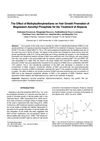 6 citations
,
July 2009 in “Biomolecules & therapeutics”
6 citations
,
July 2009 in “Biomolecules & therapeutics” This study found that combining MSM with MAP significantly enhanced hair growth in mice, comparable to or better than minoxidil, due to increased intradermal retention of MAP.
 1 citations
,
June 2020 in “Actas Dermo-Sifiliográficas”
1 citations
,
June 2020 in “Actas Dermo-Sifiliográficas” This review discusses emerging therapies for androgenetic alopecia, including topical finasteride, oral minoxidil, and intradermal dutasteride, and reports no clinical results; the authors highlight changes in treatment approaches.
 1 citations
,
January 2020 in “E3S web of conferences”
1 citations
,
January 2020 in “E3S web of conferences” In this study, an infection model using rabbits was developed for dermatophytosis by inoculating macroconidia of Microsporum species, showing that direct intradermal application effectively progressed to the skin invasion phase and highlighted the correlation between severity of symptoms and duration post-inoculation.
January 2025 in “Case Reports in Dermatological Medicine” In this study, two female patients with severe, treatment-resistant alopecia areata showed significant hair regrowth after a single session of intradermal administration of adipose tissue–derived exosomes, without experiencing adverse events, suggesting a promising therapeutic strategy for refractory cases.
 March 2025 in “International Journal of Trichology”
 This study found that, in female patients with pattern hair loss, injections of adipose-derived stem cells increased hair density and thickness, reduced perifollicular inflammation, and enhanced markers associated with hair cycle regeneration.