 15 citations
,
January 2014 in “Anais Brasileiros de Dermatologia”
15 citations
,
January 2014 in “Anais Brasileiros de Dermatologia” This review discusses the varied cutaneous manifestations of Systemic Lupus Erythematosus and outlines treatment approaches, but it reports no new clinical findings.
 15 citations
,
November 2002 in “Cardiology in Review”
15 citations
,
November 2002 in “Cardiology in Review” This review discusses various adverse skin reactions linked to cardiovascular medications and reports no new clinical results, highlighting the need for vigilance when prescribing these drugs.
 14 citations
,
September 2016 in “Journal of Cutaneous Pathology”
14 citations
,
September 2016 in “Journal of Cutaneous Pathology” This review discusses the classification and diagnosis of primary scalp alopecia, focusing on scarring and non-scarring types, and reports no new clinical results; it emphasizes simplified diagnostic pathways and tissue processing techniques.
 14 citations
,
September 2015 in “Ophthalmic plastic and reconstructive surgery”
14 citations
,
September 2015 in “Ophthalmic plastic and reconstructive surgery” This case report concludes that the presence of distinctive histiocytic responses in a Cambodian woman's eyelid lipogranulomas suggests surreptitious silicone injections despite her denial of prior procedures.
 14 citations
,
November 2009 in “Clinical and experimental dermatology”
14 citations
,
November 2009 in “Clinical and experimental dermatology” This article presents a case report of a child with coexisting alopecia areata and vitiligo showing improvement with topical prostaglandin E2 treatment, without reporting new clinical results.
 14 citations
,
January 1985 in “International Journal of Dermatology”
14 citations
,
January 1985 in “International Journal of Dermatology” The cause of alopecia areata was unknown, and while various treatments existed, no best treatment was agreed upon.
 13 citations
,
April 2020 in “Dermatology and therapy”
13 citations
,
April 2020 in “Dermatology and therapy” This systematic review assessed cyclosporine's effectiveness with or without corticosteroids for treating alopecia areata, finding combined therapy more effective and with a lower recurrence rate than monotherapy, especially for severe cases, though results varied by alopecia type.
 13 citations
,
January 2013 in “Our Dermatology Online”
13 citations
,
January 2013 in “Our Dermatology Online” This study found that polymorphic eruption was the most common pregnancy-related dermatosis, occurring mostly in the third trimester.
 13 citations
,
July 2004 in “Skinmed”
13 citations
,
July 2004 in “Skinmed” This article reviews the structure and function of hair follicles, diagnostic approaches, and treatments for nonscarring alopecias, but reports no new clinical results.
 13 citations
,
June 1984 in “Postgraduate Medicine”
13 citations
,
June 1984 in “Postgraduate Medicine” This article discusses various pruritic dermatoses that can occur during pregnancy, emphasizing the importance of physician skill in diagnosing and treating these conditions; it reports no new findings.
 12 citations
,
August 2020 in “JEADV. Journal of the European Academy of Dermatology and Venereology/Journal of the European Academy of Dermatology and Venereology”
12 citations
,
August 2020 in “JEADV. Journal of the European Academy of Dermatology and Venereology/Journal of the European Academy of Dermatology and Venereology” This study found that most chronic alopecia areata patients treated with azathioprine, methotrexate, or cyclosporine continued treatment for at least 12 months, often requiring concurrent low-dose prednisolone.
 12 citations
,
November 2003 in “Journal of the American Academy of Dermatology”
12 citations
,
November 2003 in “Journal of the American Academy of Dermatology” This study found hair regrowth in the majority of AA-affected mice and rats treated with diphencyprone, suggesting its potential utility for understanding human alopecia areata and the drug's therapeutic action.
 11 citations
,
January 2018 in “Acta dermato-venereologica”
11 citations
,
January 2018 in “Acta dermato-venereologica” In this study, oral tofacitinib showed higher efficacy and tolerability in treating refractory alopecia totalis and universalis compared to traditional treatments, achieving a 50% improvement in severity scores for 44.4% of patients over six months, with fewer adverse effects.
 11 citations
,
June 2011 in “Expert Review of Dermatology”
11 citations
,
June 2011 in “Expert Review of Dermatology” This review covers various skin-related adverse drug reactions and lists common drugs associated with these reactions but presents no new clinical findings.
 11 citations
,
May 2009 in “Actas Dermo-Sifiliográficas”
11 citations
,
May 2009 in “Actas Dermo-Sifiliográficas” This review discusses various therapeutic options for alopecia areata and reports no new clinical results; treatments may manage symptoms but do not cure the condition.
 11 citations
,
March 2007 in “Digestive Diseases and Sciences”
11 citations
,
March 2007 in “Digestive Diseases and Sciences” The conditions alopecia areata, primary sclerosing cholangitis, and ulcerative colitis may be linked by shared autoimmune and cell death mechanisms.
 9 citations
,
August 2018 in “Journal der Deutschen Dermatologischen Gesellschaft”
9 citations
,
August 2018 in “Journal der Deutschen Dermatologischen Gesellschaft” This study provides the most comprehensive review to date of published cases of frontal fibrosing alopecia, emphasizing a notable association with thyroid disease.
 9 citations
,
December 2017 in “The Journal of Allergy and Clinical Immunology”
9 citations
,
December 2017 in “The Journal of Allergy and Clinical Immunology” This review discusses the evolution of alopecia areata treatments towards more targeted therapies and reports no new clinical results, emphasizing cooperation between clinicians and scientists in understanding the disease's pathophysiology.
 9 citations
,
July 2002 in “Journal of the European Academy of Dermatology and Venereology”
9 citations
,
July 2002 in “Journal of the European Academy of Dermatology and Venereology” This article discusses multiple minute digitate hyperkeratosis in a dermatological context and reports no new clinical findings; the authors focus on a descriptive review.
 9 citations
,
April 1986 in “Postgraduate Medicine”
9 citations
,
April 1986 in “Postgraduate Medicine” This article reviews the causes of hair loss in pediatric and adult populations, emphasizing the importance of distinguishing between primary dermatologic conditions and those related to systemic diseases, but reports no new clinical findings.
 8 citations
,
September 2015 in “Clinics in Dermatology”
8 citations
,
September 2015 in “Clinics in Dermatology” This article discusses how the diagnosis and management of alopecia differ significantly between adults and children, emphasizing age-specific approaches but reports no new clinical findings.
 8 citations
,
January 2008 in “Annals of Dermatology”
8 citations
,
January 2008 in “Annals of Dermatology” This study concluded that combining systemic cyclosporine A with low-dose corticosteroids effectively treats severe alopecia areata while maintaining safe cyclosporine A levels in the blood.
 8 citations
,
September 2004 in “Contact dermatitis”
8 citations
,
September 2004 in “Contact dermatitis” Avoiding dyed wigs and clothing improved severe allergic reactions in a woman treated with diphencyprone.
 7 citations
,
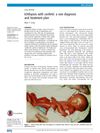
July 2014 in “BMJ case reports”
7 citations
,
July 2014 in “BMJ case reports” This article reviews the rare skin disorder ichthyosis with confetti, highlighting the potential for future therapies using revertant stem cells, and reports no new clinical results.
 6 citations
,
January 2023 in “Annals of Dermatology”
6 citations
,
January 2023 in “Annals of Dermatology” This article provides new treatment guidelines for AA based on expert consensus while integrating regional healthcare variations, but it reports no new clinical results.
 6 citations
,
September 2013 in “The Obstetrician & Gynaecologist”
6 citations
,
September 2013 in “The Obstetrician & Gynaecologist” This article reviews the physiological skin changes and unique dermatoses in pregnancy, discussing their causes and management, but reports no new clinical findings.
 5 citations
,
June 2022 in “Frontiers in veterinary science”
5 citations
,
June 2022 in “Frontiers in veterinary science” This review discusses the impact of sarcoptic mange on wombats and evaluates antiparasitic drugs like ivermectin, moxidectin, and fluralaner for treating the disease, but it presents no new clinical results.
 5 citations
,
June 2022 in “Frontiers in immunology”
5 citations
,
June 2022 in “Frontiers in immunology” This study observed that expanding regulatory T cells in the skin of mice with alopecia areata did not reverse the condition, indicating that additional immunotherapy may be necessary.
 5 citations
,
August 2020 in “Stem Cell Research & Therapy”
5 citations
,
August 2020 in “Stem Cell Research & Therapy” This study found that combining adipose-derived mesenchymal stromal cells with meglumine antimoniate reduced lesion size and parasite load in mice with leishmaniasis, suggesting potential for improved treatment.
 5 citations
,
February 2008 in “Experimental Dermatology”
5 citations
,
February 2008 in “Experimental Dermatology” In this study, topical application of Cyclosporin A on mice skin induced hair growth by transitioning follicles from telogen to anagen, but no effect was observed on cultured human hair follicles.