 1 citations
,
March 2023 in “Science Translational Medicine”
1 citations
,
March 2023 in “Science Translational Medicine” The researchers reported that targeting glycoprotein 130's signaling site in animal models promoted tissue regeneration and reduced osteoarthritis progression through anti-inflammatory and protective effects.
 November 2022 in “The journal of investigative dermatology/Journal of investigative dermatology”
 This study reported that IL-15 promotes human hair growth and protects hair follicle immune privilege, potentially stabilizing alopecia areata treatment outcomes when selectively stimulating IL-15Rα signaling.
 October 2024 in “Stem Cell Research & Therapy”
 This study found that CGF may be effective in reducing inflammation and improving skin conditions in psoriasis, particularly in patients resistant to other treatments.
 23 citations
,
August 2018 in “Biochimica and biophysica acta. Molecular and cell biology of lipids”
23 citations
,
August 2018 in “Biochimica and biophysica acta. Molecular and cell biology of lipids” This article reviews the roles of lesser-known secreted phospholipase A2 isoforms in various biological processes, such as immune suppression, metabolic regulation, epidermal hyperplasia, and male reproduction, without reporting new clinical findings.
4 citations
,
May 2024 in “Cytotechnology” January 1964 in “OSTI OAI (U.S. Department of Energy Office of Scientific and Technical Information)” This study found that platelet-secreted chemokines like CXCL7 are crucial for early neutrophil recruitment and efficient muscle regeneration in injured mice.
July 2025 in “Journal of Investigative Dermatology” Enhancing Tregs can protect against alopecia areata.
 January 2023 in “Research Square (Research Square)”
 This study identified m6A-related genes, particularly IGF2BP3, as significantly up-regulated in keloid patients, potentially implicating them in the condition's molecular mechanisms and suggesting targets for therapy.
 August 2023 in “The journal of investigative dermatology/Journal of investigative dermatology”
 This study reports that a patient with rare linear lichen planopilaris experienced complete hair regrowth after 12 weeks of treatment with the antibody ixekizumab, suggesting it as a potential targeted therapy.
15 citations
,
November 2024 in “Journal of Advanced Research” In this study, researchers found that miR-3606-3p is significantly downregulated in skin fibrosis and correlates with disease severity, with its ability to inhibit key signaling pathways suggesting potential therapeutic applications for conditions like systemic sclerosis and keloids.
 206 citations
,
September 2010 in “PLoS ONE”
206 citations
,
September 2010 in “PLoS ONE” This study found that using a Picosecond IR Laser (PIRL) on mouse skin led to less tissue damage and scarring compared to conventional surgical lasers and tools.
 6 citations
,
October 2012 in “Journal of Heredity”
6 citations
,
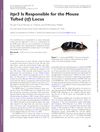
October 2012 in “Journal of Heredity” This study identified the Itpr3 gene as responsible for the tufted hair loss phenotype in the BTBR mouse strain.
8 citations
,
March 2024 in “Regenerative Therapy” This study found that using uniform poly(lactic-co-glycolic) acid microspheres to deliver insulin-like growth factor 1 stabilizes the protein and enhances its sustained delivery, supporting stem cell functions comparably to traditional methods, and showing potential for tissue and organ regeneration.
53 citations
,
July 2009 in “Cancer Research” In this mouse study, the researchers found that the monoclonal antibody ME1 causes hair follicle inflammation by up-regulating TNFα, which can be reduced by TNFα and interleukin-1 inhibitors.
June 2009 in “Faculty Opinions – Post-Publication Peer Review of the Biomedical Literature” This study found that Lrig1-positive cells in mouse epidermis are a previously unidentified source of adult interfollicular epidermal stem cells, which can contribute to sebaceous gland and epidermal lineage formation.
24 citations
,
August 2022 in “Immunity” This study found that control of Demodex mite colonization in mice required skin ILC2s and IL-13, highlighting their role in maintaining HF integrity and limiting mite overgrowth.
 February 2024 in “Advanced Functional Materials”
 This study reported that a newly developed hydrogel patch, designed to recruit regulatory T cells through ROS-triggered release of CCL22, improved wound healing and hair follicle regeneration in a diabetic mouse model by scavenging ROS, thereby protecting Tregs and suppressing Th17 cells.
55 citations
,
November 2010 in “Journal of Allergy and Clinical Immunology” This study found that the TLR3 L412F genetic variant is associated with severe viral infections, especially CMV, and immune dysfunction in a subgroup of chronic mucocutaneous candidiasis patients.
 5 citations
,
January 2024 in “The International Journal of Developmental Biology”
5 citations
,
January 2024 in “The International Journal of Developmental Biology” This article reviews the diversity of lymphatic endothelial cells, related gene targeting tools, and protocols in mouse models but presents no new experimental findings.

In this study on Drosophila embryos, researchers observed that the Slit/Robo signaling pathway is crucial for the collective migration and proper positioning of Posterior Signaling Center cells within the hematopoietic niche, highlighting its role in niche assembly and cellular organization.
 343 citations
,
March 2016 in “Nature Communications”
343 citations
,
March 2016 in “Nature Communications” This study found that IL-17A-producing γδ T cells play a key role in bone fracture healing by promoting bone formation, with deficiencies leading to impaired repair in mice.
This study identified significant differences in KIR gene profiles between SLE patients and controls, suggesting that specific KIR genes could serve as biomarkers for disease severity in Indian SLE patients.
5 citations
,
July 2017 in “Molecular Medicine Reports” This study observed that ethanol extracts of Lygodium japonicum spores significantly reduced inflammatory responses in LPS-stimulated murine macrophages in vitro by negatively regulating p38 MAPK and NF-κB.
 1 citations
,
January 2023 in “International Journal of Molecular Sciences”
1 citations
,
January 2023 in “International Journal of Molecular Sciences” This review explores the role of Tregs in autoimmune skin diseases, transplantation, and skin cancer, and discusses Tregs-based therapies' potential for treating autoimmunity without reporting new experimental results.
January 2022 in “SSRN Electronic Journal” This study found that lncRNA RP11-818024.3 transfection promoted hair growth in AGA mice and increased cellular proliferation in vitro, potentially involving the FGF2 and PI3K-Akt pathways.
 April 2016 in “Journal of Investigative Dermatology”
 This study reported that the absence of Lsh in skin led to significant epidermal hyperplasia and altered gene expression, suggesting its crucial role in regulating epidermal proliferation, differentiation, and wound healing.
 September 2009 in “European Urology Supplements”
 This study demonstrates that a new Adaptive Modulation and Coding method can improve control performance in Communication-Based Train Control systems using WLAN by reducing average delay through effective transmission mode selection.
July 2024 in “Journal of Investigative Dermatology” Expanding regulatory T cells may help treat alopecia areata by reducing harmful immune cells.
December 2015 in “OPAL (Open@LaTrobe) (La Trobe University)” In human hair follicle keratinocytes, this study found that treatment with the pharmacological inhibitor QLT0267 led to a strong inhibition of proliferation and migration and induced nearly 100% apoptosis.
3 citations
,
December 2023 in “Aging” In liver cancer cells, this study found that upregulating hsa_circ_0002980 inhibits cell proliferation, metastasis, and EMT by modulating the miR-1303/CADM2 axis, suggesting it as a potential therapeutic target.