July 2024 in “Journal of Investigative Dermatology” PH-762 shows promise in treating skin cancer by effectively targeting and silencing PD-1 in tumors with minimal side effects.
 16 citations
,
November 2005 in “Journal of Investigative Dermatology Symposium Proceedings”
16 citations
,
November 2005 in “Journal of Investigative Dermatology Symposium Proceedings” This study found that intramuscular anti-IFN-γ significantly stabilized and promoted hair regrowth in alopecia areata patients with patchy, progressive hair loss, whereas those with total baldness showed more limited improvement.
This study in mice found that a monoclonal antibody targeting EGFR resulted in skin inflammation mediated by TNFα, suggesting potential pathways for addressing EGFR antibody-induced skin rash in cancer patients.
 3 citations
,
December 2016 in “Springer eBooks”
3 citations
,
December 2016 in “Springer eBooks” This study found that activating Toll-like receptor 3 in periodontal ligament stem cells enhanced their stem cell and immunosuppressive properties, potentially supporting effective periodontal tissue regeneration.
 7 citations
,
September 2020 in “Frontiers in Cell and Developmental Biology”
7 citations
,
September 2020 in “Frontiers in Cell and Developmental Biology” This study found that recombinant murine IL-36α increased the number of regenerated hair follicles and accelerated wound healing in a mouse model of wound-induced hair follicle neogenesis.
20 citations
,
July 2017 in “Journal of Investigative Dermatology” IL-1 receptor absence in mice leads to skin cysts and changes in immune response after UVB exposure.
 April 2023 in “Journal of Investigative Dermatology”
 This study found that inducing SOX2 in keratinocytes significantly reduced pressure ulcer formation after cutaneous ischemia-reperfusion injury by producing amphiregulin, which also reduced oxidative stress and apoptosis.
18 citations
,
February 2023 in “eLife” This study indicates that innate lymphoid cells-type 1 may provoke alopecia areata by disrupting hair follicle immune privilege and inducing characteristic lesions, challenging the view that alopecia areata is purely an autoantigen-dependent, T cell-driven condition.
50 citations
,
December 2005 in “European Journal of Immunology” This study found that a specific mutation in the mouse RXRalpha gene significantly impacts immune responses and causes hair loss and skin cysts.
2 citations
,
January 2014 in “Journal of Cytology & Histology” In a mouse model, this study found that LAM/TSC cells invaded the uterus and increased angiogenesis, while anti-EGFR antibody and rapamycin effectively reduced cell presence and blood vessel proliferation.
 April 2023 in “The journal of investigative dermatology/Journal of investigative dermatology”
 This study found that deleting Ube2n in adult mouse skin leads to inflammation and other skin changes, and identifies IRAK1/4 as potential treatment targets for inflammatory skin disorders.
This study found that the transcription factor Lhx2 regulates Sonic Hedgehog signaling in mouse retinal progenitor cells, mainly by controlling the expression of co-receptors essential for effective pathway activation during early retinal neurogenesis.
 39 citations
,
May 2014 in “Frontiers in Pharmacology”
39 citations
,
May 2014 in “Frontiers in Pharmacology” In this study, CD4+CD25+FoxP3+ Regulatory T cells were found to reduce TGF-b1 induced lung fibrosis and fibrocyte accumulation in mice, partly by suppressing fibroblast growth factor 9.
 4 citations
,
November 2017 in “PubMed”
4 citations
,
November 2017 in “PubMed” This pilot study found a correlation between individual genetic inflammation profiles and the effectiveness of PRP treatment for hair regeneration, with differences observed between male and female responses.
6 citations
,
September 2018 in “International Journal of Molecular Sciences” This study found that intramuscular injections of a PRP-derivative in healthy beagle dogs did not result in statistically significant changes in lumbar muscle tissue or IGF-1 blood concentration, suggesting the treatment may be safe at therapeutic doses.
October 2014 in “Archivio Istituzionale della Ricerca (Universita Degli Studi Di Milano)” This study identified a new subset of Ret-positive sensory neurons involved in itch perception, characterized by their unique expression profile and response to specific itch-inducing molecules.

This study observed that mice treated with mrIL-36α showed differences in wound-induced hair neogenesis compared to those treated with PBS, indicating a potential role of mrIL-36α in hair growth after skin injury.
69 citations
,
February 2008 in “The American journal of pathology” This study found that local injections of interleukin-4 and neutralizing anti-interferon-γ antibody effectively treated alopecia in a mouse model, suggesting potential therapeutic pathways for human alopecia areata.
37 citations
,
May 2021 in “Frontiers in Cell and Developmental Biology” This study found that Ng2+ perivascular cells in mouse skin are a diverse lineage-restricted population primarily recruited from papillary or reticular fibroblast lineages during wound healing, maintaining heterogeneity in both wounded and non-wounded skin.
September 2025 in “PeerJ” This study found that the genes FCER1A and RGS1 are promising biomarkers for diagnosing systemic lupus erythematosus, with FCER1A downregulated and RGS1 upregulated in patients.
 April 2024 in “The Journal of experimental medicine/The journal of experimental medicine”
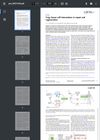
 This review discusses how regulatory T cells, known for their immunosuppressive role, also produce repair mediators critical for tissue repair and regeneration, acting on non-immune cells in tissue-specific contexts, and highlights areas for future research in tissue repair, fibrosis, and cancer.
November 2025 in “OPAL (Open@LaTrobe) (La Trobe University)” In this study, researchers conducted additional IHC staining on equine skin sections and found that collagen type III primarily labels the extracellular matrix, while anti-PDGFR-antibody staining highlights cells with long-shaped processes mainly arranged around hair follicles.
 April 2023 in “Journal of Investigative Dermatology”
 This study identified a new role for IL-4Ra-induced oxidative metabolism in wound macrophages, essential for balancing inflammatory response and promoting pro-fibrotic repair, suggesting a target for fibrosis prevention.
4 citations
,
September 2024 in “Cell Reports” This study found that mice lacking the CXCR2 receptor regenerated tissue scarlessly in various injury models and that administering plasma or G-CSF from these mice to wild-type mice also reduced scarring, suggesting potential therapeutic strategies to improve human skin wound healing.
 April 2019 in “Journal of Investigative Dermatology”
 This study identifies a mechanism where dsRNA activates TLR3 to induce RA production, promoting hair follicle regeneration in mice and suggesting a potential role in human tissue regeneration.
This study found changes in the PGI2 pathway, especially in gene and protein expression, in diabetic mice, but did not observe PGI2-dependent vasomotor dysfunction.
August 2026 in “Frontiers in Immunology” This study introduces Immunoguided Cutaneous Regeneration as a potential framework for understanding skin allotransplantation, suggesting that regeneration may depend on the preserved extracellular matrix and a regulated immune response.
11 citations
,
April 2021 in “Cancers” This study identified a small molecule that activates GLI1, suppressing neuroblastoma cell growth, which may aid in developing new treatments for high-risk neuroblastoma cases.
 July 2022 in “Journal of Investigative Dermatology”
 This study suggests that interleukin-15 plays a complex role in alopecia areata, potentially contributing to immune infiltration while also protecting against hair follicle immune privilege collapse and promoting hair growth.
34 citations
,
January 2022 in “Frontiers in Immunology” This study found that IL-25-mediated-IL-17RB signaling improved diabetic wound healing by enhancing angiogenesis, collagen deposition, and endothelial cell function, suggesting a potential therapeutic strategy for poorly healing diabetic wounds.