475 citations
,
October 2006 in “Proceedings of the National Academy of Sciences” This study suggests that folliculin, mutated in Birt–Hogg–Dubé syndrome, and its partner FNIP1 may play a role in energy and nutrient sensing through the AMPK and mTOR pathways.
 April 2025 in “International Journal of General Medicine”
 This study found that among COVID-19 patients, a higher presence of the G allele in the IFITM3 rs12252 polymorphism correlates with increased inflammatory markers and disease severity, noting higher ESR, CRP, Fibrinogen, LDH, and D-dimer levels in severe cases compared to mild ones.
 49 citations
,
August 2003 in “Journal of The American Academy of Dermatology”
49 citations
,
August 2003 in “Journal of The American Academy of Dermatology” Higher IGF-1 levels in hair follicles link to better finasteride results for hair loss.
 25 citations
,
August 2010 in “Journal of Biological Chemistry”
25 citations
,
August 2010 in “Journal of Biological Chemistry” This study found that NFI-C plays a crucial role in the transition from the telogen to anagen phase of the hair follicle cycle, affecting hair growth initiation in mice.
50 citations
,
June 1993 in “European journal of biochemistry” This article reviews the regulation of gene expression and assembly of intermediate filaments but presents no new findings.
287 citations
,
July 2001 in “Journal of Cell Science” This study mapped 65 intermediate filament genes in the human genome, highlighting that the majority of keratin-related sequences are inactive pseudogenes, notably for keratins 8 and 18.
55 citations
,
April 2008 in “Clinical Genetics” This report identifies a novel mutation in the ST14 gene in a female with autosomal recessive ichthyosis with hypotrichosis, highlighting similar features to previously reported cases.
29 citations
,
April 2000 in “Journal of histochemistry and cytochemistry/The journal of histochemistry and cytochemistry” This study found that ICAM-1 expression in murine skin is developmentally regulated and crucial for skin and hair follicle remodeling beyond its recognized role in immune responses.
 15 citations
,
December 2014 in “PLoS ONE”
15 citations
,
December 2014 in “PLoS ONE” This study identifies iRhom2 as a crucial regulator of hair follicle differentiation, showing that the iRhom2Uncv mutation leads to dysplasia and reduced TACE maturation, resulting in a hairless phenotype in mice.
 13 citations
,
November 2012 in “PLoS ONE”
13 citations
,
November 2012 in “PLoS ONE” This study identified a novel recessive mutation in mice causing lethal congenital lamellar ichthyosis, with skin and hair follicle alterations similar to human congenital ichthyoses, linked to a specific genetic defect affecting Fatp4.
65 citations
,
February 1992 in “Development” This study characterizes a type II keratin intermediate filament gene family involved in early sheep follicle differentiation, detailing gene expression patterns and sequences in hair cortical cells.
47 citations
,
September 2012 in “Human molecular genetics online/Human molecular genetics” This study suggests that the interaction between folliculin and plakophilin-4 (p0071) may play a role in folliculin's tumor suppressor function by regulating RhoA signaling, impacting cell migration and junction formation.
128 citations
,
March 1996 in “Journal of Investigative Dermatology” Increased IGF-1R expression is linked to thicker skin growth.
98 citations
,
November 1999 in “Dermatology Online Journal” This review discusses the effects of IGF-1 on hair follicle cell proliferation and differentiation, highlighting its roles in paracrine signaling, apoptosis prevention, and hair growth, but reports no new clinical results.
2 citations
,
September 2022 in “World Rabbit Science” This study found that the WIF1 gene may play a crucial role in hair follicle growth and development in Angora rabbits by regulating specific genes and proteins.
 53 citations
,
March 2014 in “Growth Hormone & IGF Research”
53 citations
,
March 2014 in “Growth Hormone & IGF Research” This study found that IGF-1 injections increased hair follicle number and growth phase duration in wild-type mice, suggesting potential for baldness treatment.
 6 citations
,
October 2012 in “Journal of Heredity”
6 citations
,
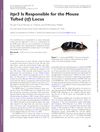
October 2012 in “Journal of Heredity” This study identified the Itpr3 gene as responsible for the tufted hair loss phenotype in the BTBR mouse strain.
 15 citations
,
July 2013 in “Cell Reports”
15 citations
,
July 2013 in “Cell Reports” This study reported that Indian hedgehog (Ihh) signaling plays a crucial role in regulating tumor progression and metastasis in epithelial cancers, with Ihh deficiency leading to increased malignancy and metastasis in mice.
 February 2026 in “International Journal of Nanomedicine”
 This study found that controlled release of hIGF-1 from TF/hIGF-1 effectively enhanced re-epithelialization and granulation tissue formation in diabetic wounds in animal models compared to controls, suggesting a promising approach for diabetic wound treatment.
 September 2017 in “Journal of Investigative Dermatology”
 This study found that stabilizing HIF1A in hair follicle cells promoted a shift to glycolysis, potentially reducing oxidative stress and promoting hair growth, particularly in balding dermal papilla cells.
147 citations
,
April 1997 in “Oncogene” This study found that transgenic mice expressing IGF-1 in their skin showed significant skin changes, early hair follicle generation, and a higher propensity to develop tumors after chemical promotion, suggesting IGF-1's role in skin carcinogenesis.
55 citations
,
October 2008 in “American Journal Of Pathology” mIGF-1 in skin cells speeds up wound healing and hair growth in mice without harmful effects.
This study found that a combination of four transcription factors can transform mouse fibroblasts into cells resembling inner ear hair cells, potentially aiding research into hearing loss treatments.
 1 citations
,
November 2022 in “Research Square (Research Square)”
1 citations
,
November 2022 in “Research Square (Research Square)” This study suggests that promoting HIF-1a expression in dermal papilla cells could enhance trichogenic gene expression, offering a potential therapeutic target for hair loss treatment.
January 2014 in “China Animal Husbandry & Veterinary Medicine” This study found that EGF, IGF-Ⅰ, and IGF-Ⅰ R are extensively expressed in mink skin and hair follicles, suggesting these genes play crucial roles in their development.
 9 citations
,
March 2018 in “European journal of dermatology/EJD. European journal of dermatology”
9 citations
,
March 2018 in “European journal of dermatology/EJD. European journal of dermatology” This study in a Pakistani family identified a novel ST14 gene variant as the likely genetic cause of autosomal recessive ichthyosis with hypotrichosis syndrome.
 July 2026 in “Zenodo (CERN European Organization for Nuclear Research)”
 This study found that women with female pattern hair loss had significantly lower serum IGF-1 levels than controls, suggesting a possible role for IGF-1 in this condition.
 24 citations
,
July 2017 in “Structure”
24 citations
,
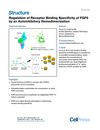
July 2017 in “Structure” In this study, researchers found that ligand homodimerization controls the receptor binding specificity of the FGF9 subfamily, preventing off-target activation of FGFR "b" isoforms.
 8 citations
,
September 2016 in “Journal of Investigative Dermatology”
8 citations
,
September 2016 in “Journal of Investigative Dermatology” In this study, Flii overexpression in mice enhanced fingertip regeneration and nail formation after both distal and proximal amputations, suggesting a role in digit and hair follicle regeneration possibly involving Wnt signaling.
 16 citations
,
August 2002 in “Journal of Interferon and Cytokine Research”
16 citations
,
August 2002 in “Journal of Interferon and Cytokine Research” In this case study, hypertrichosis in a patient with hemophilia and hepatitis C may have been induced by IFN-alpha treatment, despite the drug usually causing hair loss.