 42 citations
,
November 2002 in “The American journal of pathology”
42 citations
,
November 2002 in “The American journal of pathology” This study observed that nuclear β-catenin expression in non-small-cell lung carcinomas correlates with increased proliferation and loss of key cell-cycle checkpoints, suggesting an oncogenic advantage.
 19 citations
,
August 2014 in “Journal of Ethnopharmacology”
19 citations
,
August 2014 in “Journal of Ethnopharmacology” The study created a test that found hormonal and toxic effects in plant and fungal extracts using prostate cancer cells.
 12 citations
,
September 2003 in “Current paediatrics”
12 citations
,
September 2003 in “Current paediatrics” This review discusses topical and oral treatments for acne in children and provides guidance on tailoring these treatments according to acne severity, but it reports no new clinical results.
 5 citations
,
August 2003 in “British Journal of Dermatology”
5 citations
,
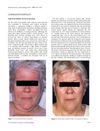
August 2003 in “British Journal of Dermatology” This article discusses the association between chronic diffuse telogen hair loss in women and iron deficiency, supporting the view that iron's role is unclear and often overstated, but reports no new clinical results.
 3 citations
,
January 2014 in “Middle East African Journal of Ophthalmology”
3 citations
,
January 2014 in “Middle East African Journal of Ophthalmology” In this case study, alopecia was observed as a possible side effect in a patient taking oral acyclovir for herpetic keratouveitis, which resolved after discontinuing the medication.
 2 citations
,
July 2019 in “IOP conference series. Materials science and engineering”
2 citations
,
July 2019 in “IOP conference series. Materials science and engineering” This study found that under optimized extraction conditions, the Gleditschia fera fruit extract contained a high level of saponins and demonstrated notable antioxidant activity.
 1 citations
,
December 2022 in “Middle East Journal of Science”
1 citations
,
December 2022 in “Middle East Journal of Science” This review covers hair dye formulations, their mechanisms, and potential applications, but reports no new findings; the authors highlight the process of oxidative dyeing and repairing damaged hair.
 1 citations
,
January 2014 in “Hair therapy & transplantation”
1 citations
,
January 2014 in “Hair therapy & transplantation” This review discusses various treatment options for Alopecia Areata, focusing on both medical and psychological approaches, and reports no new clinical results.
 November 2023 in “International journal of Ayurveda and pharma research”
 This study prepared and evaluated a polyherbal hair oil using plant-based ingredients, finding that it met standard parameters and effectively addressed hair problems such as growth and dandruff, with FDA approval for clinical use.
 January 2016 in “Ankara Üniversitesi Tıp Fakültesi mecmuası”
 Severe hair loss (androgenetic alopecia) is linked to higher risk of heart disease (cardiovascular atherosclerosis).
 July 2024 in “Journal of Pediatric Endocrinology and Metabolism”
 This study presents two adolescent cases of ovarian hyperthecosis, a rare cause of severe hyperandrogenism, highlighting management strategies involving gonadotropin suppression and hormone replacement after excluding androgen-producing adrenal and ovarian tumors.
 December 2022 in “Archives of Clinical Trials”
 In this case series study, mild ovarian hyperstimulation syndrome was reported in only one out of 118 PCOS patients receiving highly purified HMG injections for IVF treatment.
April 2019 in “Journal of the Endocrine Society” This case study reported that even with improved adrenal androgens and testosterone levels, treating women with AH-PCOS with glucocorticoids did not significantly improve ovulatory function or hirsutism.
2 citations
,
April 1993 in “Current Therapeutic Research” This study found no significant difference in effectiveness between 0.05% desonide cream and 1.0% hydrocortisone cream for treating seborrheic dermatitis over 8 weeks, with neither causing skin atrophy.
 9 citations
,
July 2018 in “Current Pharmaceutical Design”
9 citations
,
July 2018 in “Current Pharmaceutical Design” This review discusses the importance of heme oxygenase in skin physiology and disease, but it reports no new clinical results; the authors highlight its potential as a treatment target for conditions like atopic dermatitis and psoriasis.
43 citations
,
July 2017 in “International journal of pharmaceutics” This study found that anionic HSES achieved high complexation efficiencies with various steroids, significantly enhancing their solubility, while specific β-cyclodextrin thioethers showed selective binding to testosterone and estradiol.
 January 1981 in “The Journal of Toxicological Sciences”
 In this study, beagle dogs treated with hydrocortisone 17-butyrate 21-propionate ointment showed various toxic effects, including acne-like skin changes and organ atrophy, which returned to normal after a recovery period.
 4 citations
,
January 1989 in “Journal of Steroid Biochemistry”
4 citations
,
January 1989 in “Journal of Steroid Biochemistry” This study suggests that 5-ADIOL-S may contribute to the synthesis of potent androgens in peripheral tissues, and 3 alpha-DIOL-S could be a marker of androgen metabolism in various female patient groups.
 January 2023 in “Case Reports in Obstetrics and Gynecology”
 This case report highlights the need for early diagnosis and treatment of ovarian hyperthecosis to enhance the quality of life and health outcomes for affected patients.
October 2025 in “Journal of the Endocrine Society” In this case study, a 62-year-old woman with ovarian hyperthecosis experienced normalization of elevated testosterone levels and improvement in hirsutism and hair loss following bilateral salpingo-oophorectomy.
3 citations
,
February 2024 in “International journal of molecular sciences” This review highlights the potential of valorizing citrus by-products, particularly hesperidin from orange peels, as sustainable ingredients in skincare for antiaging, pigmentation, wound healing, and UV damage protection, emphasizing hesperidin's role in a circular economy approach.
 12 citations
,
January 2009 in “Gynecological Endocrinology”
12 citations
,
January 2009 in “Gynecological Endocrinology” This case report identified ovarian hyperthecosis as the cause of recent-onset androgenic symptoms in a 73-year-old woman, which was confirmed by ovary removal and led to symptom improvement.
 1 citations
,
September 2017 in “Journal of Investigative Dermatology”
1 citations
,
September 2017 in “Journal of Investigative Dermatology” This research observed that Backhousia citriodora leaf extract effectively reduced sebum production and improved sebum composition across different ethnicities, significantly decreasing skin oiliness and the likelihood of shiny skin when used in a cream applied twice daily for 28 days.
 1 citations
,
January 2018 in “Journal of Gynecologic Surgery”
1 citations
,
January 2018 in “Journal of Gynecologic Surgery” This article reports two cases where ovarian hyperthecosis caused hyperandrogenism in postmenopausal women, confirmed by imaging and resolved after bilateral oophorectomy.
17 citations
,
August 2010 in “International Journal of Cosmetic Science” This study found that a cosmetic formula containing 2% Orthosiphon stamineus leaf extract significantly reduced skin oiliness and pore size, showing better results than a formula with 1% zinc gluconate.
This article discusses solitary hirsutism, emphasizing that treatment is mostly cosmetic unless contraception is also desired, and reports no new clinical results.
 23 citations
,
January 2001 in “International journal of toxicology”
23 citations
,
January 2001 in “International journal of toxicology” This review discusses the cosmetic use and safety of Hypericum Perforatum Extract and Oil, finding that current data are insufficient to support their safety in formulations due to a lack of comprehensive testing.
 53 citations
,
October 1984 in “Endocrine reviews”
53 citations
,
October 1984 in “Endocrine reviews” This review highlights that idiopathic hirsutism is characterized by local hyperandrogenization affecting hair growth, without other signs of hyperandrogenism, and shows no new results; racial differences in prevalence are noted but not in androgenic steroids.
 18 citations
,
December 2010 in “The Journal of Steroid Biochemistry and Molecular Biology”
18 citations
,
December 2010 in “The Journal of Steroid Biochemistry and Molecular Biology” The authors concluded that increased expression of the HSD11B1 gene in adipose tissue correlates with obesity markers and predicts insulin resistance, but this association is independent of polycystic ovary syndrome when adiposity is controlled for.
11 citations
,
January 2023 in “World Journal of Clinical Cases” This study suggests that idiopathic hirsutism may involve higher local androgen synthesis despite normal serum androgen levels, challenging its categorization as idiopathic.