 56 citations
,
October 1983 in “Archives of Dermatology”
56 citations
,
October 1983 in “Archives of Dermatology” This study found that free testosterone levels were a more sensitive indicator of hyperandrogenism in women with acne than total testosterone levels.
57 citations
,
August 2018 in “British Journal of Dermatology” This review discusses the pathogenesis and treatment of acne in transgender men on testosterone therapy and reports no new clinical results, emphasizing the need for tailored guidelines.
 12 citations
,
August 2011 in “European Journal of Endocrinology”
12 citations
,
August 2011 in “European Journal of Endocrinology” This study found that anti-Müllerian hormone (AMH) is a valuable primary variable for classifying functional androgenization, especially in distinguishing ovarian-related groups, and supports the novel stratification system.
 2 citations
,
January 2012 in “Journal für Kardiologie (Krause & Pachernegg GmbH)”
2 citations
,
January 2012 in “Journal für Kardiologie (Krause & Pachernegg GmbH)” This review discusses therapeutic principles for managing hirsutism and androgenetic alopecia during the menopausal transition and peri-/postmenopause but reports no new clinical results.
 41 citations
,
November 2003 in “Annals of the New York Academy of Sciences”
41 citations
,
November 2003 in “Annals of the New York Academy of Sciences” This article discusses the complexities of androgen and antiandrogen therapies in women, detailing diagnostic measures, the effects on libido, and the potential benefits of new progestins with antiandrogenic properties, but presents no new empirical findings.
 October 2024 in “Journal of the Endocrine Society”
 This case report highlights the challenge of differentiating between non-classical adrenal hyperplasia and steroid cell tumors of the ovary in a patient presenting with hyperandrogenism.
 20 citations
,
January 2012 in “International Journal of Trichology”
20 citations
,
January 2012 in “International Journal of Trichology” This study identified polycystic ovarian syndrome as the most common cause of hirsutism among patients and found a positive correlation between hirsutism severity and free testosterone levels.
 23 citations
,
August 2005 in “Expert opinion on pharmacotherapy”
23 citations
,
August 2005 in “Expert opinion on pharmacotherapy” This review examines the benefits and potential risks of androgen replacement therapy for male hypogonadism but reports no new clinical results; the authors highlight the need for careful risk assessment, especially in older men.
June 2013 in “NATIONS UNIVERSITY INTERNATIONAL JOURNAL OF MULTI-DISCIPLINARY STUDIES” This study found no significant relationship between hormone levels and sexual function in hirsute young women compared to a control group.
 29 citations
,
February 2018 in “Genetics research international”
29 citations
,
February 2018 in “Genetics research international” This review summarizes the influence of gene polymorphisms on genetic predisposition to polycystic ovary syndrome, but reports no new experimental or clinical results.
 2 citations
,
January 2016 in “Journal of Steroids & Hormonal Science”
2 citations
,
January 2016 in “Journal of Steroids & Hormonal Science” This study found that in PCOS women, polycystic ovarian morphology is linked to more severe hormonal imbalances and insulin resistance, especially in those who are overweight or obese.
 February 2024 in “Malahayati Nursing Journal”
 This study found that hirsutism in women is associated with elevated androgen hormone levels and increased serum TNFα, suggesting a link between androgen-driven inflammatory responses and excessive hair growth.
 52 citations
,
June 1999 in “Endocrinology and Metabolism Clinics of North America”
52 citations
,
June 1999 in “Endocrinology and Metabolism Clinics of North America” This review concludes that antiandrogens with ovarian suppression may significantly improve hirsutism and androgenetic alopecia in women with PCOS, but treatment needs to continue unless the underlying PCOS cause is addressed.
 October 2023 in “Journal of the Endocrine Society”
 In this case study, the authors observed that weight loss coupled with a brief use of oral contraceptives was associated with normalized testosterone levels in a woman with severe hyperandrogenism and PCOS.
This review discusses the role of hormonal influences and antiandrogenic treatments in managing hirsutism and other androgenic manifestations in women, highlighting cyproterone acetate as a beneficial option for cosmetically sensitive patients, and reports no new clinical results.
25 citations
,
August 1989 in “Seminars in reproductive medicine” This article discusses the use of oral contraceptives for treating hyperandrogenism in women, reporting improvement in most patients, especially in reducing new hair growth, but presents no new clinical findings.
 March 2012 in “Faculty Opinions – Post-Publication Peer Review of the Biomedical Literature”
 Hair loss can be an early sign of prostate enlargement.
April 2019 in “Journal of the Endocrine Society” This case study highlights the importance of considering broad causes when evaluating hot flashes in middle-aged men, as it detailed a pituitary macroadenoma causing secondary hypogonadism in a man presenting with such symptoms.
 1 citations
,
November 1996 in “Journal of Cutaneous Medicine and Surgery”
1 citations
,
November 1996 in “Journal of Cutaneous Medicine and Surgery” Hormones, especially androgens, play a key role in causing acne, and treatments like hormone control pills and hormone-blocking medications can help.
 October 2023 in “The Egyptian Journal of Hospital Medicine ”
 This review discusses the potential use of prostate specific antigen as a diagnostic marker for hyperandrogenism in polycystic ovary syndrome but reports no new clinical results and calls for further research.
 24 citations
,
December 1988 in “British Journal of Dermatology”
24 citations
,
December 1988 in “British Journal of Dermatology” This study found no correlation between acne severity and clinical signs of androgenicity in women, suggesting factors other than hyperandrogenaemia may contribute to acne development.
 41 citations
,
April 2010 in “Gender Medicine”
41 citations
,
April 2010 in “Gender Medicine” This review discusses the causes, clinical features, diagnostic approach, and treatment options for hirsutism in women, but reports no new findings.
149 citations
,
January 2011 in “Nature reviews. Urology” Hormonal interactions, especially involving DHT and estrogen, play a key role in BPH development and treatment.
 July 2022 in “L Endocrinologo”
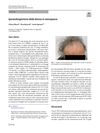
 This case report describes a 77-year-old woman with female pattern hair loss and elevated testosterone levels, who showed no improvement with minoxidil and lacked adrenal tumors on imaging.
 16 citations
,
August 1992 in “PubMed”
16 citations
,
August 1992 in “PubMed” In this study, examination of skin biopsies from individuals using anabolic-androgenic steroids revealed significant enlargement of sebaceous glands and associated increases in skin lipids and Propionibacteria acnes.
 5 citations
,
March 2001 in “Clinics in Dermatology”
5 citations
,
March 2001 in “Clinics in Dermatology” This article explores evidence for a rational strategy in the endocrine and metabolic management of patients with excess body hair or scalp loss and reports no new clinical results.
 6 citations
,
January 2010 in “Case Reports”
6 citations
,
January 2010 in “Case Reports” This study describes the case of a Filipino woman with virilisation, where a rare ovarian Leydig cell tumour was identified and removed, normalizing her testosterone levels.
 December 2025 in “International Journal of Innovative Technologies in Social Science”
 This study systematically reviewed dermatological conditions affecting transgender and gender-diverse individuals, highlighting that testosterone therapy can induce acne in 25–88% of transgender men and alopecia after over two years, while dermatologic care must consider both medical and social complexities.
January 2005 in “Elsevier eBooks” This paper discusses the relationship between insulin resistance and polycystic ovarian syndrome, noting that when they coexist, they amplify androgen secretion and skin-related changes, affecting ovulation and fertility, but presents no new experimental findings.
 3 citations
,
August 1986 in “BMJ. British medical journal”
3 citations
,
August 1986 in “BMJ. British medical journal” Women with excessive hair growth often have hormonal issues and need medical advice and treatment.