 April 2026 in “Frontiers in Marine Science”
 This study investigated neonatal mortality and health threats to Guadalupe fur seals in Mexico's San Benito Archipelago, finding a 29.52% mortality rate largely due to trauma and emaciation/infectious disease, with high rates of alopecia syndrome and entanglement linked to marine debris, primarily from local sources.
 April 2026 in “Clinical Cosmetic and Investigational Dermatology”
 In this retrospective study, the researchers found that infectious dermatologic conditions were most common among renal transplant recipients, with viral warts being the prevalent infectious condition, while increasing age and sex were associated with varying odds of developing different dermatologic issues.
 March 2026 in “Nature Communications”
 In this study, researchers conducted a large genome-wide association meta-analysis and found 30 significant genetic loci linked to the risk of dermatophytosis, shedding light on the roles of keratin biology, skin barrier defects, immune dysfunction, and obesity in the disease.
 March 2026 in “Buletin Veteriner Udayana”
 In this study, dogs with atopic dermatitis showed significant improvements in macroscopic skin lesions, such as reduced pruritus and hair regrowth, after receiving coconut oil massages every three days for 33 days.
 February 2026 in “International Journal of Web of Multidisciplinary Studies”
 This review synthesizes current research on how the interaction between the skin microbiome and exosome-mediated communication influences hair disorders, and discusses how microbiome restoration and exosome-based therapies could advance treatments for conditions like alopecia by promoting hair regrowth and follicular health.
 February 2026 in “Frontiers in Medicine”
 This review discusses strategies to identify, prevent, and manage complications in FUE and reports no new clinical results.
 February 2026 in “Clinical Cosmetic and Investigational Dermatology”
 This study found that while the global incidence of alopecia areata in individuals aged 0–19 declined from 1990-2021, the total number of cases rose, with higher burdens among females, adolescents, and low-SDI populations, particularly in Central Sub-Saharan Africa; disparities suggest a need for targeted interventions.
 January 2026 in “BULLETIN OF STOMATOLOGY AND MAXILLOFACIAL SURGERY”
 In this randomized controlled trial, both Botulinum Toxin-A and Triamcinolone Acetonide showed substantial effectiveness in treating patchy Alopecia Areata, but Botulinum Toxin-A avoided complications while Triamcinolone led to skin atrophy in 16.7% of patients.
 January 2026 in “Dermatology and Therapy”
 This study suggests a possible bidirectional relationship between sleep quality and hair loss, indicating that addressing sleep disturbances might improve hair loss management and patient well-being.
 December 2025 in “ADMET & DMPK”
 This review synthesizes recent research to propose a precision framework for treating androgenetic alopecia and alopecia areata based on genetic insights and pathway biology, highlighting the roles of androgen-receptor signaling, immune dysregulation, and emerging therapies like regenerative medicine and AI-assisted diagnostics.
 November 2025 in “Journal of Disease and Public Health”
 This systematic review found that 5%–10% of COVID-19 cases develop long-term sequelae like neurocognitive impairment and cardiovascular damage, with higher risks in women and severe cases. Vaccination may reduce these risks, but further evidence is needed to confirm its efficacy.
 November 2025 in “International Journal of Applied and Experimental Biology”
 In this review, the authors discussed the potential of hemp in cosmeceutics for skin conditions like acne and dermatitis, emphasizing its therapeutic properties and formulation challenges but noting the need for standardizing cannabinoid content and documenting effectiveness.
 October 2025 in “Editora Pasteur eBooks”
 The abstract discusses the multidisciplinary nature and advancement of dermatology and aesthetic procedures within the health sciences, emphasizing the integration of diagnostic, corrective, preventive, and therapeutic approaches, but does not provide specific study results.
 October 2025 in “SAR Journal of Medical Biochemistry”
 In this research, the methanolic extract of Moringa oleifera seeds demonstrated potential antihelminthic activity in Indian adult earthworms, potentially offering fewer side effects compared to standard anthelmintic drugs like albendazole.
This study synthesizes current evidence showing that menopause involves a predictable endocrine transition, while male ageing features a more variable testosterone decline, necessitating a nuanced clinical approach to diagnosis and treatment.
 October 2025 in “Buletin Veteriner Udayana”
 This case report described a young Himalayan kitten in Indonesia with notoedric mange, treated successfully with topical selamectin and sarolaner, highlighting the importance of early diagnosis and management to prevent reinfestation, especially in urban areas.
 September 2025 in “Research in Agriculture Livestock and Fisheries”
 This study found a high prevalence of parasitic infections in cattle in the Mymensingh district of Bangladesh, with mixed infections being more common and highlighting the need for improved management practices.
 September 2025 in “International Journal of Advanced Academic Studies”
 This review examines Ayurvedic and modern literature on combining Anu Taila Nasya and Gokshura lepa for hair loss and presents no new clinical results.
 May 2025 in “Insights-Journal of Health and Rehabilitation”
 This study found that Aloe vera and Citrus lemon extracts demonstrated notable antibacterial effects against Propionibacterium acnes in both lab and human skin models, with combined use resulting in a 67% reduction in acne, suggesting potential for future therapeutic applications.

This study utilized polarized light microscopy to examine hair shafts in ten children with rare genetic disorders, such as Netherton syndrome and ectodermal dysplasia, providing valuable diagnostic insights into hair thickness, composition, and structural irregularities associated with these conditions.
January 2025 in “Multimedialen Archiv und Publikationsserver der Christian-Albrechts-Universität zu Kiel (Christian-Albrechts-Universität zu Kiel)” In this study, human gingival mesenchymal stem cells responded differently to inflammation mediated by oxidized low-density lipoprotein (oxLDL) compared to cytokines; oxLDL significantly reduced cell proliferation but had less negative impact on differentiation characteristics.
 January 2025 in “Bright Sky Publications eBooks”
 This abstract presents the book "Buy Medical Physics in Aesthetic Medicine," which explores future innovations and techniques for cosmetic procedures expected in 2025, though specific findings or results from the book are not reported.
 August 2024 in “International Journal of Basic & Clinical Pharmacology”
 This literature review examined research on hair follicle biology and hair loss treatments, highlighting the potential of secretome-based therapies, which may enhance hair regeneration and address limitations of treatments like minoxidil and finasteride.
 August 2024 in “Clinical and Medical Engineering Live”
 This abstract highlights that alopecia treatment requires moving beyond outdated methods to a sophisticated approach that considers the complex interplay between genetic susceptibility and immune response in different types of hair loss. Results are not reported.
 July 2024 in “ADMET & DMPK”
 This review discusses the potential for surface-modified nanostructured lipid carriers to enhance hair regrowth by improving drug absorption and stability, focusing on their use with agents like minoxidil and finasteride for hair loss treatment.
 March 2024 in “World Journal Of Advanced Research and Reviews”
 This study, using interviews with educators from public and private schools in Cabanatuan City, found that resilience through faith and positivity helped them survive the challenges of Covid-19, highlighting the need for institutional support during health crises.
 February 2024 in “Digital Library of Theses and Dissertations (Universidade de São Paulo)”
 This study demonstrated that using a mass spectrometry imaging technique, researchers were able to visualize the incorporation of argan, avocado, and coconut oils into hair fibers, suggesting their potential in cosmetic and alopecia treatments by confirming oil absorption and fiber modification.
 January 2024 in “Uttar Pradesh journal of zoology”
 In this study, researchers found that chemical treatments like bleaching can cause severe damage to the hair cuticle, with previously modified hair showing complete deterioration compared to the partial degradation seen in virgin hair, highlighting the need for mindful cosmetic practices.
 January 2024 in “Bright Sky Publications eBooks”
 This study investigated the prevalence of Helicobacter pylori in patients with gastritis in Southern Iraq, but the abstract does not report any specific results.
 January 2024 in “Editora In Vivo eBooks”
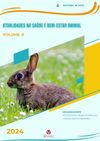
 In this case report, a female mixed-breed dog was observed with dermatophytosis, presenting with alopecia in the neck and ear, highlighting the zoonotic nature of the infection caused by fungi that can affect both animals and humans.