 11 citations
,
June 2017 in “Journal of cell science”
11 citations
,
June 2017 in “Journal of cell science” In this study, researchers found that AGD1 is crucial for membrane recruitment during root hair development in Arabidopsis thaliana, with its pleckstrin homology domain essential for targeting specific plasma membrane regions.
 199 citations
,
April 2010 in “Nature”
199 citations
,
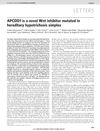
April 2010 in “Nature” A gene called APCDD1, which controls hair growth, is found to be faulty in a type of hair loss called hereditary hypotrichosis simplex.
6 citations
,
December 2019 in “Frontiers in genetics” In this study, animal model observations suggested that GLI1 expression may reduce cSCC initiation but is not involved in the tumor's aggressiveness.
 1 citations
,
April 2017 in “Journal of Investigative Dermatology”
1 citations
,
April 2017 in “Journal of Investigative Dermatology” This proof-of-concept study reported that a new, ultra-fast, one-step immunohistochemistry method improved the interpretation of Mohs surgery slides, particularly for poorly differentiated tumors.
2 citations
,
December 2013 in “Journal of dermatology” This letter reports a homozygous missense mutation in the LIPH gene causing autosomal recessive hypotrichosis simplex in a Chinese patient.
September 2025 in “OPAL (Open@LaTrobe) (La Trobe University)” This study observed that treating hair follicles with BM15766 and 7DHC led to structural damage, disrupted cellular organization, reduced expression of key genes and proteins, and increased apoptosis, in contrast to controls, indicating detrimental effects on hair follicle integrity.
11 citations
,
October 2002 in “Genetics” This study mapped a spontaneous mouse hair mutation, "hague," to keratin genes on chromosome 15 but found no gene mutations in hague mice.
 July 2022 in “Journal of Investigative Dermatology”
 This study found that the transcription factor Lef1 is crucial for normal skin and hair development and wound healing, highlighting its role in regulating essential genes and pathways in papillary fibroblasts.
December 2004 in “PLoS ONE” In this study, the Foxn1(-/-) nude phenotype was associated with an altered regulation of epithelial progeny in skin, offering a valuable model for investigating stem cell niche maintenance and regulation.
 16 citations
,
February 2019 in “Gene”
16 citations
,
February 2019 in “Gene” This study describes two methods for isolating hair follicle stem cells from newborn Yangtze River Delta White Goats, highlighting differences in cell viability and marker protein expression between the methods.
4 citations
,
July 2024 in “Biomolecules” This review suggests systemic changes in polycystic ovary syndrome may increase the risk of neurodegeneration, potentially linking it to Alzheimer's disease through common pathways affecting tryptophan metabolism.
 January 2024 in “Authorea (Authorea)”
 This review examined the use of nanomaterials in different stages of wound healing, describing their mechanisms, current challenges, and potential future applications, including intelligent healing through real-time monitoring and precision regulation, to guide future research in wound treatment.
October 2018 in “Deep Blue (University of Michigan)” This study found that matrix progenitor cell differentiation in hair growth has distinct early and late phases, and generated a mouse model to explore the hair follicle's role in harlequin ichthyosis.
132 citations
,
February 2002 in “Journal of Biological Chemistry” This study demonstrated that HOXC13 directly influences hair keratin gene expression by binding to specific DNA motifs, suggesting its role in early hair follicle differentiation.
25 citations
,
April 1985 in “Journal of Investigative Dermatology” 9 citations
,
April 2018 in “Canadian Journal of Animal Science” This study found that LEF-1 expression influences dermal papilla cells' proliferation through Wnt signaling, impacting the potential for cashmere yield improvement.
 April 2021 in “Journal of Investigative Dermatology”
 This trial found that intradermal injections of the Hair Stimulating Complex were well-tolerated and effectively stimulated hair growth and prevented hair loss in male pattern baldness participants over 18 weeks.

This study found that the long non-coding RNA lnc056 promotes the proliferation of hair follicle stem cells by upregulating TRIP6 expression through interaction with the transcription factor HNRNPUL1, suggesting a potential target for hair loss treatment.
92 citations
,
September 2013 in “Journal of Investigative Dermatology” This study found that peripheral clock genes, particularly BMAL1 and Period1, modulate human hair follicle cycling, suggesting their potential as therapeutic targets for affecting hair growth.
 September 2017 in “Journal of Investigative Dermatology”
 This study found that stabilizing HIF1A in hair follicle cells promoted a shift to glycolysis, potentially reducing oxidative stress and promoting hair growth, particularly in balding dermal papilla cells.
 5 citations
,
March 2023 in “Archives of dermatological research”
5 citations
,
March 2023 in “Archives of dermatological research” This study found that hidradenitis suppurativa is associated with increased serum levels of hypoxia-inducible factor-1α, suggesting its role in the disease's pathogenesis and as a treatment target.
 4 citations
,
September 2020 in “Cell division”
4 citations
,
September 2020 in “Cell division” In this study, XMU-MP-1 unexpectedly reduced cell proliferation and altered cell cycle progression in a model human hair follicle, possibly due to off-target kinase inhibition.
 April 2018 in “Journal of Investigative Dermatology”
 This study demonstrated that in genetic mouse models, the calcium sensor Stim1, not Stim2, is essential for sweat secretion in sweat glands.
4 citations
,
January 2022 in “Australasian Journal of Dermatology” This study found that serum HDAC1 levels are significantly higher in patients with alopecia areata compared to those with acne vulgaris and healthy controls, suggesting potential therapeutic opportunities for HDAC inhibitors.
30 citations
,
February 2010 in “The journal of investigative dermatology/Journal of investigative dermatology” This study found that the orphan protein Plet-1 is expressed in specific keratinocytes of mouse hair follicles and may regulate keratinocyte interactions with inert tissues by affecting migration and adhesion.
 52 citations
,
April 2013 in “Developmental Cell”
52 citations
,
April 2013 in “Developmental Cell” This study found that Brg1, a chromatin-remodeling enzyme, plays a critical role in hair regeneration and early epidermal repair by regulating bulge stem cells through a Brg1-Shh interaction.
October 2021 in “bioRxiv (Cold Spring Harbor Laboratory)” This study introduces the Hair Cell Analysis Toolbox (HCAT), a machine-learning software that automates the analysis of cochlear hair cells, enabling unbiased and comprehensive imaging data interpretation.
92 citations
,
May 2004 in “Journal of Investigative Dermatology”  1 citations
,
April 2018 in “Journal of Investigative Dermatology”
1 citations
,
April 2018 in “Journal of Investigative Dermatology” This study found that Polycomb repressive complex 1 is crucial for skin development and stem cell specification, influencing gene activity beyond its known repressor functions.
68 citations
,
December 2010 in “The journal of investigative dermatology/Journal of investigative dermatology” This study suggests a regulatory model where HOXC13 activates Foxn1, affecting hair and nail differentiation, supported by similarities in Hoxc13(tm1Mrc) and Foxn1(nu) mice phenotypes and gene expression patterns.