 August 2026 in “Pharmaceutics”
 In this study, researchers developed a dexpanthenol-infused nanotechnological platform within hyaluronic acid hydrogels that promoted wound healing in mice by providing a protective barrier and significantly enhancing skin regeneration, including increased fibroblast activity and tissue remodeling.
 11 citations
,
February 2018 in “Amino acids”
11 citations
,
February 2018 in “Amino acids” This study found that homocysteine-keratin accumulation in human hair increases towards the tips, linked to copper/iron-catalyzed demethylation of methionine, and may contribute to keratin damage.
 24 citations
,
July 2017 in “Structure”
24 citations
,
July 2017 in “Structure” In this study, researchers found that ligand homodimerization controls the receptor binding specificity of the FGF9 subfamily, preventing off-target activation of FGFR "b" isoforms.
 9 citations
,
June 2000 in “Journal of The American Academy of Dermatology”
9 citations
,
June 2000 in “Journal of The American Academy of Dermatology” This study reported that heterozygous carriers of a mutation in the human hairless gene did not differ from healthy homozygotes in the pattern of androgenetic alopecia.
January 2018 in “Indian Dermatology Online Journal” This case report describes a nine-year-old girl with juvenile dermatomyositis and alopecia areata, suggesting a possible etiological link between these coexisting immune-mediated diseases, a previously unreported association.
 1 citations
,
July 2024 in “International Journal of Biological Research”
1 citations
,
July 2024 in “International Journal of Biological Research” This study found that a high percentage of pediatric sickle cell disease patients have parents from medium-high socioeconomic status, indicating that the educational background of parents did not influence the disease's prevalence.
 8 citations
,
May 2019 in “Indian Journal of Plastic Surgery/Indian journal of plastic surgery”
8 citations
,
May 2019 in “Indian Journal of Plastic Surgery/Indian journal of plastic surgery” In this controlled study on hair transplantation, using autologous plasma as a graft holding solution resulted in better hair follicle cell survival, hair count, and density compared to Ringer's lactate, suggesting plasma's potential to enhance hair graft outcomes.
 13 citations
,
June 2024 in “Asian Pacific Journal of Cancer Prevention”
13 citations
,
June 2024 in “Asian Pacific Journal of Cancer Prevention” The researchers reported that the ethyl ester group in YH239-EE may enhance its ability to induce cell death, making the (+) enantiomer a potentially promising therapy for breast cancer reflected in MCF7 cell studies.
 May 2024 in “Animal genetics”
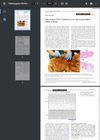
 The researchers investigated a Maine Coon cat with suspected classical Ehlers-Danlos Syndrome and discovered a heterozygous deletion in the COL5A1 gene, underscoring the value of whole-genome sequencing for precise veterinary diagnostics.
April 2017 in “Journal of dermatological science” This study reported that human hair follicles containing pluripotent stem cells can differentiate into cardiac muscle and other cells, indicating their potential for future clinical applications in heart and nerve regeneration.
 8 citations
,
May 2004 in “Textile Research Journal”
8 citations
,
May 2004 in “Textile Research Journal” This study reports promising preliminary results for using monoclonal antibodies to identify cashmere fibers, highlighting observed immunological differences from wool keratins.
This chapter emphasizes the critical role of the integumentary system in animal physiology, detailing its structures, immune functions, and sensory capabilities as crucial for homeostasis, protection, and various physiological processes.
6 citations
,
July 2025 in “Advanced Materials” This review discusses cell membrane-coated scaffolds in tissue engineering, emphasizing their potential to enhance therapeutic outcomes in regenerative medicine and reporting no new experimental results.
April 2022 in “The Journal of Sexual Medicine” This study reports that simultaneous cystoscopy, electroejaculation, transurethral resection of ejaculatory ducts, and seminal vesiculography were safe and effective in diagnosing and treating concurrent hematospermia and anorgasmia.
 30 citations
,
December 2001 in “Experimental dermatology”
30 citations
,
December 2001 in “Experimental dermatology” This study found that gonadal steroid hormones influence alopecia areata in C3H/HeJ mice, with estradiol promoting progression and dihydrotestosterone conferring resistance to disease onset.
6 citations
,
October 2024 in “Frontiers in Bioengineering and Biotechnology” This study reported that the use of composite RGDmix hydrogel improved the survival and proliferation of human amniotic mesenchymal stem cells and increased growth factor expression, enhancing wound healing through the RGDSP/integrin αv/PI3K/AKT signaling pathway.
This study found that patients with alopecia areata, particularly those with severe cases, exhibit significant systemic immune dysregulation, including altered cell communication networks and epigenetic remodeling in immune cells, suggesting potential pathways for therapeutic targeting.
42 citations
,
July 2021 in “Frontiers in Cell and Developmental Biology” This review examines the regeneration capabilities of skin, oesophagus, and oral mucosa, highlighting the oral mucosa's unique scarless healing properties and the potential of cell therapy to improve scar reduction in wound healing.
 August 2020 in “International Journal of Clinical Practice”
 In this study, researchers found no statistically significant difference in blood group distribution between patients with androgenetic alopecia and a healthy population.
January 2022 in “Galicia Clínica” This report documents a rare case of alopecia universalis in an HIV-positive patient in Portugal, highlighting the changing comorbidity spectrum in this population due to increased life expectancy from antiretroviral therapy.
9 citations
,
August 1980 in “Journal of Cutaneous Pathology” This study found that Rhodamin B staining of keratin was inconsistent across normal skin, epithelial tumors, and dermatoses, with notable differences in staining intensity between tricho-hyalin and keratohyalin granules.
 54 citations
,
August 2019 in “Bioscience trends”
54 citations
,
August 2019 in “Bioscience trends” This review discusses the potential of stem cell secretome in regenerative medicine and suggests that its paracrine effects, rather than direct cell replacement, may drive therapeutic benefits.
4 citations
,
November 2024 in “Current Opinion in Genetics & Development” 7 citations
,
November 2022 in “Biochemical and Biophysical Research Communications” This study investigated the heterogeneity of CD34+ cells in wound healing, identifying distinct cell clusters and suggesting potential therapeutic approaches for anagen and diabetic wounds.
 3 citations
,
May 2010 in “Archives of dermatology”
3 citations
,
May 2010 in “Archives of dermatology” This excerpt discusses website navigation and access details for JAMA Dermatology and reports no new research findings.
 53 citations
,
September 2020 in “Stem Cell Research & Therapy”
53 citations
,
September 2020 in “Stem Cell Research & Therapy” This review discusses strategies to enhance mesenchymal stem cell therapy effectiveness but reports no new clinical results; it highlights the need for improved consistency and efficacy in MSC-based treatments.
30 citations
,
April 2007 in “Journal of Leukocyte Biology” This study found that anti-CD44 treatment inhibited leukocyte migration in alopecia areata and eczema, suggesting targeted therapies could enhance contact sensitizer treatment for alopecia areata.
10 citations
,
December 2023 in “International Journal of Nanomedicine” This study reviewed the challenges of delivering nucleic acids for gene therapy, highlighting the limitations of non-viral vehicles and exploring bioinspired strategies using cell membrane camouflage for improved delivery efficacy.
19 citations
,
January 2019 in “Molecular Medicine Reports” This study found that for optimal ADSC viability during short-term storage, using 10% human serum at 4°C and utilizing the cells within 2 hours is most effective.
37 citations
,
January 1993 in “Journal of Investigative Dermatology”