 43 citations
,
August 2018 in “Cell Stem Cell”
43 citations
,
August 2018 in “Cell Stem Cell” This study found that Hoxc gene expression can reprogram mesenchymal dermal papilla cells, enhance epithelial stem cell regenerative potential, and promote region-specific hair follicle regeneration through Wnt signaling.
 1 citations
,
July 2014 in “Our Dermatology Online”
1 citations
,
July 2014 in “Our Dermatology Online” This article describes a rare case of alopecia with both scarring and non-scarring features, combining histologic signs of central centrifugal cicatricial alopecia with select immunologic features of alopecia areata.
November 2022 in “Journal of Investigative Dermatology” This study reported that an HS-associated NCSTN mutation in iPSC-derived skin organoids led to altered hair follicle stem cell differentiation and increased expression of proteins linked to HS inflammation.
14 citations
,
May 2022 in “Cell Reports” In this study, researchers found that basal cell carcinomas with common Hedgehog signaling mutations may require additional mutations to hyperactivate downstream signaling and progress beyond dormancy.
 1 citations
,
September 2014 in “Hormones”
1 citations
,
September 2014 in “Hormones” This review discusses the manifestations of non-classical congenital adrenal hyperplasia due to 21-hydroxylase deficiency across different life stages, but reports no new findings.
 1 citations
,
December 2023 in “Curēus”
1 citations
,
December 2023 in “Curēus” This study observed that five out of fourteen individuals aged 13-16 years, who were homozygous for the p.C282Y mutation related to hemochromatosis, had increased liver and phlebotomy-mobilized iron levels.
4 citations
,
February 2022 in “PeerJ” This study found that hair follicle mesenchymal stem cells improved liver function and pathology in a mouse model of liver cirrhosis, potentially by inhibiting the TGF-β/Smad pathway and reducing hepatic stellate cell activation.
1 citations
,
September 2025 in “Viruses” This study of HCPS survivors in Chile found that 61.9% reported incomplete recovery at 3-6 months post-symptom onset, with ECMO users experiencing more motor dysfunction and palpitations, highlighting the need for multidisciplinary care to address persistent symptoms.
1 citations
,
September 2016 in “Brain Behavior and Immunity” Hair cortisol levels can indicate stress and are affected by washing frequency, not cosmetic treatments.
 4 citations
,
January 1992 in “Clinical Oncology”
4 citations
,
January 1992 in “Clinical Oncology” This report describes three cases of hypertrichosis lanuginosa acquisita occurring after cytotoxic chemotherapy for cancer, suggesting a possible relationship which is discussed alongside a review of existing literature.
 December 2017 in “British Journal of Dermatology”
 Targeted therapy for skin cancer is complex due to the role of the hedgehog pathway in both cancer and hair growth.
 2 citations
,
August 2017 in “British Journal of Dermatology”
2 citations
,
August 2017 in “British Journal of Dermatology” Hair loss in Cronkhite-Canada syndrome may be due to an autoimmune response.
 May 2025 in “Cellular Oncology”
 This study suggests that dual inhibition of P-cadherin and c-Met could be an effective treatment strategy for head and neck squamous cell carcinoma by targeting resistant tumor cells.
December 2025 in “JGH Open” In this case study, a 78-year-old Japanese woman with Cronkhite-Canada syndrome experienced mesenteric lymphadenopathy, which reduced in size after treatment with the corticosteroid prednisolone. This suggests that mesenteric lymphadenopathy, though uncommon in CCS, may respond to steroid therapy.
 1 citations
,
June 2022 in “Chinese medical journal/Chinese Medical Journal”
1 citations
,
June 2022 in “Chinese medical journal/Chinese Medical Journal” This study identified two novel mutations in the CDH3 gene causing HJMD in a Chinese patient, expanding the genetic and phenotypic understanding of the disorder.
March 2026 in “Journal of Investigative Dermatology” Genetic factors, especially PADI3 gene variants, contribute to CCCA in women of African descent.
1 citations
,
January 2022 in “Clinical Cases in Dermatology” This review discusses central centrifugal cicatricial alopecia, emphasizing its clinical features, potential contributing factors, and treatment options, but does not report new clinical findings.
 37 citations
,
August 2016 in “Clinical, Cosmetic and Investigational Dermatology”
37 citations
,
August 2016 in “Clinical, Cosmetic and Investigational Dermatology” This article discusses central centrifugal cicatricial alopecia, highlighting its prevalence, potential genetic factors, and management challenges, but reports no new clinical conclusions and calls for further research.
 2 citations
,
October 2021 in “Research Square (Research Square)”
2 citations
,
October 2021 in “Research Square (Research Square)” This study found that in patients undergoing allogeneic hematopoietic stem-cell transplantation, older age significantly increases the risk of hemorrhagic cystitis, especially in males, who are also affected by prostatic hyperplasia.
 April 2019 in “The journal of investigative dermatology/Journal of investigative dermatology”
 In this study, the researchers observed significant metabolic dysregulation in central centrifugal cicatricial alopecia, particularly involving lipid metabolism and the downregulation of AMPK-related genes.
 October 2023 in “The American Journal of Gastroenterology”
 This case report describes chronic iron deficiency anemia in a patient with Cronkhite-Canada syndrome, highlighting the need for more data to guide treatment and cancer surveillance due to its rarity and mortality risk.
 April 2020 in “Journal of animal research”
 In this study, researchers identified hair follicle stem cells in the bulge region of canine hair follicles, suggesting potential applications for future translational research.
14 citations
,
December 1998 in “British Journal of Cancer” This study found that breast carcinomas ectopically express a truncated form of hHb1 mRNA, which is associated with epithelial cell transformation.
This study found that hair cortisol concentrations in mother-daughter pairs are a potential biomarker for cortisol responses to chronic stress, with daughter-mother similarities affected by parenting styles and children's symptoms.
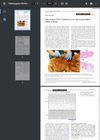 May 2024 in “Animal genetics”
 The researchers investigated a Maine Coon cat with suspected classical Ehlers-Danlos Syndrome and discovered a heterozygous deletion in the COL5A1 gene, underscoring the value of whole-genome sequencing for precise veterinary diagnostics.
August 2026 in “Acta Dermato Venereologica” This study found that women with central centrifugal cicatricial alopecia had a substantial prevalence of systemic comorbidities, including strong associations with dyslipidemia, uterine leiomyomas, and anxiety disorders.
 April 2023 in “Journal of Investigative Dermatology”
 In this study, researchers developed a detailed spatial atlas of healthy human skin and basal cell carcinoma, revealing that basal cell carcinoma likely originates from hair follicles and involves expansion of specific fibroblast subpopulations found in healthy skin.
 42 citations
,
April 2013 in “Steroids”
42 citations
,
April 2013 in “Steroids” This review discusses the pathophysiology, molecular genetics, and management of non-classic congenital adrenal hyperplasia due to 21-hydroxylase deficiency, with no new clinical findings reported.
 35 citations
,
January 2013 in “The Journal of experimental medicine/The journal of experimental medicine”
35 citations
,
January 2013 in “The Journal of experimental medicine/The journal of experimental medicine” This study found that deleting the CD98hc protein in mouse skin impairs wound healing and homeostasis, resembling aging effects, due to disrupted integrin signaling pathways.
 July 2018 in “Hair transplant forum international”
 This abstract contains only author affiliations and mentions the Asian Association of Hair Restoration Surgeons, without presenting any new research findings.