 16 citations
,
February 2018 in “Journal of Cosmetic Dermatology”
16 citations
,
February 2018 in “Journal of Cosmetic Dermatology” This study observed that carboxytherapy significantly improved clinical and dermoscopic measures in patients with alopecia areata and androgenetic alopecia compared to placebo, though some benefits regressed during follow-up.
 16 citations
,
May 2013 in “Urology”
16 citations
,
May 2013 in “Urology” The authors concluded that components of metabolic syndrome were strongly associated with severe lower urinary tract symptoms in Latin American men, while alopecia was not an independent predictor.
 14 citations
,
April 2020 in “Journal of Cosmetic Dermatology”
14 citations
,
April 2020 in “Journal of Cosmetic Dermatology” In this study, intradermal injections of QR678 were found to significantly reduce hair fall in men with androgenetic alopecia over 6 months, with superior improvements in hair density and thickness compared to PRP.
 13 citations
,
February 2020 in “Clinical, Cosmetic and Investigational Dermatology”
13 citations
,
February 2020 in “Clinical, Cosmetic and Investigational Dermatology” In this study, men with androgenetic alopecia had lower BMI and waist-to-hip ratios than controls, but no significant association with hypertension or other lifestyle factors was observed.
 7 citations
,
February 2016 in “Arab journal of urology”
7 citations
,
February 2016 in “Arab journal of urology” This study found that patients with androgenetic alopecia had a higher incidence of metabolic syndrome and benign prostatic hyperplasia compared to those without the condition.
 5 citations
,
December 2018 in “Journal of Cosmetic Dermatology”
5 citations
,
December 2018 in “Journal of Cosmetic Dermatology” This study found that after treatment with platelet-rich plasma, male androgenetic alopecia patients showed significant improvements in hair count, hair diversity, and reduction in certain dermoscopic features.
 March 2026 in “Journal of Pakistan Association of Dermatologists”
 This study found that low-dose oral minoxidil was more effective than topical minoxidil in increasing hair density and patient satisfaction among men with androgenetic alopecia, with fewer local side effects and better compliance reported over six months.
 January 2026 in “International Journal of Dermatology Venereology and Leprosy Sciences”
 In this randomized study, intradermal injections of dutasteride effectively improved androgenetic alopecia in 15 male patients, showing significant clinical improvement within one month and being well-tolerated without notable side effects, though the improvement was negatively correlated with longer disease duration.
This study found a significant association between androgenetic alopecia and metabolic syndrome, with AGA patients showing higher BMI, waist circumference, blood glucose, and cholesterol levels compared to controls.

This study found that injecting growth factor concentrates into the scalp of five patients with androgenic alopecia led to notable improvements in hair density and quality over eight weeks, with patients reporting satisfaction and minimal side effects.
 April 2024 in “Journal of dermatology research reviews & reports”
 This clinical trial found that combining 678 nm helmet-type low-level laser therapy with topical minoxidil 5% significantly increased hair density and patient satisfaction in men with androgenetic alopecia, compared to using minoxidil alone. Both treatments were well tolerated.
 March 2022 in “International Journal of Health Sciences”
 In this animal study, topical pentoxifylline was associated with improved hair regrowth in cyclophosphamide-induced hair loss in male Swiss albino rats.
 138 citations
,
August 1985 in “Journal of The American Academy of Dermatology”
138 citations
,
August 1985 in “Journal of The American Academy of Dermatology” Minoxidil promotes hair growth in male pattern baldness.
 53 citations
,
June 2017 in “Skin appendage disorders”
53 citations
,
June 2017 in “Skin appendage disorders” This review suggests that platelet-rich plasma may be effective in increasing hair density in patients with androgenetic alopecia, but more research is needed to determine the best treatment protocol.
 43 citations
,
January 2007 in “American Journal of Clinical Dermatology”
43 citations
,
January 2007 in “American Journal of Clinical Dermatology” This study concluded that a combined once-daily solution of 5% minoxidil and 0.01% tretinoin is as effective and safe as the conventional twice-daily 5% minoxidil application for treating androgenetic alopecia in men.
 41 citations
,
October 2011 in “Journal of Dermatology”
41 citations
,
October 2011 in “Journal of Dermatology” This study observed that long-term use of finasteride in Japanese men with androgenetic alopecia was associated with progressive hair regrowth in 87.1% of participants without significant safety concerns.
 33 citations
,
September 2019 in “Dermatologic Surgery”
33 citations
,
September 2019 in “Dermatologic Surgery” This study found that intradermal administration of adipose-derived stem cell–conditioned medium significantly increased hair density and dermal thickness, suggesting potential regenerative effects on both hair follicles and the interfollicular scalp in patients with alopecia.
 18 citations
,
August 2019 in “Journal of Cosmetic Dermatology”
18 citations
,
August 2019 in “Journal of Cosmetic Dermatology” This study found that autologous platelet-rich plasma was associated with increased hair density in people with pattern hair loss, but with considerable variability and unclear risks of bias.
 11 citations
,
March 2014 in “Journal of The European Academy of Dermatology and Venereology”
11 citations
,
March 2014 in “Journal of The European Academy of Dermatology and Venereology” In this study, researchers found that androgen receptor gene polymorphism is associated with higher androgenetic alopecia grades and PSA levels in men with benign prostatic hyperplasia, but not with prostate cancer.
 7 citations
,
February 2006 in “Psychological Reports”
7 citations
,
February 2006 in “Psychological Reports” In this study, men with early-stage hereditary hair loss reported greater psychological distress at the discovery of hair loss than at later stages.
 3 citations
,
October 2015 in “International Journal of Dermatology”
3 citations
,
October 2015 in “International Journal of Dermatology” This study found that the vertex/occiput ratios of hair density and diameter in prepubertal children may serve as reference values to identify androgenetic alopecia with high probability.
 May 2024 in “International journal of research in dermatology”
 This study found that vitamin D deficiency was significantly more prevalent among men with androgenetic alopecia in eastern Uttar Pradesh, India, than in age-matched controls, suggesting a potential link between vitamin D levels and the condition's pathogenesis.
 January 2024 in “Journal of Cosmetics Dermatological Sciences and Applications”
 This study found that 23.8% of participants with pattern hair loss had occipital involvement, with higher rates in females (35.6%) compared to males with early-stage hair loss (12.1%), illustrating significant gender differences in hair loss progression.
 January 2009 in “Egyptian Journal of Medical Human Genetics”
 This study, conducted among Egyptians, found a borderline significant association between the Stul polymorphism of the androgen receptor gene and androgenetic alopecia in males, with higher androgen receptor expression in balding scalp areas.
 4 citations
,
February 2021 in “International Journal of Dermatology”
4 citations
,
February 2021 in “International Journal of Dermatology” This study found that increased levels of PGD2 and prostacyclin and decreased levels of PGE2 and PGF2α were associated with baldness in androgenetic alopecia, suggesting potential targets for treatment.
 193 citations
,
August 2005 in “Journal of Investigative Dermatology Symposium Proceedings”
193 citations
,
August 2005 in “Journal of Investigative Dermatology Symposium Proceedings” This study found that the prevalence of androgenetic alopecia increases with age among both men and women in Maryborough, Australia, with 57% of women and 73.5% of men aged 80 and over affected.
 92 citations
,
October 2002 in “Journal of The American Academy of Dermatology”
92 citations
,
October 2002 in “Journal of The American Academy of Dermatology” This study reports that oral finasteride improved or stabilized hair loss in women with hyperandrogenism but not in postmenopausal women with female pattern hair loss.
 88 citations
,
October 2002 in “Journal of Dermatology”
88 citations
,
October 2002 in “Journal of Dermatology” In this study, 19 patients treated with finasteride for androgenetic alopecia developed moderate to severe depression, which resolved after stopping the medication, suggesting an association between finasteride and mood disturbances.
 86 citations
,
February 2003 in “Journal of The American Academy of Dermatology”
86 citations
,
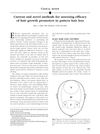
February 2003 in “Journal of The American Academy of Dermatology” This article discusses various mechanisms for promoting hair growth in pattern hair loss and highlights the challenge of balancing short-term measurable results in trials with the need for long-term efficacy data.
 64 citations
,
June 2010 in “Journal of The European Academy of Dermatology and Venereology”
64 citations
,
June 2010 in “Journal of The European Academy of Dermatology and Venereology” This study suggests that 5 mg/day oral finasteride may increase hair density and thickness in normoandrogenic Asian women with female pattern hair loss over 12 months.