 January 2025 in “Journal of Crohn s and Colitis”
 In this study, tofacitinib showed promising efficacy and safety for biologic-naïve elderly patients with moderate-to-severe ulcerative colitis, achieving steroid-free remission and clinical response over 52 weeks.
 June 2023 in “Journal of Pharmaceutical and Health Research”
 In this study with guinea pigs, a hair tonic containing 0.001% caffeine significantly stimulated hair growth, showing higher effectiveness with an average hair length of 18.294 mm compared to a tonic with 0.005% caffeine concentration, which resulted in an average hair length of 16.610 mm.
 October 2022 in “Journal of Armed Forces Medical College, Bangladesh”
 In this clinical trial, Tofacitinib effectively promoted hair regrowth in patients with alopecia areata, alopecia totalis, and alopecia universalis, with 75.6% experiencing no side effects, making it a promising treatment option according to the study.
December 2022 in “Zenodo (CERN European Organization for Nuclear Research)” In this report, a 14-year-old female with stubborn alopecia areata was successfully treated with oral tofacitinib, indicating its potential effectiveness for severe cases.
4 citations
,
December 2017 in “Journal of zoo and wildlife medicine” This study proposes that seasonal alopecia and reproductive changes in six female fossas at the San Diego Zoo may be linked to hormonal changes associated with reproductive activity.
Hair movement can indicate hair quality and health.
 55 citations
,
June 2007 in “Journal of Statistical Planning and Inference”
55 citations
,
June 2007 in “Journal of Statistical Planning and Inference” This study introduces an extended approach to the Bonferroni procedure that accounts for correlations among endpoints, aiming to improve test power while maintaining strong control of the family-wise type I error rate in clinical trials.
1 citations
,
March 2020 in “Hair transplant forum international” This study describes new devices, "HairMeasure" and "Scalp Zone Identifier," which offer an economical method to calculate Hair Mass Index without disposable materials.
January 2017 in “UiTM Institutional Repositories (Universiti Teknologi MARA)” In this study, administering varying doses of Hibiscus rosa-sinensis leaf water extract to BALB/c mice for 28 days did not result in significant changes in haematological parameters, body weight, or food consumption, suggesting no noticeable toxicity effects in the tested conditions.
8 citations
,
July 2020 in “Clinical, cosmetic and investigational dermatology” This review hypothesizes that excessive facial photo-protection may contribute to frontal fibrosing alopecia by disrupting immunological homeostasis through the aryl hydrocarbon receptor-kynurenine pathway, but it reports no new clinical results.
 1 citations
,
May 2021 in “Annals of the rheumatic diseases”
1 citations
,
May 2021 in “Annals of the rheumatic diseases” This study found that tofacitinib may be effective for treating pediatric rheumatic diseases, with especially promising results in patients with autoinflammatory diseases, arthritis and alopecia, and juvenile dermatomyositis.
 April 2019 in “Advances in integrative medicine”
 This study found that the highest rebound value in concrete with high volume slag occurs with 40% slag content, 10–20 mm basalt aggregates, and greater carbonation depth.
 62 citations
,
March 2013 in “JAMA Dermatology”
62 citations
,
March 2013 in “JAMA Dermatology” This case series reported that three pediatric patients with hidradenitis suppurativa showed decreased frequency and severity of disease flares after treatment with oral finasteride, with no significant adverse effects.
166 citations
,
July 1999 in “American Journal Of Pathology” This study found that the loss of a functional hr gene in mice leads to premature and abnormal hair follicle regression, disrupting normal hair cycling and architecture.
37 citations
,
December 2003 in “Reproductive Toxicology” The researchers reported that the rat Hershberger assay reliably detected endocrine-disrupting effects of finasteride, procymidone, and 17α-methyltestosterone, validating the assay's sensitivity for identifying hormonal activity.
 7 citations
,
March 2024 in “Scientific Reports”
7 citations
,
March 2024 in “Scientific Reports” This study reports that the new neighborhood face index (NFI) demonstrates a remarkably high correlation with the physiochemical properties of benzenoid hydrocarbons, highlighting its potential as a predictive tool.
 39 citations
,
July 2015 in “British Journal of Dermatology”
39 citations
,
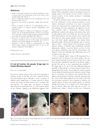
July 2015 in “British Journal of Dermatology” This article discusses the pseudo 'fringe sign' in frontal fibrosing alopecia, highlighting that it is not solely related to traction, and it reports no new clinical results.
This study found that in an ex vivo model simulating alopecia areata, the DHODH inhibitor farudodstat reduced T-cell proliferation and MHC protein expression in hair follicles, suggesting it may protect against immune privilege collapse without cytotoxic effects.
 January 2025 in “Termometer Jurnal Ilmiah Ilmu Kesehatan dan Kedokteran”
 In this study, researchers tested a tea leaf ethanol extract (Camellia sinensis) hair tonic and found it increased average hair growth compared to positive and negative controls over 28 days, but exhibited some instability and inhomogeneity after accelerated testing.
1 citations
,
April 2019 in “The journal of investigative dermatology/Journal of investigative dermatology” This study observed significant differences in the skin microbiome between hidradenitis suppurativa patients and healthy individuals, notably with decreased β-diversity and a distinct abundance of certain bacteria in affected skin.
 December 2024 in “Journal of Student Research”
 In this study, the researchers observed that using a shampoo containing hibiscus extract every two days was more effective at reducing hair loss among a small group of cosmetology students compared to using it every three days.
 27 citations
,
July 2009 in “Experimental and Clinical Endocrinology & Diabetes”
27 citations
,
July 2009 in “Experimental and Clinical Endocrinology & Diabetes” This study found that finasteride significantly improved hirsutism scores in women over 12 months and was well-tolerated with no serious side effects.
January 2022 in “UiTM Institutional Repositories (Universiti Teknologi MARA)” This study suggests that coffee ground extract may accelerate hair growth in rabbits, potentially due to its caffeine content.
 19 citations
,
March 2017 in “Scientific Reports”
19 citations
,
March 2017 in “Scientific Reports” This study suggests that the protease HAT-L4 plays a significant role in maintaining epidermal barrier function to prevent body fluid loss, as its absence in mice led to increased fluid loss and higher mortality.
April 2017 in “Leukemia research” This study reported that tofacitinib may be a promising treatment for alopecia areata in adolescents, showing significant hair regrowth with mild adverse effects in a retrospective review.
April 2010 in “The FASEB Journal” This study found that knockout mice lacking intestinal hephaestin are smaller and anemic compared to wild-type, suggesting other mechanisms may compensate for iron absorption.
 5 citations
,
September 2021 in “Journal of The American Academy of Dermatology”
5 citations
,
September 2021 in “Journal of The American Academy of Dermatology” This study found a high prevalence of beard and eyebrow alopecia in male patients with frontal fibrosing alopecia, and suggests a potential link between hormonal imbalances and the condition.
 June 2017 in “Journal of the American Academy of Dermatology”
 In this retrospective study, tofacitinib was found to be effective and well-tolerated for treating severe alopecia areata, with 77% of patients achieving a clinical response over 4-20 months, though results were more favorable for patients with less extensive hair loss.
 1 citations
,
January 2013
1 citations
,
January 2013 In this study conducted in Ilam province, Iran, researchers found that 19.35% of red foxes and 17.85% of jackals were infested with at least one type of ectoparasite, primarily Ctenocephalides canis.
 9 citations
,
October 2019 in “Dermatologic Therapy”
9 citations
,
October 2019 in “Dermatologic Therapy” This study observed that oral tofacitinib was reasonably well-tolerated but had limited efficacy in treating alopecia areata, with a clinical response seen in 41.4% of patients over six months.