 6 citations
,
December 2021 in “Scientific Reports”
6 citations
,
December 2021 in “Scientific Reports” This study found that inhibiting class I histone deacetylases in postnatal mouse dermal cells preserved their ability to induce hair follicles during culture by increasing specific gene expressions and activating the Wnt signaling pathway.
28 citations
,
October 2024 in “Advanced Materials” This study reports that a new artificial skin system using multi-layered hydrogels can promote scarless wound healing and regenerate appendages like hair follicles without cell transplantation.

This study retrospectively analyzed 945 patients with head and neck cSCC to identify risk factors for recurrences, reporting treatment modality, tumor characteristics, and patient factors such as immunosuppression as strong predictors for loco-regional recurrences.
1 citations
,
January 2020 in “Microscopy research” This study found that hair follicle stem cells from the bulge region in mice and humans can be isolated and cultured to maintain their phenotype and high proliferative capacity, suggesting their potential as an accessible source for tissue engineering and regenerative therapies.
 76 citations
,
January 2017 in “World Journal of Stem Cells”
76 citations
,
January 2017 in “World Journal of Stem Cells” This review discusses the potential applications of adipose-derived stromal cells for treating conditions like colitis, liver failure, and more, without presenting new clinical results.
 1 citations
,
June 2023 in “The FASEB journal”
1 citations
,
June 2023 in “The FASEB journal” This study found that in mice, LSD1 interacting with HSP90 accelerates skin wound healing by enhancing HFSC glycolytic metabolism, proliferation, and differentiation via the c-MYC/LDHA axis.
4 citations
,
January 2018 in “Journal of dermatology & dermatologic surgery” This review compares European and U.S. treatment guidelines for hidradenitis suppurativa and reports no definitive standard, highlighting the need for more randomized controlled trials.
17 citations
,
March 2023 in “Journal of Clinical Medicine” This study found that using PRP injections in skin flap reconstructions and combining acellular dermal matrix with split-thickness skin grafts improved healing and reduced complications in the surgical treatment of hidradenitis suppurativa.
822 citations
,
January 2021 in “Genome biology” This study presents a new method called scMC that effectively distinguishes biological from technical variation in single-cell genomics datasets, demonstrating its ability to accurately align and detect biological signals across various experiments.
14 citations
,
March 2018 in “The American journal of case reports” This study highlights the phenotypic variability in 5 patients with Woodhouse-Sakati syndrome carrying the c.436delC mutation, suggesting a broader range of clinical presentations than previously recognized.
1 citations
,
July 2024 in “JCEM Case Reports” This report highlights a new genetic variant of Woodhouse-Sakati syndrome in two sisters from the first identified family case in Russia, emphasizing the varied manifestations of the disorder and the importance of genetic testing for diagnosis and patient-specific treatment planning.
25 citations
,
June 2009 in “British Journal of Dermatology” This study classified scars in discoid lupus erythematosus patients into six types based on anatomical location and morphology, suggesting early identification might influence more aggressive treatment strategies.
19 citations
,
August 2019 in “Journal of Cellular Biochemistry” This study found that adipose‐derived stem cells can restore skin barrier function and inhibit photoaging-related responses in UVB-irradiated mice, suggesting a potential therapeutic role in managing skin photoaging.
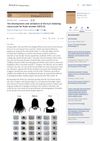 October 2023 in “The Journal of Dermatology”
 This study developed and validated the Hair-Shedding Visual Scale for Asian Women, finding it to be an effective tool for identifying FPHL and TE.
 August 2022 in “Frontiers in genetics”
 This study identified a novel bi-allelic missense variant in the DSC3 gene linked to severe Hypotrichosis with Recurrent Skin Vesicles in a Saudi child, supporting its role in the condition.
256 citations
,
March 2019 in “Journal of the American Academy of Dermatology” This review provides graded evidence and a therapeutic algorithm for managing hidradenitis suppurativa, but does not present new clinical results.
November 2024 in “Journal of Investigative Dermatology” Secukinumab reduces immune activity in hidradenitis suppurativa skin.
41 citations
,
November 2019 in “Journal of Ultrasound in Medicine” This study found that 70-MHz ultrasound can detect early signs of hidradenitis suppurativa linked to severity, including hair follicle abnormalities and keratin fragmentation, aiding in diagnosis and management.
8 citations
,
June 2015 in “Wound Repair and Regeneration” This study found that stem cell factor (SCF) improved wound healing in diabetic mice by enhancing stem cell recruitment and increasing key protein expressions involved in the healing process.
3 citations
,
January 2021 in “Oxidative Medicine and Cellular Longevity” In this study, Nrf-2-expressing hair follicle mesenchymal stem cells showed the most significant therapeutic effect in a rat model of ulcerative colitis, suggesting a new potential treatment for the disease.
4 citations
,
February 2022 in “PeerJ” This study found that hair follicle mesenchymal stem cells improved liver function and pathology in a mouse model of liver cirrhosis, potentially by inhibiting the TGF-β/Smad pathway and reducing hepatic stellate cell activation.
January 2025 in “Clinical Case Reports” This case study details the successful treatment of macrophage activation syndrome with dexamethasone and cyclosporine in a 36-year-old woman with adult-onset Still's disease, highlighting the critical importance of timely aggressive treatment.
 March 2026 in “Mendeley Data”
 This tool was developed to enhance reproducibility and sensitivity in measuring partial hair regrowth in alopecia areata patients, particularly those undergoing JAK inhibitor therapy, using scalp photographs.
 23 citations
,
September 2018 in “Journal of Investigative Dermatology”
23 citations
,
September 2018 in “Journal of Investigative Dermatology” This study reported that treating wounds with a hydrogel from acellular porcine adipose tissue and adipose-derived stem cells may significantly enhance wound healing and regeneration by promoting new adipocyte formation.
36 citations
,
December 2014 in “F1000 prime reports” This article reviews the challenges in treating hidradenitis suppurativa and discusses potential treatment options, emphasizing the need for increased awareness and comprehensive care, but reports no new clinical results.
 33 citations
,
September 2019 in “Dermatologic Surgery”
33 citations
,
September 2019 in “Dermatologic Surgery” This study found that intradermal administration of adipose-derived stem cell–conditioned medium significantly increased hair density and dermal thickness, suggesting potential regenerative effects on both hair follicles and the interfollicular scalp in patients with alopecia.
17 citations
,
August 2020 in “Stem Cell Research & Therapy” This study found that a 3D co-culture of endothelial colony-forming cells and adipose-derived stem cells restored stem cell properties and improved healing in a mouse model of chronic injury.
January 2009 in “Epsilon: Revista de la Sociedad Andaluza de Educación Matemática "Thales"” This report describes a Cronkhite-Canada syndrome patient with severe sepsis and disseminated intravascular coagulation successfully treated using combined therapies, including recombinant human soluble thrombomodulin.
112 citations
,
October 2008 in “Wound Repair and Regeneration” This study demonstrated that disrupting sonic hedgehog signaling, using cyclopamine, significantly impaired wound healing in a mouse model, suggesting its crucial role in postnatal tissue repair.
4 citations
,
January 2020 in “Indian dermatology online journal” This report describes two scalp lichen simplex chronicus cases with hair loss and intense itching, noting unique dermoscopic and histopathological features.