12 citations
,
June 2023 in “International Journal of Molecular Sciences” This review examines the potential of biomaterial-based wound dressings in managing diabetic foot ulcers, highlighting their versatility and therapeutic properties for promoting wound healing in individuals with diabetes mellitus.
1 citations
,
December 2025 in “Journal of Investigative Dermatology” Photocrosslinkable biomaterials can improve wound healing by controlling mechanical environments.
1 citations
,
July 2025 in “Biomaterials Advances” This study investigated how 2D and 3D cell culturing methods influence hair follicle morphogenesis, finding that 3D cultures responded more expectedly to minoxidil while 2D cultures reacted better to DHT treatment, challenging the assumption that 3D cultures are always superior.
 January 2024 in “Biomaterials Research”
 This study found that human hair follicle dermal papilla cells cultivated as 3D spheroids in hexanoyl glycol chitosan-coated dishes formed hair-like structures, with minoxidil enhancing growth, and successfully integrated into artificial skin models, suggesting advancements for hair loss treatments and skin restoration therapies.
 2 citations
,
July 2020 in “Journal of Drug Delivery Science and Technology”
2 citations
,
July 2020 in “Journal of Drug Delivery Science and Technology” In this study, forming inclusion complexes of Finasteride and poly (ethylene glycol) resulted in significantly improved solubility and dissolution rates, suggesting a promising new solid form for enhanced drug release.

This research focused on formulating finasteride, dutasteride, and minoxidil with cyclodextrins to enhance their solubility and skin penetration for topical use, potentially reducing scalp irritation from current alcohol-based preparations.
 5 citations
,
January 1994 in “Skin Pharmacology and Physiology”
5 citations
,
January 1994 in “Skin Pharmacology and Physiology” This study found that minoxidil forms a reservoir in the skin, allowing sustained drug delivery even after cleansing, while propylene glycol does not.
 24 citations
,
November 2018 in “International Journal of Molecular Sciences”
24 citations
,
November 2018 in “International Journal of Molecular Sciences” This review discusses ethosomes as lipid carriers that enhance drug penetration into deep skin layers and underscores the need for advanced research on their pharmaceutical applications, but it reports no clinical outcomes.
 12 citations
,
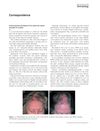
November 2011 in “International Journal of Dermatology”
12 citations
,
November 2011 in “International Journal of Dermatology” A woman developed a scalp condition from using minoxidil, which improved with a different treatment but left scarring.
 1 citations
,
July 2023 in “Cureus”
1 citations
,
July 2023 in “Cureus” In this study, cetosomal-based minoxidil solutions, with and without finasteride, were observed to be effective and tolerable treatments for androgenetic alopecia in adults, providing a potential alternative to traditional alcoholic formulations.
 1 citations
,
November 2015 in “Indian Journal of Clinical Biochemistry”
1 citations
,
November 2015 in “Indian Journal of Clinical Biochemistry” The conference presented findings on how vitamin D levels, genetic factors, and lifestyle choices like smoking and yoga affect various health conditions and diseases.
 85 citations
,
January 2007 in “Journal of Drug Targeting”
85 citations
,
January 2007 in “Journal of Drug Targeting” This study found that liposomal formulations improved minoxidil delivery to skin layers compared to niosomes and a control solution, suggesting enhanced potential for topical hair loss treatment.
2 citations
,
May 2022 in “Journal of Industrial and Engineering Chemistry” This study observed that minoxidil-loaded nanoparticles significantly enhanced skin penetration and hair regrowth in mice within three weeks, without ethanol and propylene glycol, suggesting they are a promising delivery method for treating hair loss.
 2 citations
,
January 2008 in “Journal of Society of Cosmetic Chemists of Japan”
2 citations
,
January 2008 in “Journal of Society of Cosmetic Chemists of Japan” PMS nanoparticles improve damaged hair by protecting and restoring its surface and color.
 62 citations
,
May 1997 in “Journal of Pharmaceutical Sciences”
62 citations
,
May 1997 in “Journal of Pharmaceutical Sciences” This study concluded that sebaceous glands are the main pathway for the antiandrogen RU 58841 to permeate the skin, with liposomes enhancing localization in these glands.
 5 citations
,
February 2010 in “Drug development and industrial pharmacy”
5 citations
,
February 2010 in “Drug development and industrial pharmacy” This study found that vesicles formed with behenyltrimethylammonium chloride, stearic acid, and hinokitiol significantly improved skin permeation of hinokitiol in vitro, which may aid in hair growth promotion.
 2 citations
,
January 2015 in “Springer eBooks”
2 citations
,
January 2015 in “Springer eBooks” Environmental factors and exposure to toxins may contribute to male infertility by affecting sperm and hormone function.
 1 citations
,
January 1997 in “Skin research”
1 citations
,
January 1997 in “Skin research” Hinokitiol and pantothenylethylether in hair products can cause strong allergic reactions.
11 citations
,
March 2024 in “Current Issues in Molecular Biology” This review discusses the pharmacological actions and potential therapeutic benefits of ginsenoside compound K for metabolic disorders, reports no new clinical results, and suggests further research on its bioavailability and toxicity.
 May 1987 in “Inpharma (Balgowlah)”
 Topical minoxidil may slow hair loss but often doesn't lead to satisfactory hair regrowth and requires ongoing treatment.
 17 citations
,
May 1998 in “Contact Dermatitis”
17 citations
,
May 1998 in “Contact Dermatitis” Minoxidil can cause pustular allergic reactions on skin.
 16 citations
,
October 2009 in “Dermatology”
16 citations
,
October 2009 in “Dermatology” This study found that a cream containing spironolactone did not affect hair growth in hirsute women.
 16 citations
,
March 2009 in “Skin Pharmacology and Physiology”
16 citations
,
March 2009 in “Skin Pharmacology and Physiology” This study found that the penetration enhancer SEPA™ significantly increased both the speed and amount of hair growth from minoxidil in balding stumptail macaques compared to Rogaine®.
1 citations
,
October 2015 in “The Pharma Innovation Journal” This study found that the optimal method to introduce Saw Palmetto extract into emulsion bases for androgenic alopecia treatment involves mixing it with 48% ethanol at the end of the formulation process.
 43 citations
,
July 2016 in “European journal of pharmaceutical sciences”
43 citations
,
July 2016 in “European journal of pharmaceutical sciences” This study found that dexamethasone-loaded Eudragit® L 100 nanoparticles displayed controlled drug release depending on pH levels, with minimal toxicity to human fibroblasts.
 152 citations
,
April 2012 in “Recent Patents on Inflammation & Allergy Drug Discovery”
152 citations
,
April 2012 in “Recent Patents on Inflammation & Allergy Drug Discovery” This review describes minoxidil's hair regrowth mechanism and discusses dermatological applications, but reports no new clinical results, emphasizing the need for regular use and addressing allergic reactions.
 128 citations
,
July 2009 in “International Journal of Pharmaceutics”
128 citations
,
July 2009 in “International Journal of Pharmaceutics” This study found that penetration enhancer-containing vesicles significantly improved minoxidil delivery to the skin compared to traditional liposomes and penetration enhancer-containing ethanolic solutions, with deformability linked to enhanced deposition.
 55 citations
,
January 2002 in “Journal of liposome research”
55 citations
,
January 2002 in “Journal of liposome research” This research explores developing liposomal formulations to enhance the delivery of difficult-to-absorb agents directly to hair follicles and sebaceous glands, with minoxidil and plasmid DNA as study molecules.
 2 citations
,
August 2020 in “Natural Product Communications”
2 citations
,
August 2020 in “Natural Product Communications” This study found that the topical application of a mixture of Platycladus orientalis leaf extract and α-terpineol promoted hair growth in mice by inducing early anagen transition and increasing growth factor expressions.
 January 2019 in “International Journal of Herbal Medicine”
 This study concluded that a hair emulgel formulation combining extracts from four medicinal plants demonstrated desirable characteristics of spreadability, viscosity, pH, and safety, making it effective, harmless, and economical for potential hair care use.