 51 citations
,
February 2009 in “Journal of dermatological science”
51 citations
,
February 2009 in “Journal of dermatological science” In this study, β-catenin overexpression in human hair outer root sheath cells increased the expression of Pitx2, which activated the follicular differentiation pathway, suggesting Pitx2's potential role as a modulator in hair growth control.
 6 citations
,
January 2015 in “Biochemical Society Transactions”
6 citations
,
January 2015 in “Biochemical Society Transactions” This review discusses the role of Ysc84/SH3yl1 proteins in linking actin regulation to membrane morphology changes but reports no new experimental results.
 33 citations
,
February 1999 in “The journal of investigative dermatology/Journal of investigative dermatology”
33 citations
,
February 1999 in “The journal of investigative dermatology/Journal of investigative dermatology” In this study, researchers found that overexpression of IGF-1 in transgenic mice stimulated increased vibrissa growth during the first neonatal hair cycle compared to their nontransgenic littermates.
EGF and FGF signaling stops hair follicle development in mice.
171 citations
,
June 2004 in “Journal of Investigative Dermatology” GLI2 activates GLI1, promoting skin tumor growth and hair development.
85 citations
,
June 2017 in “Journal of Investigative Dermatology” This study found that Blimp1 plays a key role in promoting hair follicle morphogenesis and growth by mediating inductive signaling pathways in dermal papilla cells.
2 citations
,
September 2017 in “Journal of Investigative Dermatology” This study found that notch1 signaling is severely impaired in hidradenitis suppurativa patients with or without NCSTN or other gamma-secretase gene mutations, highlighting a canonical defect at the lesional tissue level.
January 2007 in “Journal of Inner Mongolia University” This study achieved successful cloning of the ovine keratin associated protein 6-1 gene, which may facilitate future research on transgenic animals and hair follicle gene regulation.
 87 citations
,
September 2019 in “Nature Communications”
87 citations
,
September 2019 in “Nature Communications” In this study, researchers identified that upon tissue injury in a mouse model, epidermal cells at the wound edge convert to an embryonic-like state with SOX11 and SOX4 playing a central role in modulating epidermal development and cell migration genes.
 22 citations
,
October 2020 in “Frontiers in Cell and Developmental Biology”
22 citations
,
October 2020 in “Frontiers in Cell and Developmental Biology” This study found that resveratrol and fisetin promoted hair growth in mice by inducing telomerase reverse transcriptase expression, which activates hair follicle stem cells and transitions follicles from a resting to a growth phase.
 October 2023 in “Journal of Cosmetic Dermatology”
 This study found that an octapeptide binding to Lgr5 can enhance the proliferation and differentiation of human primary hair cells by activating the Wnt/β-catenin signaling pathway, suggesting its potential as a treatment for hair loss in androgenetic alopecia.
15 citations
,
August 1991 in “Histochemistry and Cell Biology” Enhancing Factor is found in growing tissues like young mouse intestines and skin but not in adults.
This study found that TLR2 in hair follicle stem cells is crucial for maintaining hair health and regeneration, and its decrease in aging and obesity may impair hair growth, suggesting that stimulation through its ligand carboxyethylpyrrole could offer new therapeutic avenues.
 31 citations
,
February 2014 in “Journal of dermatological science”
31 citations
,
February 2014 in “Journal of dermatological science” This study found that placental growth factor (PlGF) enhanced hair shaft elongation and accelerated hair follicle growth, suggesting its potential as a therapeutic target for alopecia.
In this study, FGF5-knockout Dorper sheep generated using CRISPR/Cas9 showed increased fine-wool and active hair-follicle density, suggesting potential therapeutic applications for androgen alopecia.
 June 2026 in “Nature Communications”
 This study found that in stretch-mediated tissue expansion, fibroblasts adopt an embryonic-like, low-collagen state that enhances epidermal stem cell renewal, supporting coordinated skin expansion crucial for reconstructive surgeries.
 16 citations
,
March 2016 in “The journal of investigative dermatology/Journal of investigative dermatology”
16 citations
,
March 2016 in “The journal of investigative dermatology/Journal of investigative dermatology” In this study, researchers observed that a noncanonical mechanism involving the γ-secretase-dependent, RBPj-independent Notch intracellular domain improves survival in Msx2-Cre mice by delaying hair follicle destruction and reducing disease severity.
1 citations
,
May 2025 in “International Immunopharmacology” This study found that L-borneol, derived from Chinese medicine, significantly promotes the differentiation of rat hair follicle stem cells into basal layer cells, aiding wound healing, with the process involving inhibition of the PODXL2 gene by the microRNA rno-miR-127.
 November 2020 in “International journal of contemporary pediatrics”
 This study reports two siblings with severe combined immunodeficiency due to a mutation in the FOXN1 gene, characterized by T-cell immunodeficiency, alopecia totalis, and nail dystrophy.
113 citations
,
June 2010 in “Biological Chemistry” This study found that mice deficient in the enzyme cathepsin L exhibited impaired degradation of autophagolysosomal content, leading to an accumulation of large, abnormal vesicles in various tissues.
2 citations
,
January 2009 in “Human cell culture”  1 citations
,
May 2023 in “Frontiers in endocrinology”
1 citations
,
May 2023 in “Frontiers in endocrinology” The researchers reported that the novel MBTPS2 variant p.Glu172Asp found in a male proband is likely pathogenic, consistent with osteogenesis imperfecta symptoms and molecular signatures, including disrupted fatty acid metabolism and collagen production.
 2 citations
,
August 2022 in “Emergency medicine international”
2 citations
,
August 2022 in “Emergency medicine international” This study found that a key gene signature, including FGF11, highlights the immunologic nature of keloid lesions, distinguishing them from normal fibroblasts and scars.
14 citations
,
February 2011 in “Experimental dermatology” This study identifies cartilage oligomeric matrix protein (COMP) as a key extracellular matrix component in human hair follicle cycling, potentially regulated by TGFβ signaling, and suggests its importance in normal hair follicle biology.
1 citations
,
February 1991 in “Journal of Biological Chemistry”  21 citations
,
November 2010 in “Journal of molecular medicine”
21 citations
,
November 2010 in “Journal of molecular medicine” This study found that deleting FoxN1 in specific thymic epithelial cells disrupted the 3D thymic structure and led to age-dependent formation of 2D epithelial cysts, highlighting FoxN1's critical role in thymic morphogenesis.
 August 2019 in “Stem cells”
 This paper reviews the role of miRNAs in stem cell therapies and hair follicle growth, reporting no new findings but highlighting recent insights into fertility treatment and wound healing.
6 citations
,
February 2023 in “Genes” This study found that overexpression of the CUX1 protein promotes proliferation of Hu sheep dermal papilla cells and affects key genes in the Wnt/β-catenin signaling pathway.
 24 citations
,
July 2017 in “Structure”
24 citations
,
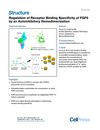
July 2017 in “Structure” In this study, researchers found that ligand homodimerization controls the receptor binding specificity of the FGF9 subfamily, preventing off-target activation of FGFR "b" isoforms.
 451 citations
,
March 2005 in “Endocrine Reviews”
451 citations
,
March 2005 in “Endocrine Reviews” This paper discusses the role of steroid sulfatase in hormone-dependent tumors and highlights the development of potent inhibitors, noting the commencement of a phase I trial for one inhibitor in postmenopausal breast cancer patients.