 1 citations
,
July 2022 in “Journal of dermatology”
1 citations
,
July 2022 in “Journal of dermatology” This study found that in vivo and in vitro, citric acid metabolism through the CS-CA axis suppressed hair growth and induced inflammation and cell apoptosis in hair follicles, suggesting it as a potential therapeutic target.
This study introduced the C-CAT, a new assessment tool for central centrifugal cicatricial alopecia, and found that established treatments improved symptoms in most patients over six months.
 97 citations
,
March 2002 in “Molecular and cellular biology”
97 citations
,
March 2002 in “Molecular and cellular biology” This study found that mice with a mutant CDP/Cux protein lacking the homeodomain showed severely impaired growth, high postnatal mortality, and reduced fertility, highlighting CDP/Cux's role in developmental regulation.
1 citations
,
February 2024 in “Preprints.org” This review discusses the pharmacology and potential therapeutic effects of rare ginsenoside compound K on metabolic disorders but presents no new clinical results, highlighting the need for further studies on its bioavailability and toxicity.
 29 citations
,
June 2017 in “Journal of Inherited Metabolic Disease”
29 citations
,
June 2017 in “Journal of Inherited Metabolic Disease” This review discusses the potential of using high-throughput and high-content screening methods for drug repositioning in rare diseases and reports no new results.
January 2000 in “Acta Academiae Medicine Militaris Tertiae” This study found that the distribution of hair keratin family proteins varies in normal scalp hair follicles, which may aid in identifying the origin of hair neoplasms.
3 citations
,
February 2020 in “DOAJ (DOAJ: Directory of Open Access Journals)” This review discusses the challenges of managing intraoperative floppy iris syndrome during cataract surgery and highlights the importance of preoperative risk assessment and multidisciplinary collaboration, reporting no new clinical results.
16 citations
,
June 2015 in “The journal of investigative dermatology/Journal of investigative dermatology” This study found that DHHC13 is crucial for hair anchoring and skin barrier function, with its deficiency in Zdhhc13(skc4) mice leading to cyclic alopecia and skin abnormalities due to cornifelin deficiencies.
 25 citations
,
April 2021 in “The EMBO Journal”
25 citations
,
April 2021 in “The EMBO Journal” This review discusses the role of hair follicle stem cells as active signaling centers in skin homeostasis, highlighting recent advancements and reporting no new clinical results.
September 2021 in “CRC Press eBooks” This review discusses dissecting cellulitis of the scalp and reports no new clinical findings.
45 citations
,
February 2013 in “The Journal of Dermatology” This study seeks to clarify the terminology and classification of keratoacanthoma and similar squamous cell carcinoma lesions with central keratin-filled craters to aid in accurate differential diagnosis.
20 citations
,
April 2009 in “Cell Biology International” This study demonstrates that bulge KSCs from hair follicles can transdifferentiate into corneal epithelial-like cells under specific conditions, which could support bioengineered cornea development.
 31 citations
,
August 2021 in “Stem Cell Research & Therapy”
31 citations
,
August 2021 in “Stem Cell Research & Therapy” This review examines the life cycle, biomarkers, and functions of hair follicle stem cells, emphasizing their role in hair loss therapy and other skin and hair disorders, but reports no new clinical results.
 March 2024 in “Indian Journal of Dermatology”
 In this case report, a 42-year-old male diagnosed with Cronkhite-Canada syndrome presented symptoms like chronic diarrhea, significant weight loss, skin hyperpigmentation, alopecia, and nail dystrophy, with endoscopic findings revealing numerous gastrointestinal polyps.
 August 2009 in “한국실험동물학회 학술발표대회 논문집”
 Fermented Rhus Verniciflua Stokes Extract may help hair grow in cells and mice.
 5 citations
,
March 2013 in “International journal of surgical pathology”
5 citations
,
March 2013 in “International journal of surgical pathology” This case report illustrates that a diagnosis of Cronkhite-Canada syndrome can be made without the presence of polyps, as demonstrated by resolving symptoms with steroid treatment.
 1 citations
,
October 2012 in “The Journal of Dermatology”
1 citations
,
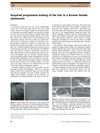
October 2012 in “The Journal of Dermatology” This letter to the editor describes a case of acquired progressive kinking of the hair in a Korean female adolescent, but no new research findings are reported.
 October 2023 in “Facial Plastic Surgery”
 This review outlines hair restoration surgery complications, particularly focusing on the iatrogenic causes associated with follicular unit excision, but it presents no new research findings.
 109 citations
,
December 1998 in “The Journal of Dermatology”
109 citations
,
December 1998 in “The Journal of Dermatology” This review discusses the hair follicle cycle's complex regulation and highlights the potential for targeting catagen control in future therapies without presenting new experimental data.
January 2017 in “PRISM (University of Calgary)” This study identifies unique gene expression patterns in specialized fibroblasts within adult hair follicles, which advances understanding of their role in tissue regeneration.
 January 2022 in “Acta dermatovenerologica Alpina, Pannonica et Adriatica (Tiskana izd.)”
 This article presents an overview of uncombable hair syndrome, emphasizing its clinical and molecular characteristics and noting systemic manifestations such as neuropsychiatric, ophthalmic, and cardiopulmonary issues.
12 citations
,
January 2016 in “Journal of clinical biochemistry and nutrition” In this study, combining deferasirox with sorafenib significantly reduced liver fibrosis and preneoplastic lesions in rats while also lessening adverse effects compared to sorafenib alone.
1 citations
,
January 2025 in “Burns & Trauma” This study found that targeting the molecule Midkine may reduce pain and itching in keloid patients by inhibiting specific Schwann cell activities contributing to these symptoms.
 January 2011 in “Web journal anti-aging medicine/Anti-aging medicine”
 In this study, kamishoyosangoshimotsuto extract improved skin moisture, texture, and brightness, as well as hair thickness and strength in women with skin and scalp hair problems over 24 weeks.
2 citations
,
January 2010 in “PubMed” This case report observed no hair regrowth after treating a woman with postmenopausal frontal fibrosing alopecia using systemic and local corticosteroids, suggesting the need for more innovative therapies.
1 citations
,
September 2025 in “International Journal of Molecular Sciences” This study found that primary stem cells from concentrated growth factor can differentiate into adipogenic, endothelial, and neuronal lineages in vitro, suggesting potential for use in regenerative therapies.
 27 citations
,
June 2005 in “The journal of investigative dermatology/Journal of investigative dermatology”
27 citations
,
June 2005 in “The journal of investigative dermatology/Journal of investigative dermatology” This study identified numerous size polymorphisms in the human ultrahigh sulfur KAP4 genes due to intragenic sequence variations, suggesting these polymorphisms may have arisen through deletions and duplications during evolution.
April 2010 in “Cancer Research” This study found that altering CDK4 expression in mice affects the population of keratinocyte stem cells, suggesting a correlation with susceptibility to skin papillomas.
 3 citations
,
June 2022 in “European journal of human genetics”
3 citations
,
June 2022 in “European journal of human genetics” This study reports the first cases of recessive KRT17-related pachyonychia congenita involving all ectodermal derivatives in seven members of two consanguineous Pakistani families.
June 2026 in “British Journal of Dermatology” This study presents cases suggesting that hair transplantation may trigger de novo frontal fibrosing alopecia in some patients, highlighting a potential association worth considering as cosmetic hair procedures become more common.