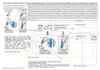
TLDR Hair follicle stem cells can become corneal-like cells with the help of pax6.
The study demonstrated that hair follicle bulge keratinocyte stem cells (KSCs) could transdifferentiate into corneal epithelial-like cells, highlighting their potential for therapeutic applications in bioengineered corneas. The transdifferentiation process was facilitated by the upregulation of pax6 and the downregulation of β-catenin and Lef-1. The research showed that bulge KSCs, isolated by collagen type IV adhesiveness, exhibited high colony formation efficiency and expressed specific markers such as CD34 and α6-integrin. When cultured in a conditioned medium containing corneal limbus soluble factors, these cells expressed keratin12, a specific marker of corneal epithelial cells. Overexpression of pax6 further induced the expression of k12 in bulge KSCs, suggesting a pivotal role of pax6 in this transdifferentiation process.
550 citations
,
December 2005 in “The Journal of clinical investigation/The journal of clinical investigation” Researchers successfully isolated and identified key markers of stem cell-enriched human hair follicle bulge cells.
419 citations
,
March 2005 in “Proceedings of the National Academy of Sciences” Hair-follicle stem cells can become neurons.
130 citations
,
February 2005 in “Proceedings of the National Academy of Sciences” Corneal cells can transform into skin and hair cells through specific signals.
212 citations
,
August 2004 in “Proceedings of the National Academy of Sciences” Hair follicle cells can create new blood vessels in the skin.
561 citations
,
April 2003 in “Journal of Investigative Dermatology” 1010 citations
,
August 2000 in “Cell” Hair follicle stem cells can form both hair follicles and skin.
129 citations
,
July 2019 in “Stem Cell Research & Therapy” Epidermal stem cells help heal severe skin wounds and have potential for medical treatments.
January 2025 in “Frontiers in Cell and Developmental Biology” Hox proteins help maintain keratinocyte identity by regulating miRNA expression.
83 citations
,
May 2013 in “International Journal of Molecular Sciences” Skin development in mammals is controlled by key proteins and signals from underlying cells, involving stem cells for maintenance and repair.
3 citations
,
March 2023 in “International journal of molecular sciences” Keratin protein production in cells is controlled by a complex system that changes with cell type, health, and conditions like injury or cancer.
1 citations
,
April 2024 in “Cells” Corneal cells can potentially revert to stem cells, aiding in repair and regeneration.