 August 2021 in “Annals of Agricultural and Environmental Medicine”
 This review provides a detailed analysis of frontal fibrosing alopecia, focusing on its prevalence in postmenopausal Caucasian women, associated comorbidities, and potential autoimmune, genetic, hormonal, and environmental factors; it emphasizes the need for improved understanding to enhance diagnosis and treatment.
1 citations
,
June 2025 in “Journal of Clinical Medicine” This study reported that frontal fibrosing alopecia predominantly affects postmenopausal women and identified potential risk factors like frequent β-blocker use and sunscreen application, indicating the need for further research.
2 citations
,
October 2020 in “Indonesian Journal of Nursing and Health Sciences” This article reviewed literature and found that Alginate-Chitosan-Fucoidan sponges may offer effective alternatives for wound dressing due to their enhanced wound healing abilities, attributed to good hemostatic and antibacterial properties, as well as excellent elasticity.
47 citations
,
September 2012 in “Human molecular genetics online/Human molecular genetics” This study suggests that the interaction between folliculin and plakophilin-4 (p0071) may play a role in folliculin's tumor suppressor function by regulating RhoA signaling, impacting cell migration and junction formation.
 10 citations
,
June 2020 in “Journal of Cosmetic Dermatology”
10 citations
,
June 2020 in “Journal of Cosmetic Dermatology” This study found a high prevalence of genital Lichen sclerosus and autoimmune comorbidities in patients with frontal fibrosing alopecia, suggesting a possible shared autoimmune process.
 July 2018 in “Elsevier eBooks”
 This review discusses the evolving understanding of frontal fibrosing alopecia as a generalized skin condition with diverse manifestations, and reports no new clinical results.
January 2012 in “Chinese Clinical Oncology” This study found that for metastatic colorectal cancer patients, substituting calcium folinate with disodium folinate in combination with fluorouracil and oxaliplatin showed similar effectiveness and safety as the mFOLFOX6 regimen.
16 citations
,
September 2021 in “Frontiers in Bioengineering and Biotechnology” In this study, chitosan-modified fucoidan/polyethylene oxide nanofibers were developed, showing promise as bio-scaffolds for tissue-engineered blood vessels by enhancing endothelial cell adhesion and inhibiting monocyte attachment.
 27 citations
,
January 2006 in “Dermatologic Surgery”
27 citations
,
January 2006 in “Dermatologic Surgery” This study found that the SAFE System may improve follicular unit extraction by reducing follicle transection rates and broadening patient eligibility, with only minor adverse reactions reported.
3 citations
,
April 2018 in “Journal of Investigative Dermatology” CCCA may be a fibroproliferative disorder, and anti-fibrotic therapies could help.
3 citations
,
December 2024 in “Journal of Animal Physiology and Animal Nutrition” In this study, researchers found that reducing FGF20 expression in dermal papilla cells of fine-wool sheep impedes the growth and differentiation of hair follicle stem cells, providing insights into wool trait improvement and regenerative medicine applications.
47 citations
,
August 2016 in “American Journal Of Pathology” This study reports that in systemic sclerosis, CD34+ dermal fibroblasts transition to CD34−, podoplanin+, and CD90+ fibroblasts across the dermis, suggesting a role in unchecked fibrosis.
January 2016 in “Indian dermatology online journal” This case report describes a 50-year-old woman with frontal fibrosing alopecia who showed no improvement despite multiple treatments, including intralesional triamcinolone and topical glucocorticoids.
20 citations
,
July 2005 in “Experimental dermatology” This study found that the fuzzy mutation in mice is linked to both structural hair defects and accelerated hair follicle cycling, influencing the regulation of hair cycle phases such as catagen and anagen.
 December 2021 in “Research Square (Research Square)”
 This study found that repeatedly collecting hair follicles from individuals with fragile X syndrome is feasible for measuring FMR1 and FMRP levels in both home and office settings.

This study describes a system called FOLLYSIS©, which uses mathematics and image analysis to optimize Follicular Unit Extraction hair transplants, showing high accuracy in measuring donor area density and reducing donor site injury.
 24 citations
,
July 2017 in “Structure”
24 citations
,
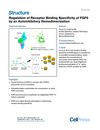
July 2017 in “Structure” In this study, researchers found that ligand homodimerization controls the receptor binding specificity of the FGF9 subfamily, preventing off-target activation of FGFR "b" isoforms.
2 citations
,
January 2019 in “Skin appendage disorders” This article reports a case of frontal fibrosing alopecia in its early inflammatory stage that responded positively to intralesional steroid treatment.
14 citations
,
February 2003 in “Journal of the American Academy of Dermatology” This case report describes the first use of laser capture microdissection to confirm that atypical lymphocytes in a folliculotropic mycosis fungoides case involving the central nervous system were part of the same tumor clone.
 December 2022 in “Journal of neurodevelopmental disorders”
 This study observed that repeated hair follicle sampling is feasible and reliable for measuring FMR1 mRNA and FMRP in individuals with Fragile X syndrome, supporting its use in longitudinal studies.
31 citations
,
January 2007 in “Journal of the American Academy of Dermatology” A rare skin growth was successfully removed without recurrence after one year.
This study found that FGF5 alternative spliceosomes inhibit dermal papilla cell proliferation and regulate hair follicle growth-related gene expression, impacting hair follicle development in rabbits.
October 2023 in “Journal of cystic fibrosis” 14 citations
,
January 2014 in “Indian Journal of Dermatology Venereology and Leprology” Frontal fibrosing alopecia can affect men's beards and leads to permanent hair loss.
 12 citations
,
October 2016 in “Anais Brasileiros de Dermatologia”
12 citations
,
October 2016 in “Anais Brasileiros de Dermatologia” This review discusses the increasing reports of frontal fibrosing alopecia, a form of scarring alopecia, and its potential link to autoimmune disorders, but reports no new clinical results.
 1 citations
,
December 2018 in “Journal of cutaneous pathology”
1 citations
,
December 2018 in “Journal of cutaneous pathology” This study found that 11% of cutaneous focal mucinosis lesions demonstrated follicular induction, which can mimic basal cell carcinoma histologically and complicate diagnosis.
 September 2023 in “Clinical, cosmetic and investigational dermatology”
 In this study, the researchers found that a 28-day topical treatment with a postbiotic ferment complex notably altered the scalp microbiome in women with sensitive scalps, increasing certain bacterial species and decreasing others, while also reportedly alleviating symptoms of sensitive skin syndrome in all participants.
 March 2022 in “Indian Journal of Animal Research”
 In this study, canine hair follicle stem cells were shown to be multipotent, capable of differentiating into various cell types like adipocytes in vitro.
44 citations
,
September 2016 in “American Journal Of Pathology” This study identified a subpopulation of neural crest-derived progenitor cells in human corneal endothelial tissue from normal and Fuchs endothelial corneal dystrophy donors, which may have potential for future cell therapy development.
 13 citations
,
September 2019 in “Scientific Reports”
13 citations
,
September 2019 in “Scientific Reports” In this study, high levels of the protein Flii in mice were associated with worsened symptoms and inflammation in ulcerative colitis, suggesting Flii may inhibit mucosal healing.