 July 2015 in “Journal of the Dermatology Nurses’ Association”
 This review covers the clinical presentation and challenges in treating frontal fibrosing alopecia in postmenopausal women and concludes that more research is needed to understand its etiology and develop effective treatments.
 6 citations
,
January 2017 in “British Journal of Dermatology”
6 citations
,
January 2017 in “British Journal of Dermatology” This article reviews frontal fibrosing alopecia, exploring its characteristics, demographics, and associated conditions, and calls for controlled trials due to an increase in worldwide cases; it reports no new findings.
 4 citations
,
March 2013 in “InTech eBooks”
4 citations
,
March 2013 in “InTech eBooks” Confocal Laser Scanning Microscopy (CLSM) is a useful tool for studying how drugs interact with skin and diagnosing skin disorders, despite some limitations.
 13 citations
,
March 2011 in “British Journal of Dermatology”
13 citations
,
March 2011 in “British Journal of Dermatology” This report describes a case of primary cutaneous follicle centre cell lymphoma presenting as hair thinning on the scalp, which is not a recognized feature of the condition.
September 2023 in “Journal of the American Academy of Dermatology” This study examined the application of new clinical guidelines for diagnosing frontal fibrosing alopecia in 18 men, highlighting that current diagnostic criteria may often overlook early beard involvement and sideburn recession.
 8 citations
,
September 2016 in “Journal of Investigative Dermatology”
8 citations
,
September 2016 in “Journal of Investigative Dermatology” In this study, Flii overexpression in mice enhanced fingertip regeneration and nail formation after both distal and proximal amputations, suggesting a role in digit and hair follicle regeneration possibly involving Wnt signaling.
 12 citations
,
March 2018 in “Anais brasileiros de dermatologia/Anais Brasileiros de Dermatologia”
12 citations
,
March 2018 in “Anais brasileiros de dermatologia/Anais Brasileiros de Dermatologia” This article describes a case of frontal fibrosing alopecia in a patient with chronic lichenoid lupus erythematosus and notes the lack of similar documented cases in existing literature.
 89 citations
,
February 2002 in “Australasian journal of dermatology”
89 citations
,
February 2002 in “Australasian journal of dermatology” This case report describes the first known instance of fibrosing alopecia associated with cutaneous lichen planus, suggesting fibrosing alopecia may be a variant of lichen planopilaris.
March 2026 in “Journal of Investigative Dermatology” Folliculin slows hair growth, and blocking it might help treat hair loss.
September 2021 in “Journal of the American Academy of Dermatology” This study found that reported stress and hair growth changes related to facial/body hair excess or scalp hair loss differ among ethnic gender minority groups, with black and other ethnic respondents experiencing more stress compared to Caucasians, particularly in relation to facial/body hair excess.
 16 citations
,
December 2018 in “ACS Biomaterials Science & Engineering”
16 citations
,
December 2018 in “ACS Biomaterials Science & Engineering” This research found that a biodegradable fibrous membrane incorporating fibroblast-derived ECM accelerated wound healing and improved neovascularization in a mouse model.
 13 citations
,
September 2019 in “Scientific Reports”
13 citations
,
September 2019 in “Scientific Reports” In this study, high levels of the protein Flii in mice were associated with worsened symptoms and inflammation in ulcerative colitis, suggesting Flii may inhibit mucosal healing.
3 citations
,
April 2018 in “Journal of Investigative Dermatology” CCCA may be a fibroproliferative disorder, and anti-fibrotic therapies could help.
 January 2025 in “Journal of Food Biochemistry”
 In this study, 2′‐Fucosyllactose (2′‐FL) administration significantly reduced hair loss and increased hair length and thickness in a testosterone-induced androgenic alopecia mouse model, suggesting potential as a therapeutic agent for AGA.
 November 2023 in “Journal of cosmetic dermatology”
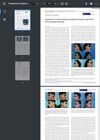
 This report describes three cases of erythromelanosis follicularis faciei et colli showing significant improvement in facial telangiectasia following treatment with a 595-nm pulsed dye laser, with minimal recurrence observed during follow-up.
 May 2026 in “International Journal of Drug Delivery Technology”
 This case study highlights Erythromelanosis follicularis faciei et colli as an easily overlooked pigmentary disorder characterized by a distinctive triad requiring precise diagnosis for effective patient counseling and cosmetic management.
November 2024 in “Dermatology and Therapy” In this review, cosmetic practices such as non-ablative lasers, autologous fat injections, and oral isotretinoin may help alleviate certain symptoms of frontal fibrosing alopecia, while treatments like deep chemical peels and ablative laser therapies are contraindicated due to potential scarring risks.
This study reported that prompt diagnosis and treatment with 5-alpha-reductase inhibitors and topical immunomodulators are key to mitigating the effects of frontal fibrosing alopecia and preventing permanent hair loss.
 February 2024 in “Skin research and technology”
 The researchers in this study identified molecular mechanisms involved in frontal fibrosis alopecia, highlighting immune response and fatty acid metabolism, and developed a four-gene diagnostic model showing high accuracy in distinguishing affected individuals from controls.
 33 citations
,
January 2015 in “Journal of Cosmetic Dermatology”
33 citations
,
January 2015 in “Journal of Cosmetic Dermatology” This study reports that familial frontal fibrosing alopecia was diagnosed earlier in premenopausal women compared to postmenopausal women, though long-term outcomes remain uncertain without a definitive treatment.
 166 citations
,
April 2012 in “Journal of The American Academy of Dermatology”
166 citations
,
April 2012 in “Journal of The American Academy of Dermatology” This study reviewed clinical data from 60 patients with frontal fibrosing alopecia and found increasing prevalence and generally poor response to treatment, with the cause remaining unclear.
1 citations
,
March 2012 in “Actas dermo-sifiliográficas/Actas dermo-sifiliográficas” Dermoscopy helps diagnose frontal fibrosing alopecia by identifying specific scalp features.
7 citations
,
July 2021 in “The Journal of Dermatology” This study in Asian females found that higher use of moisturizers and sunscreen among FFA patients may reflect appearance concerns rather than indicating a direct link to the disease mechanism.
 September 2023 in “International Journal of Dermatology”
 In this study, FAPD was characterized in a Chinese population by perifollicular mast cell infiltration, suggesting young individuals may be at higher risk than previously thought.
6 citations
,
May 2013 in “Journal of Clinical Oncology” Combining Ficlatuzumab and Gefitinib can cause severe hair loss.
January 1982 in “Clinical Cosmetic and Investigational Dermatology” This case report describes a 54-year-old woman with familial dyskeratotic comedones who experienced slight improvement in her skin lesions after three months of treatment with topical retinoids and urea cream.
2 citations
,
June 2024 in “Skin Appendage Disorders” This study identifies specific trichoscopic features such as empty follicles and perifollicular erythema in Caucasians with frontal fibrosing alopecia, which may assist in diagnosis and monitoring, but stresses the need for further research due to limited demographic data.
8 citations
,
August 2023 in “Lasers in Surgery and Medicine” This study observed that treating acne scars with fractional ablative laser concurrently with isotretinoin improved outcomes more effectively compared to applying the laser 6 months after isotretinoin treatment ended, as measured by the Quantitative Global Acne Scarring Grading System.
23 citations
,
August 1983 in “PubMed” This case report details a 17-year-old girl with systemic lupus erythematosus and recurrent infections linked to a complete isolated Clq deficiency.
 January 2024 in “Wiadomości Lekarskie”
 This study developed an AI-driven method for classifying cells in Follicular Lymphoma cases, achieving a 63% F1-score, precision, and recall in distinguishing centroblasts from other cell types using whole slide images at x20 resolution.