March 2021 in “Annals of King Edward Medical University” This report details a case of a 3-year-old child with Clouston syndrome, a rare inherited disorder affecting nails, skin, and hair, highlighting the need for supportive management due to the absence of treatment options.
 1 citations
,
March 2019 in “Journal of Interdisciplinary Medicine”
1 citations
,
March 2019 in “Journal of Interdisciplinary Medicine” This case report details a middle-aged man with multiple sclerosis who developed difficult-to-evaluate skin reactions after daclizumab treatment, noting only slight improvement with additional therapies.
 February 2023 in “Archives of Dermatological Research”
 This study found fractional carbon dioxide laser therapy effective in treating alopecia areata, both alone and with topical treatments, suggesting decorin's involvement in improving hair growth.
16 citations
,
July 1996 in “Journal of Investigative Dermatology” 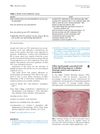 32 citations
,
September 2017 in “Journal of the American Academy of Dermatology”
32 citations
,
September 2017 in “Journal of the American Academy of Dermatology” In this study, researchers reported that oral isotretinoin effectively treated facial papules in frontal fibrosing alopecia, with histopathologic findings suggesting the involvement of elastic fibers and sebaceous glands in papule formation beyond perifollicular inflammation.
 21 citations
,
October 2017 in “Journal of the European Academy of Dermatology and Venereology”
21 citations
,
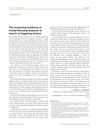
October 2017 in “Journal of the European Academy of Dermatology and Venereology” This study reports that variable environmental factors, including dietary habits, may contribute to the increasing incidence and diverse clinical presentations of frontal fibrosing alopecia.
 25 citations
,
December 2017 in “Facial Plastic Surgery”
25 citations
,
December 2017 in “Facial Plastic Surgery” This study observed that combining high-potency steroids with pimecrolimus might effectively stabilize hairline recession in frontal fibrosing alopecia patients.
December 2025 in “JEADV Clinical Practice” This case study reports on a 72-year-old woman with frontal fibrosing alopecia and hair repigmentation, suggesting the rare occurrence of canities reversal could aid in diagnosing FFA.
6 citations
,
July 2004 in “JDDG Journal der Deutschen Dermatologischen Gesellschaft” This case report documents two postmenopausal women with frontal fibrosing alopecia whose hair loss stabilized after treatment with topical corticosteroids, one also using minoxidil.
24 citations
,
July 2018 in “British Journal of Dermatology” Contact allergies might contribute to frontal fibrosing alopecia.
 May 2025 in “The Journal of Rheumatology”
 In this case report, researchers detailed the clinical management and positive outcome of a 62-year-old woman with catastrophic antiphospholipid syndrome associated with systemic lupus erythematosus, highlighting the potential effectiveness of Eculizumab in achieving disease remission and maintaining stability over 18 months.
 68 citations
,
May 2016 in “Experimental dermatology”
68 citations
,
May 2016 in “Experimental dermatology” This review discusses what is known about the pathobiology of frontal fibrosing alopecia and reports no new clinical findings, highlighting potential environmental and genetic factors in disease pathogenesis.
15 citations
,
May 2023 in “Aesthetic Surgery Journal” This study highlights ongoing limitations in the administration and reporting of FACE-Q Aesthetic scale data, recommending that future research follow the User's Guide for proper administration and scoring, justify the study's time frame, and provide sample size calculations for key outcomes.
March 2026 in “Journal of Investigative Dermatology” Folliculin slows hair growth, and blocking it might help treat hair loss.
17 citations
,
July 2022 in “BMC Genomics” This study found that overexpression of the FA2H gene in cashmere goats' hair follicle cells may enhance hair proliferation and regulate genes affecting cashmere fineness.
 2 citations
,
April 2023 in “Cutis”
2 citations
,
April 2023 in “Cutis” This systematic review discusses the treatment characteristics and outcomes for frontal fibrosing alopecia specifically in Black patients with skin of color, addressing a gap in clinical evidence due to underrepresentation in studies.
July 2019 in “Medical Science and Discovery” This study retrospectively analyzed 14 postmenopausal women with frontal fibrosing alopecia, noting that 57% experienced total eyebrow loss, and all received various steroid treatments, highlighting the importance of early diagnosis to potentially delay disease progression.
 July 2008 in “Journal of the Islamic Medical Association of North America”
 This conference abstract outlines topics discussed at the International Conference of the Islamic Medical Association of North America and reports no new results.
 8 citations
,
October 2019 in “International Journal of Dermatology”
8 citations
,
October 2019 in “International Journal of Dermatology” This study examined 56 Thai patients with frontal fibrosing alopecia, finding frontotemporal hairline recession and eyebrow loss were common, and reported better disease stabilization with combination treatments of topical corticosteroids with hydroxychloroquine or finasteride.
10 citations
,
October 2009 in “Photomedicine and laser surgery” This study found that intense pulsed light treatment achieved a mean of 85% hair reduction in two patients with faun tail, although local anesthesia may be needed due to severe pain associated with neurological abnormalities.
 March 2026 in “Collagen and Leather”
 This study found that a newly developed supramolecular FPC hydrogel effectively promotes wound healing through its anti-inflammatory and angiogenic properties, making it a promising material for wilderness first aid due to its storage convenience, sprayability, and ability to speed up wound recovery.
4 citations
,
November 2020 in “Acta Dermato Venereologica” In this study, patients with specific skin and scalp conditions, including eczematous lesions, showed significant improvement after two weeks of oral tofacitinib treatment, as evidenced by changes in the trunk lesions.
 March 2026 in “Scientific Reports”
 This study found that Cnidium officinale extract and its compound ferulic acid improved hair growth by promoting dermal papilla cell function and mitochondrial activity, suggesting their potential as a new treatment option for alopecia, possibly through estrogen receptor alpha activation.
 6 citations
,
January 2018 in “International Journal of Trichology”
6 citations
,
January 2018 in “International Journal of Trichology” This report describes the first known case of frontal fibrosing alopecia in a genetically unrelated couple, suggesting the potential role of environmental factors in its development.
5 citations
,
February 2025 in “Cell Reports” In this study, inducible whole-body Acly-knockout mice revealed that ACLY is essential for skin homeostasis, as its deficiency led to increased sebum production and skin abnormalities, indicating a vital role for cytosolic acetyl-CoA synthesis in preserving skin barrier integrity and systemic lipid regulation.
 September 2015 in “Dermatologic Surgery”
 In this study, the researchers developed a computer-aided imaging system to quantitatively measure baldness in Chinese women with female pattern hair loss, potentially improving the precision of severity evaluation compared to traditional scales.

This review discusses the potential link between contact allergy and frontal fibrosing alopecia, noting the presence of implicated allergens in current literature, but reports no new clinical findings.
 3 citations
,
February 2023 in “Journal of drug delivery science and technology”
3 citations
,
February 2023 in “Journal of drug delivery science and technology” In vitro, this study found that PTX and HU SF-FA NLCs showed greater cytotoxicity and apoptosis in ovarian cancer cells than pure paclitaxel, suggesting promise as a targeted drug delivery platform.
April 2011 in “Reactions Weekly” 1 citations
,
September 2024 in “Life” This study reports three cases of alopecia areata resistant to corticosteroids that improved after 16 weeks of treatment with a combination of fractional carbon dioxide laser and topical tacrolimus, suggesting a potential new therapeutic option that requires further confirmation.