2 citations
,
January 2025 in “Journal of Oncology Pharmacy Practice” This case study reports a rare instance of pembrolizumab-induced eyelash trichomegaly in a 63-year-old male patient, highlighting the importance for clinicians to be aware of such uncommon adverse effects to manage patient treatment effectively.
4 citations
,
January 2020 in “JOURNAL OF CLINICAL AND DIAGNOSTIC RESEARCH” This study found that applying 2% Minoxidil lotion twice daily for four months improved hair diameter and density in individuals with eyebrow hypotrichosis, suggesting it is an effective and well-tolerated treatment; mild side effects like itching and burning were observed in 22.72% of participants.
14 citations
,
January 2018 in “Skin Appendage Disorders” This case report suggests that identifying hyperpigmentation on the upper eyelid with specific dermoscopy patterns could help diagnose facial lichen planus pigmentosus without needing a facial biopsy.
28 citations
,
January 2015 in “Journal of Cell Science” In this study, PINCH-1 gene loss in mouse epidermis led to detachment from the basement membrane, thickened skin, and hair loss, with findings suggesting PINCH-1 plays a role in keratinocyte adhesion through both ILK and EPLIN pathways.
 7 citations
,
April 2017 in “Dermatologic surgery”
7 citations
,
April 2017 in “Dermatologic surgery” This study concluded that bimatoprost 0.03%, applied either twice or once daily, is safe, well-tolerated, and effective in improving eyebrow fullness and darkness in individuals with eyebrow hypotrichosis.
3 citations
,
May 2022 in “Journal of Cosmetic Dermatology”  1 citations
,
January 2015 in “International journal of trichology (Print)”
1 citations
,
January 2015 in “International journal of trichology (Print)” A single long white eyelash is a rare but benign condition.
 2 citations
,
September 2003 in “Annals of Plastic Surgery”
2 citations
,
September 2003 in “Annals of Plastic Surgery” This paper discusses a method for eyebrow reconstruction using intermediate hair from the forehead hairline with a pedicled temporoparietal fascial flap and reports no new clinical results.
 14 citations
,
November 2005 in “Facial Plastic Surgery”
14 citations
,
November 2005 in “Facial Plastic Surgery” This article reviews the senior author's approach to lower eyelid rejuvenation in blepharoplasty, discussing specific surgical techniques and adjunctive procedures, but reports no new research results.
 5 citations
,
February 2011 in “Aesthetic Plastic Surgery”
5 citations
,
February 2011 in “Aesthetic Plastic Surgery” This study describes a novel intraoral approach for lower eyelid fat transposition and midface lift, reporting improved outcomes and visualization without complications such as lower eyelid malposition or asymmetry in six patients.
 April 2024 in “Journal of applied cosmetology”
 This study found that while hyaluronic acid fillers can enhance facial balance and aesthetics, particularly in the temple area, they carry significant risks like vascular occlusion and blindness, highlighting the need for careful technique and product selection to ensure safety.
 38 citations
,
March 2017 in “Expert Opinion on Investigational Drugs”
38 citations
,
March 2017 in “Expert Opinion on Investigational Drugs” This review examines the potential of bimatoprost for treating various types of eyelash and eyebrow hypotrichosis, discussing its pharmacological properties but providing no new clinical results.
1 citations
,
September 2025 in “Eye” This pharmacovigilance study found that certain systemic medications, including finasteride, bortezomib, and dupilumab, were disproportionately reported in association with eyelid disorders like blepharitis, meibomian gland dysfunction, and chalazia, suggesting these drugs may contribute to these conditions though benefits might still outweigh the risks.
June 2026 in “Journal of Clinical Microbiology” This abstract reports no new research findings; it includes an educational image of microorganisms found in a skin biopsy.
12 citations
,
April 2013 in “Clinical & experimental ophthalmology” This article does not include an abstract and reports no new clinical findings; it discusses Demodex blepharitis that mimics eyelid sebaceous gland carcinoma.
October 2021 in “Operative techniques in otolaryngology--head and neck surgery” This article reviews various surgical techniques to improve ocular and cosmetic outcomes in patients with facial paralysis but reports no new clinical results; it emphasizes tailored long-term management strategies.
 10 citations
,
May 2007 in “Journal of Prosthetic Dentistry”
10 citations
,
May 2007 in “Journal of Prosthetic Dentistry” This clinical report describes a method for using tattoo marks to help align a facial prosthesis for a patient with skin flap reconstruction.
January 2000 in “Time to knit” This article reviews the advantages of emulgel as a topical drug delivery system for hydrophobic drugs but provides no new findings.
1 citations
,
April 2023 in “Preprints.org” This study found that the guided SEFFI technique for facial volume restoration and anti-aging is minimally invasive with a low complication rate, suggesting it as a promising treatment option.
 22 citations
,
March 2019 in “European Journal of Ophthalmology”
22 citations
,
March 2019 in “European Journal of Ophthalmology” This study found that switching patients with glaucoma or ocular hypertension from benzalkonium chloride-latanoprost to preservative-free latanoprost maintained intraocular pressure control and improved tolerability, potentially enhancing treatment adherence and quality of life.
July 2019 in “Dermatologic Surgery” This abstract provides contact information for François Kuonen at the Lausanne University Hospital Center and reports no new research findings.
 7 citations
,
April 2018 in “Facial Plastic Surgery”
7 citations
,
April 2018 in “Facial Plastic Surgery” This source discusses the safety and effectiveness of the endoscopic brow lift as a well-established procedure for rejuvenating the upper third of the face, detailing surgical techniques, patient selection, and ways to minimize complications.
 12 citations
,
November 2006 in “Journal of thoracic oncology”
12 citations
,
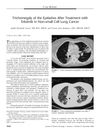
November 2006 in “Journal of thoracic oncology” This case report describes a patient with non-small cell lung cancer who experienced trichomegaly (excessive eyelash growth) as a side effect of erlotinib treatment without developing typical skin rash.
 January 2023 in “Indian Dermatology Online Journal”
 This article reviews the indications for micropigmentation in dermatological conditions like stable vitiligo and alopecia, but presents no new clinical results.
 21 citations
,
January 2012 in “Annals of Dermatology”
21 citations
,
January 2012 in “Annals of Dermatology” This study reported that Ell-Cranell® alpha 0.025% solution significantly increased hair counts and diameter in Korean women with female pattern hair loss over an 8-month period, showing both efficacy and safety.
This study explored Black Sea shark liver oil-based emulgels, finding that the addition of borage oil (Gel 2) enhanced the anti-inflammatory and wound healing properties compared to shark liver oil alone (Gel 1) and a reference diclofenac gel, suggesting promising eco-friendly applications in dermatocosmetics.
 3 citations
,
March 2007 in “Otolaryngologic Clinics of North America”
3 citations
,
March 2007 in “Otolaryngologic Clinics of North America” This article reviews various forehead rejuvenation techniques and emphasizes the importance of individualized technique selection based on anatomy, function, and desired aesthetic outcomes, reporting no new findings.
June 2026 in “Value in Health” The measures for eyebrow and eyelash hair loss in severe Alopecia Areata are reliable and useful for clinical trials.
 April 2024 in “Pharmaceuticals”
 This review highlights the clinical usefulness of bimatoprost in lowering intraocular pressure for glaucoma patients and its promising results in promoting hair growth for conditions like alopecia, with research also exploring potential new applications and delivery systems.
26 citations
,
June 1993 in “Archives of Otolaryngology - Head and Neck Surgery” This study found that the endolaser technique using a small incision is as effective as standard forehead lifts for reducing glabellar frown lines and forehead creases with a shorter recovery time.