The authors concluded that capecitabine and high-dose toremifene may be an effective treatment option for patients unable to undergo anthracycline or taxane therapies, based on one woman's cancer management.
 1 citations
,
November 2019 in “Archives of breast cancer”
1 citations
,
November 2019 in “Archives of breast cancer” This review discusses non-oral hormonal contraceptives and other exogenous steroid hormones, reporting they are generally safe for temporary use in women without breast cancer, but data are limited.
November 2022 in “bioRxiv (Cold Spring Harbor Laboratory)” This study found that prostaglandin E2 pretreatment may reduce radiotherapy-induced alopecia by enhancing hair follicle self-repair through transient G1 arrest, suggesting a potential preventive treatment.
7 citations
,
August 2010 in “Medicinal Chemistry Research” This study found that some synthesized 17-oximino-5-androsten-3β-yl esters demonstrated stronger cytotoxicity and antiandrogenic activity against prostate cancer cells than finasteride.
23 citations
,
December 2013 in “Molecules” This study found that the evodiamine derivative 2-16 exhibited the highest antitumor activity and a broad spectrum of activity against various human cancer cell lines, with improved solubility.
 5 citations
,
October 2020 in “Brain Research Bulletin”
5 citations
,
October 2020 in “Brain Research Bulletin” This study found that etifoxine pretreatment reduced neuroinflammation and improved cognitive function in LPS-induced neuroinflammation in mice, potentially through increased neurosteroid synthesis and reduced apoptosis.
133 citations
,
July 2006 in “International Journal of Dermatology” This study found that topical eflornithine HCl 13.9% cream effectively reduced facial hair in women, with a favorable safety profile.
1 citations
,
July 2024 in “Journal of Investigative Dermatology” VYN201 shows promise as a safe and effective treatment for non-segmental vitiligo.
38 citations
,
May 2010 in “American Journal Of Pathology” In this study, prolonged systemic administration of 17β-estradiol in castrated male mice delayed wound healing by inhibiting re-epithelialization and reducing collagen accumulation, with estrogen receptor-α likely mediating this effect.
 April 2018 in “The journal of investigative dermatology/Journal of investigative dermatology”
 This study observed that in an ex vivo setting, 17β-estradiol increased CB1 expression in human hair follicles, suggesting possible sensitivity to endocannabinoids and a potential mechanism for hair therapy.
 8 citations
,
June 2022 in “International Journal of Molecular Sciences”
8 citations
,
June 2022 in “International Journal of Molecular Sciences” This review discusses the potential of extracellular vesicles for facial aesthetic applications, including scar reduction and skin rejuvenation, but reports no new clinical results; further research into production and mechanisms is needed.
16 citations
,
March 2025 in “International Journal of Molecular Sciences” This review analyzed 12 clinical studies on extracellular vesicle therapies, finding potential benefits for skin aging, acne scars, alopecia, and wound healing, but highlighted significant challenges like production standardization and lack of large-scale studies.
 October 2015 in “Reactions Weekly”
 A woman got a scalp condition from using latanoprost, but it improved after stopping the drug and starting other treatments.
 January 2018 in “Springer eBooks”
 PDE inhibitors, especially PDE4 inhibitors like apremilast, are effective for certain inflammatory skin conditions but have side effects and can be costly.
 April 2023 in “Journal of Investigative Dermatology”
 In this study, researchers found that the protein eIF4E is crucial for keratinocyte proliferation in psoriasis, suggesting it as a potential treatment target for the condition.
 December 2025 in “npj Breast Cancer”
 In the phase 3 CAPItello-291 trial, capivasertib combined with fulvestrant significantly increased progression-free survival in patients with advanced breast cancer with specific genetic alterations, but the authors highlight that managing side effects like diarrhea, rash, and hyperglycemia is crucial for optimizing treatment adherence and outcomes.
 68 citations
,
June 2005 in “Expert Opinion on Therapeutic Targets”
68 citations
,
June 2005 in “Expert Opinion on Therapeutic Targets” This review discusses the influence of oestrogens on various skin components and highlights their modulatory roles and receptor pathways, but it reports no new clinical results.
 37 citations
,
April 2010 in “FEBS Letters”
37 citations
,
April 2010 in “FEBS Letters” In this study, researchers reported that the activation of EDA2R by p53 leads to p53-dependent cell death in cancer cells and is involved in chemotherapy-induced hair loss.
 January 2010 in “Actas Dermo-Sifiliográficas”
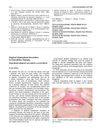
 A woman developed thick gums from everolimus treatment after a kidney transplant.
1 citations
,
February 2025 in “Archives of Dermatological Research” Using Excimer light with topical steroids is the most effective treatment for alopecia areata.
May 2024 in “Reactions weekly” 88 citations
,
January 2001 in “Dermatology” This study found that the monophasic oral contraceptive ethinylestradiol/chlormadinone acetate was more effective in treating mild to moderate papulopustular acne in women than ethinylestradiol/levonorgestrel.
43 citations
,
January 2014 in “Indian Journal of Dermatology” This study reported that EGFR inhibitor therapy in lung and head/neck cancer patients was associated with acneiform eruptions and severe skin dryness, which rarely necessitate discontinuation of treatment and can be managed symptomatically.
222 citations
,
January 2003 in “Critical Reviews in Therapeutic Drug Carrier Systems” This review discusses the capabilities of ethosomes as drug delivery carriers and reports improved outcomes in a clinical study with an ethosomal acyclovir formulation.
 30 citations
,
December 2019 in “PLoS ONE”
30 citations
,
December 2019 in “PLoS ONE” This study found that formulating raloxifene in nano-lipid carriers significantly enhanced its permeation and cytotoxicity against cancer cells compared to raw raloxifene.
54 citations
,
October 2022 in “Cells” This review discusses the therapeutic potential of mesenchymal stem cell-derived extracellular vesicles and modern technologies like 3D bioprinting but reports no new clinical results.
 150 citations
,
April 2013 in “Dermato-endocrinology”
150 citations
,
April 2013 in “Dermato-endocrinology” This review discusses the effects of estrogen on skin aging and highlights potential therapies, but reports no new clinical findings.
 37 citations
,
October 2017 in “Clinical and Experimental Dermatology”
37 citations
,
October 2017 in “Clinical and Experimental Dermatology” This article discusses the potential of oral tofacitinib as a treatment for atopic dermatitis, alopecia areata, and vitiligo, without presenting new clinical results.
94 citations
,
August 2002 in “Experimental Dermatology” This study found that 17α‐estradiol increases aromatase activity in female hair follicles, which may explain its beneficial effects in treating androgenetic alopecia.
 September 2020 in “Acta Scientific Cancer Biology”
 This case report describes how personalized treatment based on Encyclopedic Tumor Analysis successfully led to durable regression in a woman with advanced pilomatrical carcinoma, unresponsive to standard care.