January 2020 in “Revista Dermatológica Centro Uraga” This article describes how recognizing distinct trichoscopic features aids in diagnosing various dermatological conditions and hair loss, but it reports no new clinical findings.
182 citations
,
January 2000 in “Drug Development Research” This study found that ethosomal carriers enhanced dermal and transdermal drug delivery more effectively than classic liposomes, improving delivery to deep skin layers and showing potential for treating conditions like herpes labialis and diabetes.
 64 citations
,
July 1997 in “Journal of The American Academy of Dermatology”
64 citations
,
July 1997 in “Journal of The American Academy of Dermatology” This study found that eosinophils are a useful diagnostic feature for alopecia areata, especially when the typical "swarm of bees" lymphoid infiltrate is absent, helping differentiate it from trichotillomania.
 October 2021 in “International journal of basic and clinical pharmacology”
 This case report discusses how trichomegaly, an adverse effect of the cancer therapy drug erlotinib, might serve as a marker of positive tumor response and potentially aid in treating madarosis.
 1 citations
,
January 2023 in “Journal of pharmaceutical and biological sciences”
1 citations
,
January 2023 in “Journal of pharmaceutical and biological sciences” This review examines ethosomal structures and their mechanisms as skin delivery systems, outlining preparation methods and applications but presents no new experimental findings.
19 citations
,
April 2023 in “Antibiotics” This study found that azelaic acid entrapped in transethosomes exhibited enhanced antidermatophyte activity and improved treatment outcomes in guinea pig models of dermatophytosis compared to free azelaic acid.
 13 citations
,
April 2019 in “American Journal of PharmTech Research”
13 citations
,
April 2019 in “American Journal of PharmTech Research” In this study, researchers highlighted that emulgels, a combination of emulsions and gels, offer a novel topical delivery method for hydrophobic drugs, possessing attributes such as easy spreadability and bio-friendliness, making them suitable for conditions like acne, fungal infections, and psoriasis.
January 2024 in “Frontiers research topics” This research abstract outlines the innovative approach of the Frontiers journal series, which aims to transform academic publishing by providing open access, interdisciplinary journals that employ a rigorous peer-review process to serve both scholarly communities and the public.
 8 citations
,
November 1990 in “Archives of Dermatology”
8 citations
,
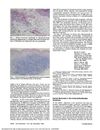
November 1990 in “Archives of Dermatology” This case report details a woman with eosinophilia-myalgia syndrome associated with L-tryptophan ingestion, highlighting skin lesions with abundant dermal mucin.
 September 2024 in “International Journal of Pharmaceutical Quality Assurance”
 This review outlines the potential of nanoemulsion-based hydrogels (nanoemulgels) for enhanced topical and transdermal drug delivery in treating skin disorders, highlighting their ability to improve therapeutic efficacy, control drug release, and boost patient compliance.
 March 2025 in “Experimental Dermatology”
 This study found that transgenic mice overexpressing IKZF1 developed lesions similar to alopecia areata, suggesting that Ikaros may play a role in the disease's pathogenesis. Ikaros expression was also higher in human alopecia areata patients compared to controls.
 2 citations
,
April 2022 in “PubVet”
2 citations
,
April 2022 in “PubVet” This case report discusses a 5-year-old Persian cat with feline eosinophilic granuloma complex, which responded positively to prednisone and topical corticosteroids, eliminating itching and promoting fur regrowth without relapse.
January 2000 in “Time to knit” This article reviews the advantages of emulgel as a topical drug delivery system for hydrophobic drugs but provides no new findings.
January 2026 in “Scientific Reports” This study found that among pediatric patients with alopecia areata, elevated eosinophilic hematological ratios were observed, suggesting these could serve as markers for disease exacerbation and the pathophysiology of the condition.
1 citations
,
November 2006 in “Medicina de Familia SEMERGEN” This study characterized Eclipta alba for use in a capillary product for alopecia, confirming its suitable physico-chemical properties and pharmacological constituents, including wedelolactone for hair growth.
March 2020 in “Upravlìnnâ, ekonomìka ta zabezpečennâ âkostì v farmacìï” This study developed quality control methods for the "Flavosterol" emulgel, which met the required quality standards and is intended for the prevention and treatment of androgenetic alopecia.
 June 2025 in “Deleted Journal”
 In this case report, two Persian cats with Lynxacarus radovskyi fur mites and symptoms like mild alopecia and pruritus fully recovered after receiving selamectin spot-on treatment monthly for three months.
 December 2024 in “International Journal of Newgen Research in Pharmacy & Healthcare”
 In this study, Eclipta alba phytosomes were developed to enhance the bioavailability and therapeutic efficacy of its bioactive compounds, showing improved in vitro antioxidant activity and significant in vivo anticancer effects compared to the free extract.
 2 citations
,
August 2012 in “Journal of the American Academy of Dermatology”
2 citations
,
August 2012 in “Journal of the American Academy of Dermatology” This correspondence describes two patients with both epidermolysis bullosa simplex, Dowling-Meara type, and loose anagen hair syndrome, an association not previously reported in the literature.
This study explored Black Sea shark liver oil-based emulgels, finding that the addition of borage oil (Gel 2) enhanced the anti-inflammatory and wound healing properties compared to shark liver oil alone (Gel 1) and a reference diclofenac gel, suggesting promising eco-friendly applications in dermatocosmetics.
 July 2026 in “Editora Pasteur eBooks”
 This study assesses the potential of exosomes as a therapeutic option for androgenetic alopecia, examining their mechanisms and effectiveness. The authors conducted a systematic review of existing research to explore how these extracellular vesicles might stimulate hair growth and restore follicle function.
This study found that an exosome formulation with plant extracts significantly increased hair regrowth in men with male pattern alopecia compared to a placebo, without notable adverse effects.
July 2025 in “International Journal of Science and Research (IJSR)” This research outlines the potential of nanoemulgels as a superior alternative to conventional topical treatments, noting their ability to improve skin permeability, drug release, and therapeutic targeting, though challenges remain in formulation stability and consistency.
January 1988 in “Bulletin of Hispanic Studies” This article reviews the history of Portuguese and Spanish derivational suffixes and provides no new empirical findings, discussing various scholarly works and contributions on the subject.
January 2017 in “Elsevier eBooks” Telogen effluvium is a condition that causes temporary hair loss due to stress or shock to the body.
October 2022 in “Amplla Editora eBooks” January 2025 in “Dialnet (Universidad de la Rioja)” In this case study, a 14-year-old male with treatment-resistant diffuse alopecia areata experienced complete hair regrowth after three monthly sessions of microneedling combined with triamcinolone, dutasteride, and synthetic exosomes, suggesting this therapy might enhance outcomes in refractory cases.
51 citations
,
August 2013 in “The Journal of experimental medicine/The journal of experimental medicine” This study found that Wnt secretion is important for maintaining skin homeostasis in mice, as Evi-deficient mice developed psoriasis-like skin lesions and had an imbalance in immune cell populations.
 19 citations
,
January 2013 in “Journal of Cutaneous Medicine and Surgery”
19 citations
,
January 2013 in “Journal of Cutaneous Medicine and Surgery” This study found that patients with alopecia areata exhibit a stronger deficiency in coping with stress compared to those with androgenetic alopecia and controls, suggesting a psychosomatic component to the condition.