 10 citations
,
October 2018 in “Dermatologic Therapy”
10 citations
,
October 2018 in “Dermatologic Therapy” In this study, researchers tested lotions containing DGLA, S-equol, and propionyl-l-carnitine on individuals with androgenic alopecia, noting a significant increase in hair count for women and a marginal increase for men after 6 months, along with improved hair cycle dynamics.
1 citations
,
September 2024 in “Life” This study reports three cases of alopecia areata resistant to corticosteroids that improved after 16 weeks of treatment with a combination of fractional carbon dioxide laser and topical tacrolimus, suggesting a potential new therapeutic option that requires further confirmation.
5 citations
,
May 2017 in “Journal of dermatological science” This study reviewed the genetic and phenotypic aspects of Olmsted syndrome, highlighting pathogenic mutations in TRPV3 and MBTPS2 genes and their association with specific skin manifestations like symmetrical keratoderma and hyperkeratotic plaques.
 April 2023 in “Iraqi postgraduate medical journal”
 This study found that combining microneedling with clobetasol propionate 0.05% cream significantly improved complete hair regrowth in alopecia areata patches compared to using the cream alone, with nearly double the rate of full hair regrowth observed in the combination treatment group.
 October 2025 in “Pielegniarstwo XXI wieku / Nursing in the 21st Century”
 This review discusses the effectiveness and mechanisms of combined oral contraceptives in treating acne vulgaris but reports no new clinical results; the authors highlight their antiandrogenic effects for managing acne and related endocrine disorders.
This abstract introduces TrichoFoam™, a new foaming vehicle for compounding pharmacies, designed to be a gentle, non-irritating option for alopecia treatment, acknowledging that current topical treatments are limited and oral products may cause adverse effects.
 November 1996 in “Inpharma Weekly”
 Lotion with piroctone olamine and triclosan improves hair loss in men.
5 citations
,
May 2018 in “Veterinary dermatology” This study found that a gluconolactone-based shampoo and lotion significantly reduced skin scaling in golden retrievers with autosomal recessive congenital ichthyosis.
January 2016 in “Indian journal of drugs in dermatology” This case report describes a 48-year-old male with severe, itchy hypertrophic lichen planus who showed a 90% improvement in lesions following 4 months of treatment with oral acitretin, with no recurrence 6 months posttreatment.

In this reported case, a 30-year-old man with a long history of alopecia universalis experienced limited regrowth of eyebrows and eyelashes after six months of deuruxolitinib, despite unchanged scalp hair, suggesting site-specific potential for hair regrowth in challenging cases.
61 citations
,
March 2006 in “Colloids and surfaces. B, Biointerfaces” In this study, lecithin/n-propanol/isopropyl myristate/water/tetracaine hydrochloride microemulsion was found to be a safe carrier for transdermal drug delivery in animal models, with analgesic effects on Wistar rats.
 14 citations
,
January 2015 in “Acta dermato-venereologica”
14 citations
,
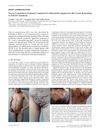
January 2015 in “Acta dermato-venereologica” Acitretin significantly reduced inflammatory attacks in a woman with Naevus Comedonicus Syndrome but caused side effects.
 22 citations
,
January 2009 in “Medical mycology”
22 citations
,
January 2009 in “Medical mycology” In this case report, researchers identified Arthroderma vanbreuseghemii as the cause of a familial fungal infection, which was successfully treated with itraconazole and topical terbinafine cream.
 July 2022 in “المجلة العراقية للصيدلة”
 This study reported that topical azelaic acid cream 20% demonstrated statistically significant efficacy in treating localized alopecia areata of the scalp over 12 weeks, comparable to topical clobetasol ointment 0.05%, suggesting it as a potential therapeutic option.
 3 citations
,
November 2020 in “Phyton-international Journal of Experimental Botany”
3 citations
,
November 2020 in “Phyton-international Journal of Experimental Botany” This review discusses the potential therapeutic applications of wedelolactone, a compound in Eclipta prostrata, for various chronic human diseases and reports no new clinical results.
September 2022 in “Health and Medical Journal” This case report describes a 19-year-old woman with systemic lupus erythematosus and telogen effluvium, who experienced new hair growth and increased hair density after 90 days of treatment with 2% topical minoxidil and oral keratin-based antioxidants.
 1 citations
,
February 2015 in “Journal of evolution of medical and dental sciences”
1 citations
,
February 2015 in “Journal of evolution of medical and dental sciences” This study concluded that 0.05% betamethasone dipropionate cream is more effective than other topical treatments for improving alopecia areata over 12 weeks.
 2 citations
,
May 2021 in “Research Square (Research Square)”
2 citations
,
May 2021 in “Research Square (Research Square)” This study found that ketoconazole-loaded solid lipid nanoparticles significantly improved skin permeation and retention compared to a drug suspension and marketed product, demonstrating enhanced delivery into deeper skin layers.
 October 2025 in “Nepal Journal of Dermatology Venereology & Leprology”
 In this case study, a 55-year-old male farmer from Nepal with a kerion barbae in the beard region showed complete resolution after initiating oral itraconazole, highlighting the potential for misdiagnosis when bacterial superinfection complicates dermatophyte infections.
This study characterized the physical-chemical properties of Eclipta alba and identified compounds in the plant that could support its use in developing hair loss treatments.
 9 citations
,
April 1987 in “International Journal of Dermatology”
9 citations
,
April 1987 in “International Journal of Dermatology” This article reviews rosacea and rosacea-like demodicidosis, discussing historical findings, but provides no new clinical results; the authors highlight the role of Demodex in related skin conditions.
1 citations
,
May 2024 in “Journal of Pakistan Association of Dermatologists” This study found that topical calcipotriol was significantly more effective than topical tacrolimus in promoting hair growth for alopecia areata patients, demonstrating 67% efficacy compared to 33% efficacy with tacrolimus over a 6-month period.
 July 2024 in “Dermatology Practical & Conceptual”
 This article discusses the diagnostic challenges between certain neonatal scalp conditions and highlights the potential of line-field confocal optical coherence tomography to provide detailed, non-invasive skin examination, without presenting new clinical findings.
 22 citations
,
March 1963 in “Archives of dermatology”
22 citations
,
March 1963 in “Archives of dermatology” This case report describes hair regrowth in a patient with alopecia totalis using fluocinolone acetonide cream applied under thin plastic films.
 32 citations
,
September 2015 in “Dermatology”
32 citations
,
September 2015 in “Dermatology” This study describes a newly recognized skin reaction associated with dasatinib, nilotinib, and ponatinib, marked by a lichenoid exanthem with severe pruritus that may necessitate discontinuation of therapy.
January 2026 in “European Journal of Therapeutics” In this study, researchers reported that applying topical 7.5% dapsone led to a significant decline in lichen planopilaris activity within a month and a sustained two-year remission in a patient intolerant to other treatments, suggesting dapsone as a promising alternative for managing this condition.
 January 2026 in “Physical Education Health and Social Sciences”
 This study found that integrating Lactobacillus-rich probiotic nutrition and fractional CO₂ laser therapy with clotrimazole in mucoadhesive hydrogels significantly improved clinical and structural outcomes for women with recurrent vulvovaginal candidiasis, suggesting a promising advanced therapy, though further validation in larger trials is needed.
1 citations
,
November 2022 in “International Journal of Cosmetic Science” In this study, a topical application of Lotus corniculatus seed extract significantly reduced sebum production and skin oiliness in humans through inhibition of lipid synthesis pathways.
 September 2023 in “Clinical, cosmetic and investigational dermatology”
 In this case report, a rare form of chronic cutaneous lupus, lupus erythematosus profundus, was treated effectively with topical and systemic therapies, leading to improvement and healing of ulcerations, though resulting in atrophic scars and macules.
27 citations
,
October 2020 in “Drugs” This article reviews the development milestones of clascoterone up to its first approval for treating acne vulgaris, reporting no new clinical results for androgenetic alopecia.