
This study introduced a new laser-only method called EKA for acne treatment, which is reported to be safe, painless, and heat-free, showing promising results for both acne and scar repair in initial sessions without combining with LED light.
3 citations
,
January 1993 in “Toxicological Sciences” This study found that 2-ethylhexanoic acid impaired fertility in Wistar rats and delayed postnatal development of pups, suggesting potential reproductive toxicity at certain dosages.
 3 citations
,
November 2019 in “The American Journal of Dermatopathology”
3 citations
,
November 2019 in “The American Journal of Dermatopathology” This study found that multiple eccrine duct dilation is highly specific for diagnosing cicatricial alopecia and may indicate scarring processes, aiding in accurate differential diagnosis from noncicatricial alopecias.
 27 citations
,
February 2009 in “Autoimmunity Reviews”
27 citations
,
February 2009 in “Autoimmunity Reviews” This study describes the development of the EUSCLE Core Set Questionnaire for cutaneous lupus erythematosus, designed to standardize data collection, facilitate epidemiological analysis, and guide diagnostic and therapeutic strategies across European centers.
1 citations
,
April 2023 in “Animals” This study utilized EDAR gene-targeted cashmere goats to identify 732 differentially expressed genes and 140 proteins associated with abnormal hair growth, providing insights into the regulatory mechanisms of cashmere follicle development.
 November 2013 in “Annales de Dermatologie et de Vénéréologie”
 This study found that extracts of Punica granatum L. improved hair growth and demonstrated significant anti-lice and antidandruff activity in a mouse model.
19 citations
,
January 2012 in “Dermatology” This study describes three cases of acneiform eruptions from EGFR inhibitors that improved with topical recombinant human EGF, suggesting its potential as a treatment option for this side effect.
1 citations
,
January 2022 in “Clinical Cases in Dermatology” This case report describes a 22-year-old Asian man with erosive pustular dermatosis of the scalp, whose lesions improved after treatment with topical tacrolimus and oral isotretinoin.
10 citations
,
April 2013 in “Journal of Investigative Dermatology” This study reports a semidominant inheritance of epidermolytic ichthyosis due to a KRT1 mutation, which was previously thought to be only inherited dominantly.
This study suggests that ethyl acetate extract of Equisetum debile may be effective for functional food and nutraceutical use due to its strong 5α-reductase, IL-6 inhibition, and lipid peroxidation activities without cytotoxic effects.
61 citations
,
April 2023 in “Advanced Materials” This study introduced a viscoelastic dry electrode that successfully reduces motion artifacts in EP monitoring on hairy skin, maintaining stable performance for up to 48 days.
10 citations
,
January 1985 in “PubMed” This study found that electron and proton microprobe analysis can reveal differences in element distribution within human hair and epidermis, although no significant water content differences were noted between atopic eczema and normal skin.
 1 citations
,
March 2023 in “European Journal of Human Genetics”
1 citations
,
March 2023 in “European Journal of Human Genetics” This retrospective study observed that patients with vascular EDS on long-term angiotensin II receptor blockers or beta-blockers experienced fewer vascular events compared to those without cardiac medication under similar lifestyle and emergency care advice.
 1 citations
,
January 2020 in “International journal of research in pharmacy and chemistry”
1 citations
,
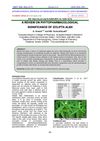
January 2020 in “International journal of research in pharmacy and chemistry” This review provides an overview of the ethnomedicinal uses, chemical composition, and pharmacological profile of Eclipta alba Hassk and presents no new clinical findings.
4 citations
,
November 2015 in “The journal of investigative dermatology. Symposium proceedings/The Journal of investigative dermatology symposium proceedings” This case study highlights a patient with alopecia areata who also has eosinophilic esophagitis, suggesting it may be considered an atopic disease and a potential trigger for alopecia areata in affected patients.
This study observed that mesenchymal stem cell-conditioned medium accelerated burn wound healing in rats by enhancing epidermal growth factor presence, improving wound closure, collagen density, and re-epithelialization compared to the control.
8 citations
,
August 2022 in “BMC Veterinary Research” This study found that C57BL/6 mice and Sprague–Dawley rats show distinct distributions of eccrine sweat glands and hair follicles in their volar skin, suggesting these models should be selected according to research focus on skin appendages.
4 citations
,
April 2024 in “Animals” This study reported allergic dermatitis in Brazilian donkeys linked to Culicoides insect bites, characterized by severe itching and skin lesions. The potential treatment with copaiba oil and multivitamin emulsion was explored, revealing its promise for managing this condition.
1 citations
,
May 2008 in “Journal of Experimental Biology” This collection of reviews, edited by Ken Lukowiak and Janis Weeks, explores diverse sensory systems across species, including olfaction, echolocation, magnetoreception, and visual adaptations, without presenting new experimental results.
 July 2026 in “Frontiers in Veterinary Science”
 This study found that combined dietary supplementation of sodium hyaluronate and eggshell membrane was associated with various improvements in skin and coat health markers in healthy Ragdoll cats.
2 citations
,
February 2018 in “International Research Journal of Pharmacy” This study reported that an alkaloid isolated from E. alba leaves inhibited HIV-1 reverse transcriptase activity with minimal cytotoxicity, suggesting its potential as an antiviral agent.
15 citations
,
November 2009 in “Journal of Comparative Pathology” Epidermolysis bullosa in calves was not caused by mutations in the keratin genes bKRT5 and bKRT14.
 1 citations
,
November 2001 in “Acc Current Journal Review”
1 citations
,
November 2001 in “Acc Current Journal Review” This review found that 5α‐reductase inhibitors were associated with slightly increased rates of decreased libido, erectile and ejaculatory dysfunction, gynecomastia, and mood disorders compared to placebo, though their long-term effects remain unclear.
 1 citations
,
April 2025 in “Pediatria i Medycyna Rodzinna”
1 citations
,
April 2025 in “Pediatria i Medycyna Rodzinna” This research re-analyzed single-cell gene expression data from a mouse model, confirming that certain genes involved in the EDA-EDAR and WNT pathways are crucial for skin appendage development, suggesting that their restoration may mitigate the effects of hypohidrotic ectodermal dysplasia in children.
20 citations
,
May 2007 in “JDDG Journal der Deutschen Dermatologischen Gesellschaft” In this case report, etanercept was observed to effectively resolve symptoms of refractory acrodermatitis continua suppurativa Hallopeau after previous treatments had limited success.
69 citations
,
August 2006 in “Behavior Therapy” This study found that group behavior therapy for trichotillomania led to greater short-term symptom improvement compared to supportive therapy, but did not achieve clinically significant changes or prevent relapse over six months.
16 citations
,
March 2025 in “International Journal of Molecular Sciences” This review analyzed 12 clinical studies on extracellular vesicle therapies, finding potential benefits for skin aging, acne scars, alopecia, and wound healing, but highlighted significant challenges like production standardization and lack of large-scale studies.
9 citations
,
April 2025 in “Stem Cell Research & Therapy” This review suggests that MSC-derived conditioned media hold promise in dermatology, with studies indicating enhanced therapeutic effects when used alongside treatments like laser therapy and microneedling, leading to improved dermatological outcomes.
9 citations
,
July 2024 in “JAAD reviews.” This review discusses the role of extracellular vesicles in dermatology for therapeutic, diagnostic, and prognostic purposes, highlighting the lack of validated findings and the necessity for more rigorous clinical trials.
 8 citations
,
June 2022 in “International Journal of Molecular Sciences”
8 citations
,
June 2022 in “International Journal of Molecular Sciences” This review discusses the potential of extracellular vesicles for facial aesthetic applications, including scar reduction and skin rejuvenation, but reports no new clinical results; further research into production and mechanisms is needed.