11 citations
,
January 2009 in “Indian journal of dermatology, venereology, and leprology” This review discusses the characteristics, geography, and treatment challenges of dermatitis cruris pustulosa et atrophicans in men, emphasizing the need for further research on its etiology and management; it presents no new clinical findings.
June 2026 in “Journal of Dermatological Science” This study found that a topical formulation containing DMG-Na significantly improved hair loss parameters in people experiencing hair loss, suggesting its potential effectiveness for such conditions.
 1 citations
,
June 2018 in “International Journal of Dermatology”
1 citations
,
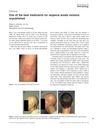
June 2018 in “International Journal of Dermatology” DNCB is highly effective for treating alopecia areata with minimal long-term side effects.
 12 citations
,
February 2013 in “The Open Stem Cell Journal”
12 citations
,
February 2013 in “The Open Stem Cell Journal” This article reviews the definitions, opportunities, advantages, and limitations of dental pulp stem cells and stem cells from human exfoliated deciduous teeth in tissue engineering and regenerative medicine, reporting no new clinical results.
 1 citations
,
October 2020 in “Nepal journal of dermatology, venereology & leprology”
1 citations
,
October 2020 in “Nepal journal of dermatology, venereology & leprology” This study found that patients on maintenance hemodialysis commonly experience cutaneous symptoms, with pigmentation and nail disorders being the most prevalent.
 April 2023 in “Experimental Dermatology”
 This study found that a single intradermal injection of human dermal papilla cells increased hair follicle number and thickness in pigs, suggesting potential effectiveness for hair growth in humans.
 January 2023 in “Indian dermatology online journal”
 This case report discusses a 15-year-old boy with pachyonychia congenita, identifying a keratin 17 gene mutation, and highlights the need for a national registry and more accessible genetic testing in India.
 2 citations
,
February 2015 in “Journal of Tissue Engineering and Regenerative Medicine”
2 citations
,
February 2015 in “Journal of Tissue Engineering and Regenerative Medicine” This study found that transplanting trichogenous dermal cells significantly enhanced the restoration of in vivo-damaged hair follicles in a nude rat model, with a combination of dermal papilla and sheath cells proving more effective than either cell type alone.
 1 citations
,
October 2021 in “Clinical, Cosmetic and Investigational Dermatology”
1 citations
,
October 2021 in “Clinical, Cosmetic and Investigational Dermatology” In this study on cultured human dermal papilla cells, researchers found that niacinamide may enhance hair growth by reducing oxidative stress-induced cell senescence and delaying catagen entry, suggesting potential applications against hair loss.
 July 2022 in “Biomedicines”
 This study found that 4-aminopyridine significantly enhanced skin wound healing by accelerating wound closure, improving skin architecture, and promoting hair follicle neogenesis and tissue regeneration.
14 citations
,
March 2019 in “European journal of pharmaceutics and biopharmaceutics” This study observed that proretinal nanoparticles delivered significantly higher concentrations of retinal to the stratum corneum and hair follicles compared to non-particulate forms, potentially improving topical retinoid therapy.
July 2025 in “Ultrasound in Medicine & Biology” This study found that nanobubble-encapsulated diclofenac with ultrasound-targeted microbubble destruction (DNBs-UTMD) can enhance the anti-tumor efficacy of Doxil® by regulating the tumor immune microenvironment, improving drug uptake, and increasing T cell responses while reducing immune-suppressive cells in the process.
 28 citations
,
January 2021 in “Parkinsonism & related disorders (Online)/Parkinsonism & related disorders”
28 citations
,
January 2021 in “Parkinsonism & related disorders (Online)/Parkinsonism & related disorders” This article reviews skin disorders in Parkinson's disease, highlighting the potential of skin studies and stem cell research to advance understanding and treatment of the neurodegenerative disorder, without presenting new results.
122 citations
,
June 1998 in “PubMed” This study found that sensory and sympathetic innervation in the mystacial pads of mice is governed by a balance of neurotrophin signaling, highlighting the roles of NGF/trkA and NT-3/trkC pathways.
 20 citations
,
December 2003 in “Journal of Cosmetic and Laser Therapy”
20 citations
,
December 2003 in “Journal of Cosmetic and Laser Therapy” This study found that an 800-nm diode laser was effective for reducing pigmented hair and extending hair plucking intervals, with most patients tolerating the procedure well without anesthetics.

In this study, researchers optimized the culture strategy for dermal papilla cells and established a promising immortalized cell strain, iDP6, which resembles primary DP cells and is suitable for further research applications.
January 2018 in “Refubium (Universitätsbibliothek der Freien Universität Berlin)” This thesis developed stimuli-responsive nanocarriers, demonstrating their potential for targeted genetic material delivery with reduced toxicity and diagnostic applications, and explored pH-sensitive nanogels for effective skin drug delivery and monitoring.
23 citations
,
December 2013 in “Molecular cancer therapeutics” This study found that AR-positive breast cancer cell lines are more sensitive to the dual PI3K/mTOR inhibitor NVP-BEZ235 compared to AR-negative cells.
31 citations
,
September 2019 in “Acta Pharmacologica Sinica”  March 2021 in “PARIPEX INDIAN JOURNAL OF RESEARCH”
 In this study, researchers compared the efficacy of platelet-rich plasma with microneedling versus microneedling alone for treating androgenic alopecia in 50 patients, though results are not reported in the abstract.
September 2023 in “Journal of the American Academy of Dermatology” This study analyzed nail excision practices in the United States from 2012 to 2017, revealing that podiatrists performed 99% of these procedures, vastly outnumbering dermatologists, and showed a broad geographic distribution across the country.
1 citations
,
September 2017 in “BMJ” The man has a disease causing skin patches, thickened nerves, and mild muscle weakness.
September 2015 in “Veterinary Dermatology” This study found that microneedling induced nearly complete hair regrowth in two Pomeranians with alopecia X, suggesting it may be a promising alternative treatment for similar hair cycle arrest disorders.
January 2018 in “Journal of Visualized Experiments” This study found that injections of autologous platelet-rich plasma in patients with pattern hair loss were compared to placebo, but the abstract does not report specific clinical results.
8 citations
,
January 2025 in “JADA Foundational Science” This review discusses the state-of-the-art in photobiomodulation therapy for oral and dental applications and emphasizes the need for education, training, and addressing logistical issues for its routine use.
 April 2017 in “Journal of Investigative Dermatology”
 In this study, deep phenotyping of 68 patients with XPD gene defects successfully separated individuals by clinical diagnosis and survival status, potentially improving diagnosis and prognosis for xeroderma pigmentosum and trichothiodystrophy.
 87 citations
,
March 2020 in “Australian Dental Journal”
87 citations
,
March 2020 in “Australian Dental Journal” This review discusses different preparation and application methods of platelet-rich plasma in dental regenerative medicine and reports no new results, highlighting its potential and associated controversies.
 73 citations
,
May 1976 in “JAMA”
73 citations
,
May 1976 in “JAMA” This case report associates severe zinc deficiency with long-term total parenteral nutrition, suggesting the need for trace element supplementation in such nutritional management.
1 citations
,
August 2021 This study found that biomimetic dermal papilla spheres cultured in a specific microenvironment can partially restore hair-inducing ability in high-passage dermal papilla cells in nude mice, resembling the characteristics of primary cells.

This study found that polycystic ovary syndrome was the most common cause of hirsutism among premenopausal Algerian women.