3 citations
,
April 2019 in “Journal of Mind and Medical Sciences” This review discusses the application of photodynamic therapy for treating oral lichen planus and indicates its potential benefits, but it reports no new clinical results.
 2 citations
,
April 2012 in “Science-business Exchange”
2 citations
,
April 2012 in “Science-business Exchange” Blocking a protein called prostaglandin D2 might help treat hair loss.
January 2026 in “Forum Dermatologicum” This study reviewed cases of Graham–Little-Piccardi–Lassueur syndrome and found that topical treatments were generally ineffective, while systemic therapies like prednisone, hydroxychloroquine, and isotretinoin led to partial hair regrowth and disease stabilization, highlighting the importance of early diagnosis and systemic therapy to improve outcomes.
 12 citations
,
June 2020 in “Journal of The American Academy of Dermatology”
12 citations
,
June 2020 in “Journal of The American Academy of Dermatology” This article discusses platelet-rich plasma therapy for cicatricial alopecias like lichen planopilaris and reports no confirmed new clinical results; the authors highlight ongoing uncertainty about its effectiveness and potential risks.
 June 2010 in “Melanoma research”
 This study found that LDE225, a novel Smo antagonist, shows potential as a topical treatment for basal cell carcinoma due to its high affinity binding and effective inhibition of tumor growth in preclinical models.
February 2026 in “JEADV Clinical Practice” This report describes a rare case of scarring alopecia, diagnosed as lichen planopilaris (LPP), affecting solely the limbs, highlighting the necessity for thorough evaluation of LPP beyond the scalp.
19 citations
,
July 2017 in “Clinical and experimental dermatology” This study provides one of the first descriptions of the demographic, clinical, and therapeutic characteristics of lichen planopilaris in Chilean adults, reporting that treatment usually reduced or halted disease progression.

This study evaluated the effect of intralesional injections of lyophilized Platelet Derived Growth Factors in 42 patients with Peyronie's disease and found significant reductions in penile curvature and plaque size, along with improvements in Peyronie's Disease Questionnaire scores, suggesting a potential treatment role.
 June 2026 in “Lasers in Medical Science”
 This randomized trial found that diode laser achieved more favorable long-term hair removal outcomes but induced more discomfort and transient adverse effects compared to intense pulsed light in women with Fitzpatrick skin types I-IV.
 May 2014 in “Clinical and Experimental Dermatology”
 A 70-year-old woman with a rare skin condition improved after treatment with topical steroids and acitretin.
15 citations
,
July 2022 in “Nano Research” This study suggests that using cholesterol-free liposomes, specifically PPD-Lip, as a delivery system with dutasteride may enhance the treatment of androgenetic alopecia by promoting hair regrowth in mice models.
11 citations
,
January 2018 in “Jaypee's international journal of clinical pediatric dentistry” This report describes the clinical presentation of Papillon-Lefèvre syndrome in two brothers and reviews the related literature, without providing new clinical outcomes.
 1461 citations
,
March 2004 in “Annals of oncology”
1461 citations
,
March 2004 in “Annals of oncology” This study found that in first-line treatment of metastatic breast cancer, pegylated liposomal doxorubicin (PLD) provided similar progression-free survival to doxorubicin with significantly less cardiotoxicity.
 April 2012 in “Informa Healthcare eBooks”
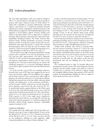
 Lichen planopilaris is a rare, chronic condition causing hair loss, mainly in middle-aged women, and early treatment is important to prevent permanent baldness.
September 2017 in “Journal of Investigative Dermatology” This study found that photodynamic therapy achieved permanent removal of nonpigmented hair in mice after multiple sessions, unlike laser treatment, which was not effective for nonpigmented hair.
 3 citations
,
June 2022 in “Dermatology and therapy”
3 citations
,
June 2022 in “Dermatology and therapy” This case report found that a novel botanical treatment halted disease progression and promoted hair regrowth in four patients with lichen planopilaris, indicating potential for use as a safe alternative therapy.
July 2025 in “Case Reports in Dermatology” This case report highlights that early signs like pili torti may precede lichen planopilaris in some patients, emphasizing the importance of timely intervention to prevent permanent hair loss.
 1 citations
,
October 2023 in “Skin research and technology”
1 citations
,
October 2023 in “Skin research and technology” This study found that line-field confocal optical coherence tomography effectively visualized key diagnostic features of classic lichen planopilaris in real time, suggesting its potential as a valuable diagnostic tool.
 16 citations
,
May 2000 in “Endocrinology”
16 citations
,
May 2000 in “Endocrinology” This study identified a new gene, mrp4, in mice, which suggests it may have a unique role in the growth and development of hair follicles in the ears and tails.
This phase Ib study found that combining pegylated liposomal doxorubicin and pembrolizumab was well-tolerated and effective, with durable antitumor responses and a median survival of over two years in heavily pretreated ER-positive metastatic breast cancer patients.
June 2023 in “International Journal of Dermatology” This study reviewed 41 cases of lichen planus pigmentosus in patients from southeastern Tunisia, highlighting its prevalence among older individuals and notable differences compared to patterns observed in an Indian cohort.
36 citations
,
July 2004 in “Journal of Controlled Release” This study demonstrates that confocal laser scanning microscopy can effectively visualize the rapid diffusion and penetration pathway of a dye into the hair follicle in fresh human scalp skin.
 November 2021 in “Research Square (Research Square)”
 This study found that a 532 nm laser at 15 J/cm² enhanced the proliferation and differentiation of tendon-derived stem cells in rats, potentially accelerating tendon healing through the up-regulation of Nr4a1.
7 citations
,
March 2023 in “Lasers in Surgery and Medicine” This study found that a single ablative fractional laser treatment significantly reduced hedgehog pathway gene expression in microscopic murine basal cell carcinomas, nearly matching the effects of repeated topical vismodegib applications.
1 citations
,
July 2024 in “Journal of lasers in medical sciences” This case study reports that treating a female patient with facial partial unilateral lentiginosis using a 532-nm Nd:YAG fractional picosecond laser resulted in significant improvement in pigmentation without notable side effects, indicating it may be an effective and well-tolerated treatment option.
 16 citations
,
December 2017 in “Journal of The American Academy of Dermatology”
16 citations
,
December 2017 in “Journal of The American Academy of Dermatology” This study found that low-level laser therapy may reduce inflammation and increase hair thickness in patients with lichen planopilaris after six months of treatment, though the small sample size limits the findings.
 2 citations
,
March 2023 in “Biomedicine & pharmacotherapy”
2 citations
,
March 2023 in “Biomedicine & pharmacotherapy” This study found that platelet lysate significantly improved hair growth and follicle performance in both experimental settings and AGA patients, showing results comparable to platelet-rich plasma.
July 2021 in “Authorea (Authorea)” This article discusses Graham-Little Piccardi Lassueur Syndrome, a rare variant of Lichen planopilaris, but reports no clinical findings or results.
 12 citations
,
March 2019 in “Lasers in Surgery and Medicine”
12 citations
,
March 2019 in “Lasers in Surgery and Medicine” This study found that low-level laser therapy increased the expression of proteins in dermal papilla tissues, suggesting it promotes hair growth in male androgenetic alopecia patients.