 106 citations
,
June 2005 in “Journal of Investigative Dermatology”
106 citations
,
June 2005 in “Journal of Investigative Dermatology” This study defines classification criteria for hair follicle dystrophy using a mouse model of chemotherapy-induced alopecia, providing tools for standardized hair damage assessment.
 47 citations
,
December 2019 in “Biomaterials”
47 citations
,
December 2019 in “Biomaterials” This study demonstrated effective delivery of CRISPR/Cas9 components to dermal papilla cells in androgenic alopecia animals using ultrasound-activated nanoparticles, resulting in specific gene editing and hair growth recovery.
 17 citations
,
December 2015 in “BMC Complementary and Alternative Medicine”
17 citations
,
December 2015 in “BMC Complementary and Alternative Medicine” This study found that Avicennia marina extract significantly inhibited 5α-reductase type 1 activity in human hair dermal papilla cells, suggesting its potential use for treating androgenic alopecia.
 13 citations
,
January 2010 in “Advances in Biochemical Engineering / Biotechnology”
13 citations
,
January 2010 in “Advances in Biochemical Engineering / Biotechnology” This review covers various aspects of hair biology, pigmentation, and development, focusing on genetic and biochemical modulation of hair follicle components but reports no new findings.
 4 citations
,
December 2020 in “International journal of research - granthaalayah”
4 citations
,
December 2020 in “International journal of research - granthaalayah” This study found that tetracycline can adhere to hair follicle structures and disrupt cell metabolism, potentially damaging healthy human cells as well as pathogens.
 April 2024 in “bioRxiv (Cold Spring Harbor Laboratory)”
 In a keratinocyte-specific knockout mouse model, this study found that deleting GRK2 disrupted hair follicle homeostasis, causing cyst-like structures, abnormal growth patterns, and eventual hair loss, suggesting potential links to immune-mediated alopecias.
 July 2018 in “Elsevier eBooks”
 This review discusses novel treatments for androgenetic alopecia, including therapies like platelet-rich plasma and adipose-derived stem cells, and reports no new clinical results.
9 citations
,
February 2012 in “Clinical Neurology and Neurosurgery” In this paper, three APS patients were followed over time, showing that the diagnosis and course of autoimmune polyglandular syndrome can evolve, highlighting the need for careful monitoring and potential re-evaluation.
 25 citations
,
October 2015 in “Dermatology”
25 citations
,
October 2015 in “Dermatology” This study observed that dapsone may be effective for treating pustular psoriasis, as four out of five patients showed improvement after previously failing other treatments.
37 citations
,
September 2009 in “JEADV. Journal of the European Academy of Dermatology and Venereology/Journal of the European Academy of Dermatology and Venereology” This study found that diphencyprone is an effective and safe treatment for extensive alopecia areata, especially with long-term therapy and maintenance to reduce relapse risk.
 1 citations
,
February 2023 in “Deleted Journal”
1 citations
,
February 2023 in “Deleted Journal” This study found that Diphenylcyclopropenone (DCP) was effective for treating extensive alopecia areata in Thai patients, although a high relapse rate suggests maintenance therapy might be necessary.
 7 citations
,
August 2000 in “Journal of Pediatric and Adolescent Gynecology”
7 citations
,
August 2000 in “Journal of Pediatric and Adolescent Gynecology” This review discusses perceptions and side effects of depot medroxyprogesterone acetate and emphasizes the importance of educating teens to enhance compliance; it reports no new clinical findings.
 12 citations
,
November 2003 in “Journal of the American Academy of Dermatology”
12 citations
,
November 2003 in “Journal of the American Academy of Dermatology” This study found hair regrowth in the majority of AA-affected mice and rats treated with diphencyprone, suggesting its potential utility for understanding human alopecia areata and the drug's therapeutic action.
 December 2025 in “Molecules”
 This study found that the 15-PGDH inhibitor DPP improved endothelial function in hair-related cells exposed to DHT by reducing oxidative stress and enhancing angiogenic capacity.
May 2024 in “Journal of the Egyptian Womenʼs Dermatologic Society” This study suggests that DPCP treatment can be effective and safe for severe alopecia areata in children, with maintenance therapy potentially reducing relapse rates.
 18 citations
,
February 2018 in “International Journal of Molecular Sciences”
18 citations
,
February 2018 in “International Journal of Molecular Sciences” This study found that prostaglandin D2 promotes androgen receptor and AKT signaling in human dermal papilla cells through the DP2 receptor, potentially contributing to androgenetic alopecia.
 1 citations
,
April 2019 in “Journal of Investigative Dermatology”
1 citations
,
April 2019 in “Journal of Investigative Dermatology” This study examined the safety and efficacy of dupilumab in adolescents with moderate-to-severe atopic dermatitis, finding that it was well tolerated and significantly improved symptoms over 52 weeks, with its safety profile similar to that in adults.
 January 2018 in “Springer eBooks”
 PDE inhibitors, especially PDE4 inhibitors like apremilast, are effective for certain inflammatory skin conditions but have side effects and can be costly.
 March 2005 in “Journal of The American Academy of Dermatology”
 Diphencyprone treatment protocols could be simplified as no harm occurred despite not fully following them.
3 citations
,
April 2024 in “JAAD Case Reports” This article reviews DPCP's use as a topical immunotherapy for alopecia areata and discusses its suggested mechanism, but reports no clinical results.
 27 citations
,
December 2015 in “Clinical and Experimental Dermatology”
27 citations
,
December 2015 in “Clinical and Experimental Dermatology” This study found that hair regrowth occurred in 72.2% of alopecia areata patients treated with diphencyprone, with disease extent at baseline and duration affecting outcomes.
 April 2016 in “The Journal of Sexual Medicine”
 This report analyzed an FDA adverse event database and aimed to evaluate and describe post-finasteride syndrome potentially related to dutasteride, but it does not report new clinical findings.
 January 2024 in “Annals of Dermatology”
 This study found that DPCP immunotherapy effectively treats alopecia areata, identifying factors that influence treatment response and patient satisfaction, which may aid in standardizing the treatment for improved outcomes.
 26 citations
,
September 2018 in “Neurobiology of Disease”
26 citations
,
September 2018 in “Neurobiology of Disease” This study found that both finasteride and dutasteride significantly reduced L-DOPA-induced dyskinesia in a rat model of Parkinson's disease, with dutasteride showing greater effectiveness at lower doses.
18 citations
,
December 2016 in “European journal of pharmacology” In this study, 12-Chloracetyl-PPD showed anti-cancer activity by inhibiting cancer cell viability and inducing apoptosis through reactive oxygen species production without harming normal cells.
3 citations
,
November 2021 in “Skin Appendage Disorders” This study found that home-use diphenylcyclopropenone (H-DPCP) is a cost-effective alternative to office-use for severe alopecia areata, showing similar effectiveness with reduced costs.
36 citations
,
May 2005 in “BMC dermatology” This study found that topical diphenylcyclopropenone was effective in treating severe alopecia areata but had a high relapse rate and was often accompanied by side effects like eczema and lymphadenopathy.
 1 citations
,
March 2023 in “Frontiers in Cardiovascular Medicine”
1 citations
,
March 2023 in “Frontiers in Cardiovascular Medicine” A specific gene variant is linked to heart disease, increased heart muscle, curly hair, and thick skin on palms and soles.
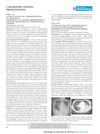 May 2025 in “The Journal of Rheumatology”
 This case report highlights a rare instance of diffuse alveolar hemorrhage in a patient with catastrophic antiphospholipid syndrome, emphasizing the importance of early recognition and multidisciplinary management.
 April 2016 in “Journal of Investigative Dermatology”
 This study found that the peptide derivative beta-Ala-Pro-Dab-NHbenzyl may reduce wrinkles and sebum production in human skin by inhibiting dipeptidyl peptidase 4, suggesting potential for acne and skin inflammation treatment.