 14 citations
,
August 2007 in “Bioorganic & Medicinal Chemistry Letters”
14 citations
,
August 2007 in “Bioorganic & Medicinal Chemistry Letters” This study reported that the compound (1R, 2S)-4-(2-cyano-cyclohexyl-oxy)-2-trifluoromethyl-benzonitrile effectively stimulated hair growth in mice and reduced sebum production in hamsters.
11 citations
,
April 1993 in “PubMed” In this study, trichocytes were shown to have potential for alternative differentiation, with mesenchymal cell influences playing a critical role in determining this process.
41 citations
,
July 2016 in “Journal of Investigative Dermatology” This study identified molecular differences between dysplastic nevi and common melanocytic nevi, including altered keratinocyte differentiation, increased hair follicle-related molecule expression, and distinct immune microenvironment characteristics in dysplastic nevi.
September 2025 in “OPAL (Open@LaTrobe) (La Trobe University)” In this study, researchers investigated the formation of spherical crystals of minoxidil in various alcoholic solvents, discovering new types like spherulite aggregates and a unique butterfly-shaped crystal, with the spherulite aggregates showing improved powder flow properties compared to other forms.
6 citations
,
December 2023 in “Journal of Molecular Cell Biology” In this study, Gsdma1/2/3 knockout mice showed reduced epidermal hyperplasia and inflammation when induced by PMA, which was attributed to decreased EGFR-Stat3/Akt signaling due to a decrease in related ligands.
54 citations
,
November 1994 in “Differentiation” This study found that trichohyalin is expressed in various normal and pathological epithelia beyond hair follicle cells, where it is uniquely associated with filaggrin, suggesting a specific role in aggregating K6/K16-containing intermediate filaments.
 4 citations
,
August 2022 in “The Scientific World Journal”
4 citations
,
August 2022 in “The Scientific World Journal” This study found that bufotalinin, derived from Merremia peltata leaves, may enhance hair growth by acting as a potential androgen receptor antagonist in rabbits.
80 citations
,
June 1997 in “The American Journal of Human Genetics” 53 citations
,
July 2002 in “Journal of Investigative Dermatology” The Dfl mutation in mice causes poor sebaceous gland function and complete hair loss.
 2 citations
,
November 2018 in “Indian Journal of Pharmaceutical Education”
2 citations
,
November 2018 in “Indian Journal of Pharmaceutical Education” This study designed a novel model for 5a-reductase enzyme inhibitors using pharmacophore and 3D QSAR techniques, potentially allowing for improved prediction and development of drug therapies targeting benign prostatic hyperplasia.
11 citations
,
July 2023 in “Applied Nanoscience”  October 2021 in “Journal of Investigative Dermatology”
 In this research, investigators used in vitro models to study the Merkel cell-neurite complex and reported that mechanical stimulation, similar to gentle touch, can induce molecular changes that are potentially relevant to hair growth, thus contributing to the understanding of its underlying mechanisms.
 417 citations
,
September 2005 in “PLoS biology”
417 citations
,
September 2005 in “PLoS biology” This study developed molecular signatures for dermal papilla cells and their niche, uncovering novel signaling regulators and genes linked to hair disorders, which may inform future hair development research.
 136 citations
,
March 1996 in “Journal of the American Chemical Society”
136 citations
,
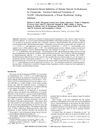
March 1996 in “Journal of the American Chemical Society” This study explains finasteride's high potency and specificity as a mechanism-based inhibitor for treating benign prostatic hyperplasia by detailing its interaction with human type 2 steroid 5α-reductase.
5 citations
,
March 2012 in “Journal of Investigative Dermatology” In their mouse study, Oda et al. found that removing the MED1 gene in the skin led to hair loss and changes in epidermal cell differentiation, indicating MED1's significant role in these processes.
This chapter discusses phase transitions in various pharmaceutical examples and does not present any new research findings.
44 citations
,
August 2004 in “Journal of Investigative Dermatology” A gene deletion in DSG4 causes sparse hair in some Pakistani families.
This study demonstrated that Reverse Protein Engineering can decrease the size of Firefly Luciferase from 550 to less than 80 amino acids, but further research is needed to ensure these smaller peptides retain bioluminescent activity.
57 citations
,
January 2020 in “International Journal of Molecular Sciences” This review discusses the role of peptidylarginine deiminases in skin homeostasis and diseases, particularly in keratinocyte differentiation and hair disorders, but presents no new experimental findings.
 2 citations
,
September 2022
2 citations
,
September 2022 In this study, researchers found that a PER3 gene SNP may be pathogenic for a new subtype of dyschromatosis universalis hereditaria, especially when combined with a SASH1 mutation.
 39 citations
,
August 2022 in “Cell Death and Disease”
39 citations
,
August 2022 in “Cell Death and Disease” This study found that a dopamine-methacrylated hyaluronic acid hydrogel enhances the efficacy of adipose-derived stem cells in promoting skin regeneration, potentially involving the Notch signaling pathway.
August 1994 in “Journal of Dermatological Science” 1 citations
,
March 2023 in “Journal of Natural Fibers” This study explored using tyrosine as a cross-linking agent for curling Asian hair and found that it could shape hair effectively before washing without damaging the fibers, though the method was less effective after washing compared to commercial products.
27 citations
,
November 2007 in “Genomics” This study found that mutations in type I IRS keratin genes disrupt keratin protein complexes in mice, suggesting crucial roles for these genes in proper hair coat formation.
June 2025 in “OPAL (Open@LaTrobe) (La Trobe University)” This study found that a synthetic polyphenol, dimeric 1,2,4-benzenetriol (diBTO), can coat gray hair and gradually oxidize, creating a resistant brown layer similar to apple browning, which offers a practical hair dyeing solution that withstands washing and reduces the need for long dyeing sessions.
20 citations
,
February 1968 in “Journal of Histochemistry & Cytochemistry” This study reports that citrulline, uniquely found in the inner root sheath of hair follicles, can be specifically detected with the carbamido diacetyl reaction, resulting in a bright orange color.
 1 citations
,
March 2023 in “Frontiers in Cardiovascular Medicine”
1 citations
,
March 2023 in “Frontiers in Cardiovascular Medicine” A specific gene variant is linked to heart disease, increased heart muscle, curly hair, and thick skin on palms and soles.
 2 citations
,
June 2023 in “Journal of cell science”
2 citations
,
June 2023 in “Journal of cell science” In this study, researchers found that specific mutations in iRhom2 in mice lead to skin and hair abnormalities which depend on the presence of the protein ADAM17, suggesting a complex role for iRhom2 in tissue development and potential implications for treating tylosis with oesophageal cancer.
 April 2023 in “Journal of Investigative Dermatology”
 This study demonstrated that a combination of four types of honey significantly improved hair integrity, porosity, and surface roughness after exposure to UV-A and pollution stress.
 7 citations
,
November 2010 in “Genesis”
7 citations
,
November 2010 in “Genesis” Mouse Scube3 affects teeth, tongue, vibrissae, and eye development, but not facial structure or limb growth.