 September 2024 in “Cutis”
 Sunscreen use may increase the risk of frontal fibrosing alopecia.
 68 citations
,
May 2016 in “Experimental dermatology”
68 citations
,
May 2016 in “Experimental dermatology” This review discusses what is known about the pathobiology of frontal fibrosing alopecia and reports no new clinical findings, highlighting potential environmental and genetic factors in disease pathogenesis.
 3 citations
,
April 2021 in “Journal of Medicinal Chemistry”
3 citations
,
April 2021 in “Journal of Medicinal Chemistry” This study suggests that finasteride may inhibit the enzyme PNMT, potentially contributing to its sexual and psychological side effects.
 March 2025 in “International Journal of Trichology”
 This case report describes the first observed instance of fibrosing alopecia in a pattern distribution in a child, suggesting the condition is not solely androgen dependent.
January 2018 in “Journal of Crohn s and Colitis” This study found that high-dose intravenous ferric carboxymaltose may reduce inflammatory activity in patients with inflammatory bowel disease and iron deficiency anaemia, as evidenced by decreased CRP levels and improved clinical disease indices.
 13 citations
,
March 2020 in “Genes”
13 citations
,
March 2020 in “Genes” This study found that FGF5-/- rabbits exhibited a significant long hair phenotype by prolonging the anagen phase, suggesting FGF5 acts as a negative regulator of hair growth.
 2 citations
,
April 2023 in “Cutis”
2 citations
,
April 2023 in “Cutis” This systematic review discusses the treatment characteristics and outcomes for frontal fibrosing alopecia specifically in Black patients with skin of color, addressing a gap in clinical evidence due to underrepresentation in studies.
1 citations
,
August 1999 in “ACS symposium series” In this study, fluorescence microscopy revealed that a cationic cellulose ether derivative adsorbed onto hair fibers desorbed significantly when treated with sodium dodecylsulfate.
 26 citations
,
September 2018 in “Neurobiology of Disease”
26 citations
,
September 2018 in “Neurobiology of Disease” This study found that both finasteride and dutasteride significantly reduced L-DOPA-induced dyskinesia in a rat model of Parkinson's disease, with dutasteride showing greater effectiveness at lower doses.
May 2018 in “The journal of immunology/The Journal of immunology” This study identified that patients with compound heterozygous mutations in FOXN1 exhibited severe T-cell lymphopenia but retained normal hair and nail development, indicating a distinct clinical phenotype from classic FOXN1 cases.
75 citations
,
June 2007 in “Journal of Biological Chemistry” This study found that the combination of MT-DADMe-ImmA and MTA selectively induced apoptosis in head and neck squamous cell carcinoma cell lines FaDu and Cal27, but not in normal fibroblasts or MTAP-deficient breast cancer cells.
 61 citations
,
July 2011 in “PLOS ONE”
61 citations
,
July 2011 in “PLOS ONE” This study provides the first direct evidence that spermidine can stimulate hair growth and modulate human epithelial stem cell biology in cultured human hair follicles.
1 citations
,
April 2021 in “Journal of Cosmetic Dermatology” In this placebo-controlled clinical study, a cream containing 4% capryloyl glycine and 1% glycine soy‐fermented extract effectively inhibited ODC1 activity and improved hypertrichosis in 91.7% of Caucasian female patients on the forearms, whereas no improvement was observed with the placebo.
45 citations
,
May 2002 in “International Journal of Dermatology” This case report describes a patient with systemic lupus erythematosus who developed multiple dermatofibromas while on long-term prednisone therapy.
 October 2024 in “Cermin Dunia Kedokteran”
 This article discusses the surveillance and spread of hand, foot, and mouth disease in China, Singapore, and Indonesia, and reports no new results, emphasizing the need for improved prevention and management strategies.
 September 2024 in “Medicina”
 This study found that among women with PCOS, the FokI CC genotype of the VDR gene may offer protection against acne and seborrhea, while the VDR-TaqI dominant genotype is associated with reduced oxidative stress.
4 citations
,
September 2021 in “Sensors” In this study, LED therapy for eyebrow loss in older females with frontal fibrosing alopecia significantly increased eyebrow hair count after 10 treatments and maintained improvement at 6 months, indicating it could be a promising and well-tolerated treatment option.
 August 2024 in “JEADV Clinical Practice”
 In this clinical trial, 16 women with frontal fibrosing alopecia experienced significant improvements in hair density, vellus hair count, and quality of life after monthly intralesional dutasteride treatments, though larger and longer-term studies are needed to confirm these findings.
 September 2017 in “Journal of Investigative Dermatology”
 This study found that mackerel fermented fish oil protected human keratinocyte cells from UVB-induced oxidative stress by scavenging free radicals and reducing cellular damage.
 November 2023 in “Brain Sciences”
 This study investigated medications potentially linked to male-factor infertility using the FDA Adverse Event Reporting System and found that finasteride, testosterone, valproate, and other drugs showed significant disproportionate reporting of infertility cases, highlighting a potential under-reporting issue to regulatory bodies.
6 citations
,
August 2024 in “Biomacromolecules” This study introduces a novel in vitro model for clubfoot fibrosis to enable high-throughput drug screening and found that while the model increased collagen deposition, the antifibrotic drug minoxidil effectively inhibited the expression of collagen cross-linking enzymes.
 August 2016 in “Journal of Investigative Dermatology”
 This study observed that the osteopontin-derived peptide FOL-005 inhibited hair growth in human scalp skin models, contrary to its hair growth promotion in mice, supporting further clinical testing for excessive hair growth treatment.

In this study, fibroblast growth factors promoted dermal papilla cell proliferation and showed potential for treating androgenic alopecia, with possible advantages over minoxidil in cellular organization and health.
 March 2023 in “Journal of Cosmetic Dermatology”
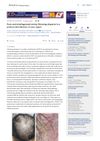
 This case report illustrates that fibrosing alopecia in a pattern distribution may be misdiagnosed as androgenetic alopecia due to similar hair loss patterns, but distinctive trichoscopic and histopathologic features help differentiate it.
 37 citations
,
January 2009 in “Sexual Development”
37 citations
,
January 2009 in “Sexual Development” This study found that chronic exposure to fadrozole or finasteride during frog development induced intersex individuals, which displayed different gene expression profiles depending on the chemical used.
5 citations
,
January 2016 in “Skin appendage disorders” This case report describes frontal fibrosing alopecia in a woman with primary biliary cirrhosis and polymyalgia rheumatica, suggesting a possible autoimmune link to this form of hair loss.
December 2025 in “ILDS-DEV”  39 citations
,
November 2015 in “Nanomedicine”
39 citations
,
November 2015 in “Nanomedicine” This study found that the developed Finasteride-loaded SMEDDS improved the relative bioavailability of the drug compared to a commercial tablet, offering a promising oral delivery system for glucosteroid analogs.
 August 2024 in “Skin Research and Technology”
 This case study involving a 63-year-old woman with female pattern hair loss found that a 3-month regimen of low-dose oral minoxidil increased hair density from 98 to 140 hairs per square centimeter, but caution was advised regarding its safety and efficacy without larger trials.
January 2025 in “Reactions Weekly”