80 citations
,
January 1979 in “Journal of Surgical Oncology” This paper reviews keratoacanthoma as a tumor that resembles but rarely progresses to squamous cell carcinoma, detailing its stages, potential origins, and distinguishing features from other similar growths, without reporting new clinical results.
January 2010 in “USFEU Scientific Library (Ural State Forest Engineering University)” This study developed a grooved microneedle platform enabling precise transdermal delivery of triamcinolone acetonide for alopecia areata, achieving accurate dosing by controlling groove position and drug concentration.
 January 2024 in “LA Referencia (Red Federada de Repositorios Institucionales de Publicaciones Científicas)”
 This study found that Carbon Quantum Dots effectively detected and quantified Co²⁺ ions and methylcobalamin in tap water with high sensitivity and recovery rates between 95% and 105%.
 January 2024 in “bioRxiv (Cold Spring Harbor Laboratory)”
 In this mouse study, the absence of the Ascl4 gene did not affect the development of hair follicles, teeth, or mammary glands, suggesting it is non-essential for these processes.
 101 citations
,
November 2011 in “Nature Communications”
101 citations
,
November 2011 in “Nature Communications” Wnt/β-catenin signaling is crucial for cell fusion in placental development.
 141 citations
,
September 2016 in “European Journal of Dermatology”
141 citations
,
September 2016 in “European Journal of Dermatology” This review examines dermatological side effects of taxane chemotherapy reported in past studies and highlights the necessity for identifying and managing these conditions to maintain cancer patients' quality of life; it presents no new clinical results.

This report describes the 2024 American Academy of Dermatology Annual Meeting in San Diego, notable for attracting nearly 20,000 attendees with 339 sessions covering a wide range of dermatological topics, making it potentially the largest dermatology meeting by attendance.
 July 2022 in “Berkala Ilmu Kesehatan Kulit dan Kelamin/Berkala ilmu kesehatan kulit dan kelamin (Periodical of dermatology and venerology)”
 This study reviewed medical records of tinea capitis patients at a clinic in Surabaya, finding that the condition predominantly affected young males and was often associated with contact with cats.
11 citations
,
November 2015 in “Carcinogenesis” In this study, researchers found that deleting TNFα in PKCε transgenic mice reduced the development of cutaneous squamous cell carcinomas induced by UV radiation or a chemical protocol.
January 2025 in “Dermatologic Therapy” This study found that baricitinib significantly reduced alopecia severity in JAK inhibitor-naïve patients compared to those previously treated with tofacitinib, indicating that switching JAK inhibitors can be safe and may be beneficial for selected patients with partial prior responses.
May 2025 in “OPAL (Open@LaTrobe) (La Trobe University)” This study found that in a mouse model of alopecia areata, tofacitinib inhibited CD8+ T cell infiltration at hair follicles by modulating linoleic acid metabolism and magnesium pathways, offering insights into potential therapeutic strategies for the condition.
22 citations
,
March 2017 in “Journal of the Formosan Medical Association” This report presents the Taiwanese Dermatological Association's 2016 consensus on defining and managing skin toxicities from EGFR-TKI treatments, providing comprehensive guidelines for clinicians in Taiwan.
 April 2026 in “Human Genome Variation”
 In this study, researchers identified a recurrent MBTPS2 splice-site variant as a mutational hotspot in IFAP syndrome across diverse families, with phenotype severity suggesting the influence of additional modifiers.

This observational study reviewed thyroid eye disease patients treated with teprotumumab at one center, reporting common side effects like fatigue and dry eye symptoms, with serious adverse events including two cases of blood clots and one pulmonary embolism.
1 citations
,
January 2008 12 citations
,
August 2001 in “PubMed” This study found that contrast enhanced phototrichogram (CE-PTG) significantly improved detection of various hair types and growth stages in androgenetic alopecia compared to standard PTG and was comparable to biopsy analysis.
October 2020 in “Der Hautarzt” This case study demonstrated that off-label tofacitinib treatment led to full regrowth of scalp hair after 18 months in a patient with alopecia areata universalis, following unsuccessful therapies.
 May 2017 in “bioRxiv (Cold Spring Harbor Laboratory)”
 This study found that the peach gene CTG134, involved in auxin-ethylene interactions, plays a role in hormonal regulation during root hair formation in Arabidopsis and tobacco.
17 citations
,
September 2022 in “Biomaterials Research” This study found that the film-trigger applicator system enhanced drug delivery efficiency and skin penetration of dissolving microneedles compared to traditional patch systems in both lab and animal models.
 September 2023 in “Journal of The American Academy of Dermatology”
 This study examined the clinicopathological characteristics of cutaneous squamous cell carcinoma on the scalp and ear but reported no new results on its association with androgenetic alopecia.
 45 citations
,
September 2012 in “Life Sciences”
45 citations
,
September 2012 in “Life Sciences” This study observed that Aconiti Ciliare Tuber extract may promote hair growth in mice by activating the Wnt/β-catenin signaling pathway.
 April 2020 in “Trends in Immunotherapy”
 In this study, 60% of patients with alopecia totalis showed partial hair regrowth after being treated with triamcinolone acetonide injections, with one patient achieving complete regrowth and responding well to further immunotherapy.
January 2022 in “Clinical Cases in Dermatology” This review discusses prevention, diagnosis, and treatment strategies for traction alopecia but presents no new clinical findings; the authors emphasize early intervention to prevent permanent hair loss.
 July 2025 in “Journal of the Pakistan Medical Association”
 In this study, intralesional triamcinolone acetonide combined with 5-fluorouracil was more effective for treating keloids, showing a good to excellent response in 95% of cases and fewer side effects, compared to triamcinolone acetonide alone, which achieved a 70% response rate.
8 citations
,
November 2025 in “Journal of Translational Medicine” This review highlights challenges in developing drugs targeting the Wnt/β-Catenin signaling pathway for cancer due to its complexity and essential roles in normal tissue. It explores targeted protein degradation technology as a promising strategy to overcome these challenges, suggesting potential new avenues for drug development.
 145 citations
,
May 2008 in “Cancer Science”
145 citations
,
May 2008 in “Cancer Science” This review discusses how increased gene copy number for telomerase components may contribute to telomerase up-regulation in cancer cells, although the exact mechanisms are not fully understood.
 21 citations
,
January 2005 in “Pediatric Dermatology”
21 citations
,
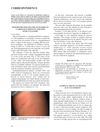
January 2005 in “Pediatric Dermatology” An 8-year-old girl with vitiligo developed extra hair growth on her knee after using tacrolimus ointment.
6 citations
,
July 1994 in “Journal of Dermatological Science” This study found that introducing the recombinant rat OTC gene into SPF-ASH mice restored normal hair growth and metabolic function, improving symptoms associated with OTC deficiency.
188 citations
,
June 1998 in “Molecular cell” This study found that mimicking the XPD point mutation in mice resulted in trichothiodystrophy-like symptoms, supporting the role of basal transcription and DNA repair defects in the disease.
 June 2023 in “Clinical Case Reports”
 This report describes a woman with microcystic adnexal carcinoma who underwent successful excisional surgery and hair transplantation, which may be beneficial for treating surgical scars.