 15 citations
,
January 2003 in “Lasers in Surgery and Medicine”
15 citations
,
January 2003 in “Lasers in Surgery and Medicine” This study found that cold air can effectively preserve the epidermis when using an 810 nm diode laser, but it is slightly less effective than a chilled sapphire window in dark-haired pigmented pigs.
 June 2024 in “Journal of clinical oncology”
 This study found that sensor-controlled scalp cooling prevented visible hair loss in 53% of breast cancer patients undergoing chemotherapy, with greater hair density and absence of comorbidities enhancing its efficacy, also improving patients' quality of life without increasing scalp metastasis risk.
 January 2024 in “International Journal of Health Science”
 This study evaluated emerging techniques for managing chemotherapy-induced alopecia and found that scalp cooling significantly reduced hair loss, while photobiomodulation was well-tolerated without major adverse effects; however, further research is needed to refine treatment protocols and ensure long-term safety.
7 citations
,
March 2023 in “Journal of Investigative Dermatology” Low-intensity ultrasound may help protect hair follicles from chemotherapy-induced hair loss.
 23 citations
,
December 2001 in “Lasers in Surgery and Medicine”
23 citations
,
December 2001 in “Lasers in Surgery and Medicine” This article discusses the extended theory of selective photothermolysis and does not report new clinical results; the authors explore potential applications in hair removal techniques.
 11 citations
,
January 2022 in “Journal of Cancer”
11 citations
,
January 2022 in “Journal of Cancer” This article reviews the potential for low intensity ultrasound as an antidote for the peripheral cytotoxic side effects of taxane drugs in chemotherapy, presenting no new clinical results.
 April 2023 in “The journal of investigative dermatology/Journal of investigative dermatology”
 This study provides ex vivo proof-of-principle that low-intensity ultrasound may protect human hair follicles from paclitaxel-induced damage, potentially reducing chemotherapy-related alopecia.
37 citations
,
October 2017 in “JEADV. Journal of the European Academy of Dermatology and Venereology/Journal of the European Academy of Dermatology and Venereology” This literature review reported that scalp hypothermia significantly decreases the occurrence of chemotherapy-induced alopecia, increasing effectiveness by 2.7-fold in controlled clinical trials and 3.9-fold in randomized trials, and highlighted a need for standard guidelines for its use.
 1 citations
,
January 2024 in “Journal of Cutaneous and Aesthetic Surgery”
1 citations
,
January 2024 in “Journal of Cutaneous and Aesthetic Surgery” This study found that treating patchy alopecia areata with fractional CO2 laser and topical triamcinolone acetonide was more effective and safer than intralesional triamcinolone, despite higher initial discomfort, as it resulted in greater patient satisfaction and fewer adverse effects like skin atrophy.
 3 citations
,
June 1995 in “International Journal of Gynecology & Obstetrics”
3 citations
,
June 1995 in “International Journal of Gynecology & Obstetrics” This paper cites a prospective, randomized, double-blind, controlled trial investigating laser laparoscopy for pelvic pain associated with minimal to moderate endometriosis but reports no new results.
 October 2025 in “Iraqi postgraduate medical journal”
 This study observed that using fractional CO2 laser-assisted delivery of clobetasol propionate cream significantly improved treatment outcomes for localized alopecia areata compared to the cream alone, suggesting the laser's enhancing effect on hair regrowth.
October 2022 in “Dermatology practical & conceptual” This study found that micro-needling with triamcinolone acetonide led to the best treatment outcomes for alopecia areata compared to other methods of trans-epidermal drug delivery.
 2 citations
,
January 2022 in “Skin appendage disorders”
2 citations
,
January 2022 in “Skin appendage disorders” This study presents two cases where intralesional methotrexate combined with ablative fractional CO2 laser treatment resulted in excellent outcomes for refractory alopecia areata.
 February 2009 in “Journal of The American Academy of Dermatology”
 This pilot study found that fractional infrared technology improved skin laxity and thickness in the cervical area of four female patients without causing adverse effects.
 April 2019 in “Archives of aesthetic plastic surgery”
 This study evaluated an 808-nm diode laser at different fluences for permanent axillary hair removal in Korean women and found that high-fluence treatment (14 J/cm2) effectively reduced hair density and thickness, with no significant difference in comfort compared to lower fluences.
36 citations
,
June 2016 in “Journal of dermatological treatment” This study found that a combination of low-fluence Q-switched 1064 nm Nd:YAG laser, hydroquinone cream, and oral tranexamic acid showed promising results for Riehl’s melanosis in Asian patients, with no serious adverse events reported.
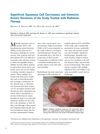 5 citations
,
May 2006 in “Dermatologic Surgery”
5 citations
,
May 2006 in “Dermatologic Surgery” This study found that a PEEP of 10 mbar for 2 hours did not adversely affect liver function or gastric mucosal perfusion in patients after cardiac surgery, as long as cardiac output was maintained.
 31 citations
,
September 2014 in “Journal of Pharmaceutical Sciences”
31 citations
,
September 2014 in “Journal of Pharmaceutical Sciences” This study found that Er–YAG laser treatment significantly enhanced skin absorption and follicular delivery of antialopecia drugs, suggesting a potential laser-assisted approach to treat alopecia.
 April 2007 in “Nature Clinical Practice Urology”
 TICE salvage chemotherapy is effective for treating germ-cell tumors with poor prognosis.
1 citations
,
January 2023 in “The Egyptian Journal of Hospital Medicine” This study found that combining platelet-rich plasma with microneedling and subcision was effective in treating atrophic acne scars in over 80% of patients with minimal adverse effects.
December 2005 in “Dermatologic surgery” This study found that while Er:YAG laser therapy can initially improve the appearance of eruptive vellus hair cysts, it was ineffective in preventing early recurrences due to limitations in ablation depth.
 31 citations
,
September 1999 in “Dermatologic Surgery”
31 citations
,
September 1999 in “Dermatologic Surgery” This study found that cooling hair grafts during transplantation did not significantly improve the survival or growth rates of hair follicles compared to room temperature storage.
 1 citations
,
April 2019 in “Journal of Investigative Dermatology”
1 citations
,
April 2019 in “Journal of Investigative Dermatology” This study found that cold atmospheric plasma can accelerate wound healing processes and reduce bacterial growth, including drug-resistant strains, suggesting its potential as a novel treatment for chronic wounds.
 4 citations
,
October 2024 in “Aesthetic Plastic Surgery”
4 citations
,
October 2024 in “Aesthetic Plastic Surgery” In this study, combining microneedle and sublative fractional radiofrequency treatments significantly improved skin tightening, texture, collagen organization, and satisfaction in individuals with moderate photoaging, while reducing abnormal elastin after three months.
 May 2015 in “Journal of The American Academy of Dermatology”
 The Nd:YAG laser is a successful and safe way to treat ingrown and pincer nails.
July 2024 in “Journal of Investigative Dermatology” Scalp cooling may be less effective for women of color on certain chemotherapy treatments.

This study introduced a new laser-only method called EKA for acne treatment, which is reported to be safe, painless, and heat-free, showing promising results for both acne and scar repair in initial sessions without combining with LED light.
September 2001 in “PubMed”  June 2026 in “Pathology & Oncology Research”
 In this study, the Orbis PAXMAN® scalp cooling system showed effectiveness and good tolerability in preventing chemotherapy-induced hair loss in breast cancer patients, particularly those receiving anthracycline-free chemotherapy, though the presence of comorbidities was linked to a higher risk of severe alopecia.
 May 2017 in “Journal of The American Academy of Dermatology”
 Combining microneedling with Q-switched laser treatment for tattoo removal did not improve results and caused more pain.