 December 2011 in “Asia-Pacific biotech news”
 This collection of research news highlights various scientific advancements, including discoveries in anti-cancer compounds, new cell types that boost immunity, and a potential Parkinson's breakthrough in Australia, among others from China, India, Korea, Singapore, and Thailand.
 11 citations
,
August 2020 in “Dermatologic therapy”
11 citations
,
August 2020 in “Dermatologic therapy” This review article highlights that mesotherapy, a popular non-surgical procedure in aesthetic dermatology, involves injecting a mixture of compounds into the skin for purposes like skin rejuvenation and hair loss treatment, but lacks large-scale studies on its efficacy and safety.
1 citations
,
October 2015 in “The Pharma Innovation Journal” This study found that the optimal method to introduce Saw Palmetto extract into emulsion bases for androgenic alopecia treatment involves mixing it with 48% ethanol at the end of the formulation process.
 193 citations
,
January 2015 in “International journal of trichology”
193 citations
,
January 2015 in “International journal of trichology” This review examines hair cosmetics, including shampoos and conditioners, for their formulations and effects, but reports no new clinical findings; it emphasizes the importance of dermatologist knowledge in treating diverse hair conditions.
 50 citations
,
July 2014 in “International Journal of Clinical Pharmacology and Therapeutics”
50 citations
,
July 2014 in “International Journal of Clinical Pharmacology and Therapeutics” This study found that both topical and oral finasteride significantly reduced plasma DHT after one week, with lower finasteride plasma exposure for the topical formulation.
 40 citations
,
August 2014 in “Journal of Nanoparticle Research”
40 citations
,
August 2014 in “Journal of Nanoparticle Research” This study found that biologically synthesized silver nanoparticle gel demonstrated excellent wound healing efficacy in rats, surpassing both marketed formulations and ionic silver.
 34 citations
,
October 2014 in “European journal of pharmaceutics and biopharmaceutics”
34 citations
,
October 2014 in “European journal of pharmaceutics and biopharmaceutics” This study found that adapalene-loaded solid lipid microparticles may enhance targeted drug delivery into sebum due to their similarity to sebum components, although both this formulation and a standard cream showed equivalent follicular penetration.
 23 citations
,
January 2001 in “International journal of toxicology”
23 citations
,
January 2001 in “International journal of toxicology” This review discusses the cosmetic use and safety of Hypericum Perforatum Extract and Oil, finding that current data are insufficient to support their safety in formulations due to a lack of comprehensive testing.
 15 citations
,
January 2022 in “Journal of Oleo Science”
15 citations
,
January 2022 in “Journal of Oleo Science” This study found that a phytosomal delivery system improved the bioavailability of Cuscuta reflexa extract compared to the plain extract, suggesting enhanced potential for this formulation.
 14 citations
,
December 2011 in “Archives of Dermatological Research”
14 citations
,
December 2011 in “Archives of Dermatological Research” This study found that phyto-vesicles of ß-sitosterol showed better absorption and improved activity for treating androgenetic alopecia in rats compared to the compound and its complex.
 10 citations
,
February 2008 in “International Journal of Andrology”
10 citations
,
February 2008 in “International Journal of Andrology” This study found that a 400-mg dose of oral testosterone with dutasteride increases serum testosterone levels for 8–10 hours in hypogonadal men, with the nanomilled formulation unaffected by food, suggesting a practical twice-daily therapy option.
 8 citations
,
November 2024 in “Scientific Reports”
8 citations
,
November 2024 in “Scientific Reports” In this study, different drying methods for Hedychium spicatum rhizomes significantly affected the essential oil yield, antioxidant potential, and compound composition, with the HSOV30 method yielding the highest oil content, antioxidant activity, and specific compound levels such as 1,8-cineole and elemol.
 8 citations
,
July 2020 in “International Journal of Pharmaceutics”
8 citations
,
July 2020 in “International Journal of Pharmaceutics” In this study, complexation with cyclodextrins was reported to increase the solubility of FIN for potential use in aqueous formulations for treating male androgenic alopecia.
 1 citations
,
February 2025 in “Journal of Biomedical Research & Environmental Sciences”
1 citations
,
February 2025 in “Journal of Biomedical Research & Environmental Sciences” This review explores the diverse health benefits and pharmacological properties of mushrooms, highlighting their potential use in cosmetics for antioxidant, anti-aging, and anti-hair loss effects due to their bioactive compounds.
 1 citations
,
January 2025 in “RSC Advances”
1 citations
,
January 2025 in “RSC Advances” The researchers evaluated scientific data on the usage and pharmaceutical applications of ascorbic acid derivatives, such as ascorbyl-6-palmitate and ascorbyl-2-glucoside, highlighting their development into stable delivery platforms to overcome ascorbic acid's instability and formulation challenges.
 June 2026 in “International Journal of Drug Delivery Technology”
 In this study, researchers optimized fast-dissolving tablets of nifedipine using a systematic approach, resulting in formulations that demonstrated rapid disintegration, enhanced dissolution profiles, and improved solubility, potentially improving oral delivery for patients requiring poorly soluble antihypertensive medication.
 May 2026 in “International Journal of Scientific Research in Chemistry”
 This study examined finasteride degradation under stress conditions, identifying three unique degradation products in acidic environments, providing insights into impurity profiling and quality control for finasteride formulations.
 January 2026 in “Drug Delivery and Translational Research”
 This study investigated the integration of crystal engineering and microneedle technology for androgenetic alopecia treatment, finding that microneedles loaded with newly developed Kopexil multicomponent crystals reduced drug diffusion rates in vitro compared to standard formulations.
 January 2026 in “Frontiers in Natural Products”
 This study found that combining shikimic acid with Prunus mume fruit extract significantly reduces type I 5α-reductase levels in testosterone-stressed skin sebocytes, surpassing the effects of shikimic acid or standard acne treatments alone, and shows promise for stable, non-irritating acne remedies in cosmetic formulations.
 January 2026 in “Food and Feed Research”
 This review highlights the traditional medicinal uses, phytochemical composition, and pharmacological properties of Musa paradisiaca, noting its applications in treating diarrhea and other conditions, and identifying key bioactive compounds with antimicrobial, antioxidant, and other bioactivities through in vitro and in vivo studies.
 August 2025 in “İstanbul Gelişim Üniversitesi Sağlık Bilimleri Dergisi”
 In this study, the researchers developed a chromatographic method to determine α-tocopherol and α-tocopheryl acetate in pharmaceutical capsules with high accuracy and repeatability, establishing it as a reliable alternative for analyzing these compounds.
 June 2025 in “International Journal of Environmental Sciences”
 In this study, researchers developed an herbal shampoo using extracts from multiple plants and observed that specific combinations effectively inhibited bacteria like Pseudomonas aeruginosa and Staphylococcus species, with certain formulations also being well-received by consumers for color and overall satisfaction.
 May 2025 in “Journal of Drug Delivery and Therapeutics”
 This review discusses the integration of modern and Unani medicine in the management of Benign Prostatic Hyperplasia, highlighting the potential of Unani herbal formulations as promising alternatives with minimal side effects but reports no new clinical results.
 March 2025 in “Asian Journal of Beauty and Cosmetology”
 This study found that microspicule cosmetics with low-molecular-weight peptide complexes significantly improved skin whitening, pore condition, and skin barrier function over four weeks compared to a non-microspicule formulation.
 December 2024 in “International Journal of Drug Delivery Technology”
 In this study, researchers developed and evaluated a topical dutasteride gel for treating male pattern baldness, finding that a formulation with 10% garlic extract showed the most promising results in promoting faster hair growth compared to other formulations tested.
 November 2024 in “International Journal of Plant and Environment”
 This study analyzed Sphenodesme involucrata var. paniculata leaves and found high carbohydrate and calcium content, along with several bioactive compounds, supporting their use in traditional medicine for their nutrient-rich properties.
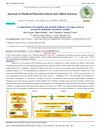 June 2024 in “Journal of medical pharmaceutical and allied sciences”
 In this study, researchers observed that Pectin from Nagpuri oranges significantly increased colony counts of probiotic bacteria like L. acidophilus and L. plantarum both in vitro and in vivo, suggesting potential use as a prebiotic or synbiotic in nutraceutical formulations.

In this in-vitro study, neem leaf extract, combined with oils from Eucalyptus citriodora and Cymbopogon martini, inhibited dermatophyte growth responsible for tinea capitis, showing potential for developing a treatment formulation against the infection.

This review of Lawsonia inermis L., or henna, details its bioactive compounds and historical uses in Unani medicine, including treatment for various conditions like ulcers and jaundice, while highlighting its potential for wound healing, hepatoprotective, and other effects, though further research is needed.
 December 2023 in “Asian Journal of Pharmaceutical Research and Development”
 This research suggests that phytoestrogen-rich herbal extracts may help reduce hyperandrogenism, insulin resistance, and ovarian weight while promoting ovulation in polycystic ovarian syndrome, indicating potential for discovering new bioactive compounds.