 1 citations
,
February 2017 in “The American journal of dermatopathology/American journal of dermatopathology”
1 citations
,
February 2017 in “The American journal of dermatopathology/American journal of dermatopathology” This case report presented a 52-year-old man with cutaneous focal mucinosis, exhibiting rare follicular induction of the epidermis, underscoring the importance of recognizing this association in differential diagnoses.
November 2019 in “European journal of internal medicine” This report documents a case of Cronkhite-Canada Syndrome in a 56-year-old Laotian man, who successfully improved with vitamin supplementation and medical treatment after experiencing weight loss, alopecia, and gastrointestinal polyposis.
This study introduced the C-CAT, a new assessment tool for central centrifugal cicatricial alopecia, and found that established treatments improved symptoms in most patients over six months.
September 2022 in “Indian Journal of Paediatric Dermatology” This case report documents the first confirmed mutation-proved instance of Clouston syndrome in a large Chinese-Malaysian family, linked to the c.263C>T (A88V) mutation in the GJB6 gene, with no available treatment but highlighting the importance of genetic counseling.
6 citations
,
October 2001 in “British Journal of Ophthalmology” This article discusses the potential of intralesional cidofovir for treating SCC without systemic toxicity, noting that surgical excision remains the best treatment option; it reports no new clinical results.
1 citations
,
October 2013 This dissertation proposes a framework for analyzing medical images on mobile devices but presents no new research findings, focusing instead on development methodologies and their applications to hair transplant and glaucoma contexts.
 March 2024 in “Indian Journal of Dermatology”
 In this case report, a 42-year-old male diagnosed with Cronkhite-Canada syndrome presented symptoms like chronic diarrhea, significant weight loss, skin hyperpigmentation, alopecia, and nail dystrophy, with endoscopic findings revealing numerous gastrointestinal polyps.
14 citations
,
February 2022 in “The Journal of clinical investigation/The journal of clinical investigation” This study found that the development of Merkel cell carcinoma from hair follicles in mice can be driven by in vivo reprogramming with ATOH1 and relies on p53 loss for progression.
September 2017 in “The journal of investigative dermatology. Symposium proceedings/The Journal of investigative dermatology symposium proceedings” This study emphasizes the genetic component of central centrifugal cicatricial alopecia, highlighting an atypical case involving an adolescent male within an African-American family.
 September 2021 in “CRC Press eBooks”
 This article discusses features, genetics, and diagnostic challenges of central centrifugal cicatricial alopecia in African American women but reports no new clinical results.
13 citations
,
March 2010 in “International Journal of Cosmetic Science” This study used nanoscale secondary ion mass spectrometry to locate where calcium and copper are concentrated in colored hair, finding these metals particularly in the cuticle's sulfur-rich regions.
 8 citations
,
January 2011 in “Experimental and Therapeutic Medicine”
8 citations
,
January 2011 in “Experimental and Therapeutic Medicine” This review summarizes the characteristics of the peri-malignant melanoma stroma, indicating its potential role in early dermal metastatic migration and increased metastasis risk.
 29 citations
,
January 2017 in “Journal of Investigative Dermatology”
29 citations
,
January 2017 in “Journal of Investigative Dermatology” This study found that increased MSI2 expression in hair follicle stem cells can delay hair growth by maintaining stem cell quiescence and repressing Hedgehog signaling.
79 citations
,
June 1991 in “Journal of Medical Genetics” This article discusses the classification of mental retardation based on IQ ranges and provides no new experimental findings.
 1 citations
,
April 2022 in “The Journal of Family Practice”
1 citations
,
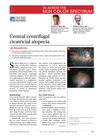
April 2022 in “The Journal of Family Practice” This report describes early and late stages of central centrifugal cicatricial alopecia in two Black women, highlighting progression from a small to a large central patch of hair loss.
6 citations
,
July 2005 in “Acta Ophthalmologica Scandinavica” This case report suggests that madarosis, or eyelash loss, may be associated with mitochondriopathy, expanding the known causes of madarosis to include this condition.
 May 2023 in “International Journal of Molecular Sciences”
 This review highlights the complications of radiation therapy, specifically radiation cystitis, and explores the potential of mesenchymal stem cell-based therapies for tissue repair while discussing their therapeutic potential and limitations.
22 citations
,
March 2007 in “European journal of pediatrics” This study found that scanning electron microscopy revealed considerable abnormalities in hair morphology in MPS I, II, IIIA, and IIIB patients, potentially related to heparan sulfate accumulation.
5 citations
,
April 2024 in “Science China Materials” 10 citations
,
November 2019 in “Journal of the European Academy of Dermatology and Venereology” This study observed distinct differences in hair characteristics between individuals with cardio-facio-cutaneous syndrome and Costello syndrome, highlighting the role of the RAS pathway in these RASopathies and aiding clinical diagnosis.
Men with CCCA often face delayed diagnosis and severe hair loss, highlighting the need for earlier recognition and treatment.
 10 citations
,
July 2021 in “Archiv für Pathologische Anatomie und Physiologie und für Klinische Medicin”
10 citations
,
July 2021 in “Archiv für Pathologische Anatomie und Physiologie und für Klinische Medicin” This study found that the expression of LRIG1 in Merkel cell carcinoma tumors was associated with improved overall and cancer-specific survival.
 April 2019 in “The journal of investigative dermatology/Journal of investigative dermatology”
 In this study, the researchers observed significant metabolic dysregulation in central centrifugal cicatricial alopecia, particularly involving lipid metabolism and the downregulation of AMPK-related genes.
September 2026 in “Zenodo (CERN European Organization for Nuclear Research)” This research introduces the MHS Hair Restoration Protocol, which is a comprehensive approach aimed at restoring the hair follicle environment by modulating the gut-microbiome-endocannabinoidome axis and incorporating specific dietary and topical strategies, rather than focusing only on short-term hair count improvements.
 January 2026 in “Dermatology Online Journal”
 This case report highlights that CCCA can present with multifocal patchy hair loss in younger men of African descent, suggesting the need for careful evaluation when diagnosing atypical alopecia patterns.
14 citations
,
February 2011 in “Experimental dermatology” This study identifies cartilage oligomeric matrix protein (COMP) as a key extracellular matrix component in human hair follicle cycling, potentially regulated by TGFβ signaling, and suggests its importance in normal hair follicle biology.
September 2017 in “The journal of investigative dermatology. Symposium proceedings/The Journal of investigative dermatology symposium proceedings” This case report suggests that in African-American patients, the histology of Central Centrifugal Cicatricial Alopecia may resemble lichen planopilaris, indicating a potential diagnostic challenge.
3 citations
,
April 2012 in “Cancer research” This study reports that side-population stem cells, distinct from hair follicle stem cells, may play a significant role in the malignant progression of squamous cell carcinomas in mice.
 1 citations
,
April 2025 in “Romanian Journal of Ophthalmology”
1 citations
,
April 2025 in “Romanian Journal of Ophthalmology” This study indicates that central serous chorioretinopathy linked to topical minoxidil use is rare, suggesting the need for early detection and discontinuation if it occurs.
 June 2019 in “Journal of Aesthetic Nursing”
 This article describes Amy Senior's evolving views on the Joint Council for Cosmetic Practitioners and reports no new research findings.