November 2021 in “Clinical, cosmetic and investigational dermatology” This case report details an 80-year-old woman with circle hair potentially linked to acquired ichthyosis from multiple myeloma, where a prescribed topical treatment led to clinical improvement.
This case report highlights that Tjalma Syndrome may present as a main symptom of systemic lupus erythematosus and should be considered in patients with ascites, pleural effusions, and elevated CA-125 levels.
 May 2021 in “Histochemistry and Cell Biology”
 This article highlights studies on cholesterol transporter proteins in hair cycles, epithelial-to-mesenchymal transition in cancer, ovarian hormone effects on cell polarity before implantation, and UV effects on rodent skin, without providing new clinical results.
 June 2024 in “Annals of Medicine and Surgery”
 This case report highlights the rare co-occurrence of Pili Annulati and Trichorrhexis Nodosa in a Syrian woman, underlining the need for further research into their relationship and treatment.
December 2024 in “International Journal of Molecular Sciences” This study observed that CXCL12 is highly co-expressed with androgen receptors in human hair follicle cells, and its inhibition via antibodies increased hair length, suggesting a potential treatment strategy for androgenic alopecia.
March 2026 in “Skin Appendage Disorders” In this case report, a 38-year-old woman with monilethrix, a hair shaft disorder, was found to have both hair fragility and androgenetic alopecia, highlighting the diagnostic and management challenges posed by coexisting hair conditions.
 2 citations
,
May 2021 in “Clinical Pharmacology in Drug Development”
2 citations
,
May 2021 in “Clinical Pharmacology in Drug Development” This phase 1 study reported that after administering supratherapeutic doses of cortexolone 17α‐propionate, a topical antiandrogen intended for hair loss treatment, there was no effect on the QTc interval, indicating no measurable cardiac safety concerns in the concentration range tested.
1 citations
,
September 2025 in “PLoS ONE” This study found that disrupted cholesterol homeostasis in scalp samples from cicatricial alopecia patients hinders hair regrowth by affecting hair follicle stem cell markers, with resulting effects confirmed in vitro and in animal models.
 9 citations
,
May 2008 in “Journal of Clinical Oncology”
9 citations
,
May 2008 in “Journal of Clinical Oncology” This article compiles references on toxic epidermal necrolysis and cutaneous reactions to anticancer agents but reports no new findings.
 November 2025 in “Archiv für Pathologische Anatomie und Physiologie und für Klinische Medicin”
 This study examined 16 sporadic trichoblastic tumors and found that although one showed malignant transformation, clinical follow-up revealed no residual or metastatic disease. RNA sequencing indicated a high tumor mutational burden and absence of a UV-related signature, helping to distinguish these tumors from similar growths.
July 2025 in “Journal of Cutaneous Pathology” In this case report, a newborn with Conradi-Hünermann-Happle syndrome was diagnosed through early skin biopsy, which revealed unique histopathological features, including dystrophic calcifications, confirming a pathogenic variant in the EBP gene.
In this study, chitosan hydrogels and delivery systems showed promise in supporting skin recovery post-laser procedures, enhancing topical treatments for acne and melasma, and improving hair density in scalp applications, but limited study sizes and formulation variability restrict generalizability.
51 citations
,
February 2004 in “Journal of Investigative Dermatology” MCSP may help identify and regulate skin stem cells, affecting hair growth and regeneration.
 3 citations
,
March 2021 in “Cureus”
3 citations
,
March 2021 in “Cureus” This article reports a rare combination of rapid-onset halo nevi, nonsegmental vitiligo, and premature scalp hair graying.
1 citations
,
July 2018 in “JAMA dermatology” This abstract contains navigation and subscription information for JAMA Dermatology and reports no new clinical findings.
 January 2026 in “Forum Dermatologicum”
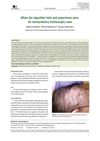
 This case study examined a 72-year-old woman with unique hair shaft constrictions consistent with monilethrix, despite features atypical for this condition, ultimately reaching a diagnosis that led to successful improvement using oral minoxidil and reduced hair trauma.
 July 2025 in “Clinical Dermatology Review”
 In this case report, researchers observed multiple trichofolliculomas in family members, noting this as a rare manifestation of typically singular hair follicle hamartomas.
 January 2025 in “Haematology International Journal”
 This study describes a functional disorder in the ovary, known as stromal hyperplasia, characterized by the proliferation of ovarian stroma and luteinization of stromal cells, which is linked to excessive androgen production and elevated testosterone levels.
 October 2024 in “Journal of the Endocrine Society”
 This case report describes a patient with an ovarian steroid cell tumor that initially presented as non-classical adrenal hyperplasia, emphasizing the difficulty in differential diagnosis with hyperandrogenism and the importance of close clinical monitoring.
3 citations
,
December 2003 in “Archives of Pathology & Laboratory Medicine” This article reviews the distinctive features of cutaneous lymphadenoma, a variant of trichoblastoma, and its differential diagnosis, but it presents no new empirical results.
January 2000 in “HAL (Le Centre pour la Communication Scientifique Directe)” Melatonin boosts hair growth in chinchillas.
 44 citations
,
August 2008 in “Archives of Dermatology”
44 citations
,
August 2008 in “Archives of Dermatology” This abstract provides no results; it is a website notification about cookies and general access to JAMA content.

In this case study, a 38-year-old woman with monilethrix, a hair shaft disorder causing hair fragility, was also diagnosed with androgenetic alopecia, leading the authors to emphasize the complexity in diagnosing and managing such combined hair conditions.
14 citations
,
May 1979 in “International Journal of Dermatology” In this study, trichostasis spinulosa was observed in 51 patients with lesions on the nose, where some follicles contained up to 86 hairs each, possibly influenced by endocrine factors and actinic rays.
 June 2020 in “International journal of research in dermatology”
 This study found that oral intake of choline-stabilized orthosilicic acid (ch-OSA®) significantly improved hair, skin, and nail health in the Indian population, with no reported side effects.
28 citations
,
October 1987 in “PubMed” This study found that treating Tradescantia stamen hair cells with LiCl disrupts mitotic progression, leading to metaphase arrest, which can be reversed by myo-inositol or CaCl2 addition.
10 citations
,
January 1925 in “Archives of Dermatology” This article discusses a historical case of a rare skin disorder involving alopecia and follicular plugs reported in 1907; it presents no new findings.
1 citations
,
December 1997 in “Archives of dermatology” This report describes a case of trichostasis spinulosa, a condition with pruritic, black papules on the face caused by keratotic plugs with embedded vellus hairs.
2 citations
,
April 2013 in “PubMed” This review discusses non-motor symptoms in autoimmune myasthenia gravis and associated thymomas, highlighting abnormal T-cell clones as a contributing factor, but reports no new clinical results.
 57 citations
,
March 2011 in “The American Journal of Dermatopathology”
57 citations
,
March 2011 in “The American Journal of Dermatopathology” This study found that permanent alopecia can occur after certain chemotherapy treatments and presents as nonscarring hair loss similar to androgenetic alopecia, with specific histological features that could be misdiagnosed without proper clinicopathological correlation.